



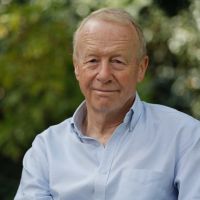

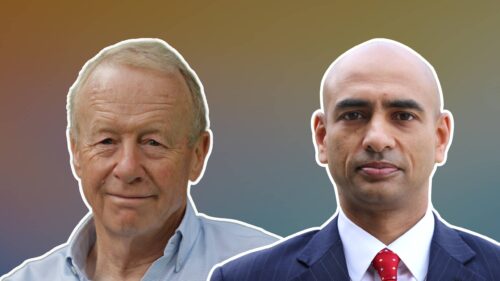
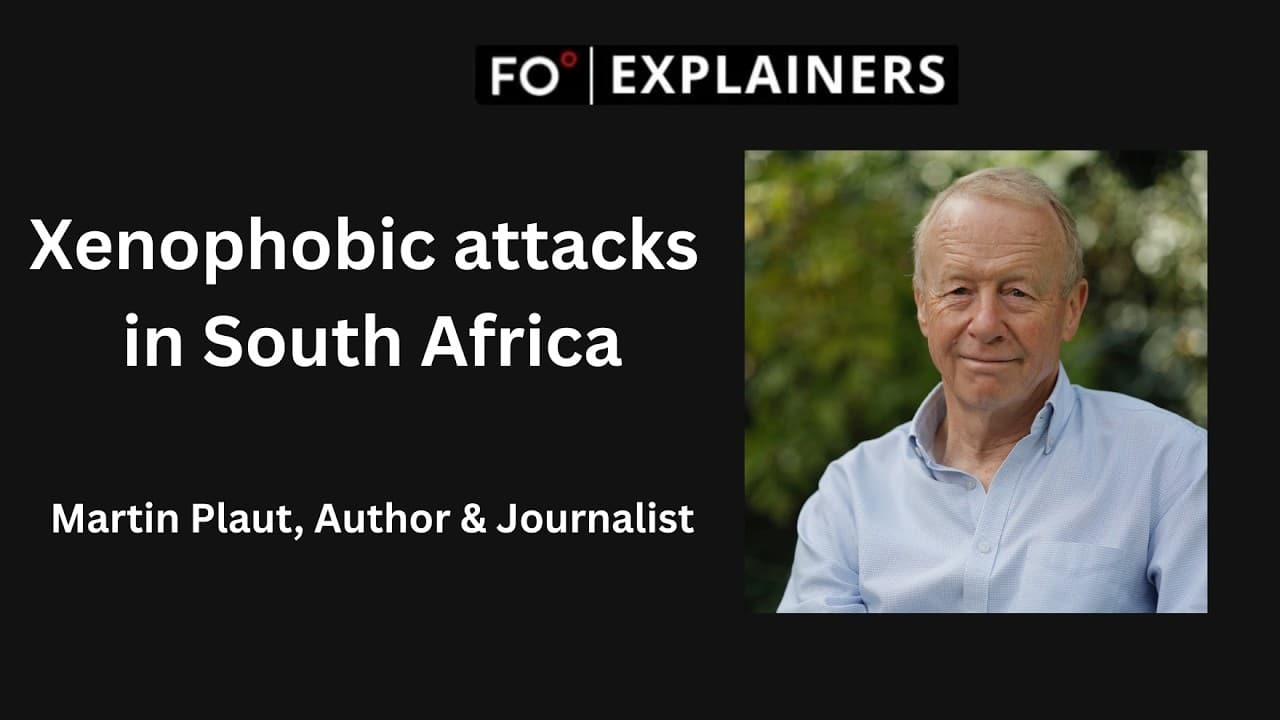
Fair Observer’s Video Producer Rohan Khattar Singh speaks with Martin Plaut, a journalist, academic and author, about the deepening rupture between the Trump administration and South Africa. They examine why Washington barred South Africa from the 2026 G20 summit in Miami, Florida, and how decades of ANC foreign policy have collided with US President Donald Trump’s worldview. Plaut views the dispute as not simply about one diplomatic incident, but ideological alignment, domestic politics and competing visions of the global order. Can South Africa preserve its BRICS-oriented identity while remaining economically dependent on the United States?
A long-brewing rupture
Plaut argues that tensions between Washington and Pretoria predate Trump, rooted in the African National Congress (ANC)’s longstanding “third-worldist” foreign policy outlook. During the anti-apartheid struggle, both the Soviet Union and China supported the ANC, creating political loyalties that still shape South African diplomacy today. Pretoria continues to pursue close ties with Russia and China while promoting a multipolar world order through forums such as BRICS.
Khattar Singh highlights several recent flashpoints. South African military officials visited Iran, and Pretoria participated in joint naval exercises alongside Iran, Russia and China. For Plaut, these actions became impossible to separate from Trump’s confrontational posture toward the Iranian capital of Tehran. He suggests that the White House increasingly views South Africa not as a neutral middle power, but as a state drifting toward America’s strategic rivals.
The decision to exclude South Africa from the G20 therefore reflects more than personal animosity. Plaut believes that it signals growing American frustration with Pretoria’s geopolitical positioning and with what Washington sees as persistent anti-Western instincts inside the ANC.
Trump, Musk and the white farmer narrative
The discussion then shifts to the highly charged politics surrounding white South African farmers. Plaut explains that Trump’s relationship with South African President Cyril Ramaphosa deteriorated sharply after a White House meeting in which Trump confronted him with images of murdered farmers and allegations of anti-white discrimination.
Plaut acknowledges that violent crime in South Africa is severe and often brutal. However, he stresses that white farmers are not uniquely targeted compared to other vulnerable groups. Khattar Singh notes that available statistics show most farm murder victims in recent years have been black South Africans, complicating the narrative circulating on social media.
Plaut says that the issue resonates with Trump because it fits into a broader MAGA-era cultural framework. “What is the MAGA movement? It’s Make White America Great Again,” he says.
Tesla CEO Elon Musk also looms over the conversation. Musk, who was born in South Africa, has repeatedly amplified claims about attacks on white farmers through X. Plaut believes Musk and a circle of wealthy South African expatriates exert more influence over Trump’s understanding of the country than traditional diplomatic channels. “They just drip feed this stuff into his ear whenever they have the opportunity,” Plaut says.
The dispute also intersects with business interests. Musk reportedly wants to expand Starlink operations in South Africa but opposes Black Economic Empowerment policies requiring foreign firms to partner with black South Africans.
Israel, the ICJ and competing worldviews
Another major source of friction is South Africa’s genocide case against Israel at the International Court of Justice. Plaut describes the move as a significant irritant for Washington, particularly given the Trump administration’s skepticism toward international institutions.
For many South Africans, support for the Palestinian cause fits naturally within the ANC’s anti-colonial political identity. Yet Plaut notes that divisions persist within South Africa itself. Some conservative white South Africans identify strongly with Israel and view themselves as similarly isolated within a hostile regional environment.
The broader disagreement reflects competing attitudes toward global governance. Plaut argues that while much of the world still relies on institutions built after World War II, Trump increasingly favors personal diplomacy and transactional bilateral relationships over multilateral frameworks.
Khattar Singh raises the larger question of whether Africa itself is being sidelined. South Africa was the continent’s sole G20 representative for decades before the African Union joined the grouping in 2024. Plaut rejects the idea of a coordinated American strategy against Africa, instead portraying Trump’s approach as highly personal and improvisational.
South Africa’s declining dominance
Plaut repeatedly returns to South Africa’s internal problems. Ordinary citizens care less about G20 access than about failing infrastructure, unemployment and rising crime. Johannesburg has faced prolonged water shortages and rolling electricity outages, while youth unemployment has climbed to catastrophic levels.
“Sixty percent of young people under 25 are unemployed,” Plaut says. “It is just horrific.”
These weaknesses are eroding South Africa’s claim to continental leadership. Khattar Singh points to the growing prominence of countries such as Egypt, Kenya, Nigeria and Ethiopia. Plaut agrees that other African powers are increasingly “punching above their weight,” even as divisions inside the African Union make unified continental leadership difficult.
Simultaneously, the ANC itself is weakening politically. After losing its outright majority, the party now governs through coalition arrangements and faces mounting electoral pressure at the local level. Plaut compares its trajectory to other historic liberation movements that dominated politics after independence before gradually declining.
Can the relationship be repaired?
To repair relations with Washington, Ramaphosa has appointed Ralph Meyer as ambassador to the US. A former National Party politician who later helped negotiate the end of apartheid, Meyer is an experienced statesman capable of calming tensions after the previous ambassador accused Trump of leading a white supremacist movement.
Yet Plaut warns that waiting for Trump to leave office would be a mistake. American concerns about South Africa’s strategic orientation extend beyond one administration. Pretoria’s economic interests remain rooted to the US even as parts of the ANC remain emotionally and ideologically aligned with Russia and China.
The result is a country caught between competing worlds: politically drawn toward multipolarity, economically dependent on the West and increasingly uncertain of its own position within Africa.
[Lee Thompson-Kolar edited this piece.]
The views expressed in this article/video are the author’s own and do not necessarily reflect Fair Observer’s editorial policy.
























Comment