







 | ||||||
| ||||||
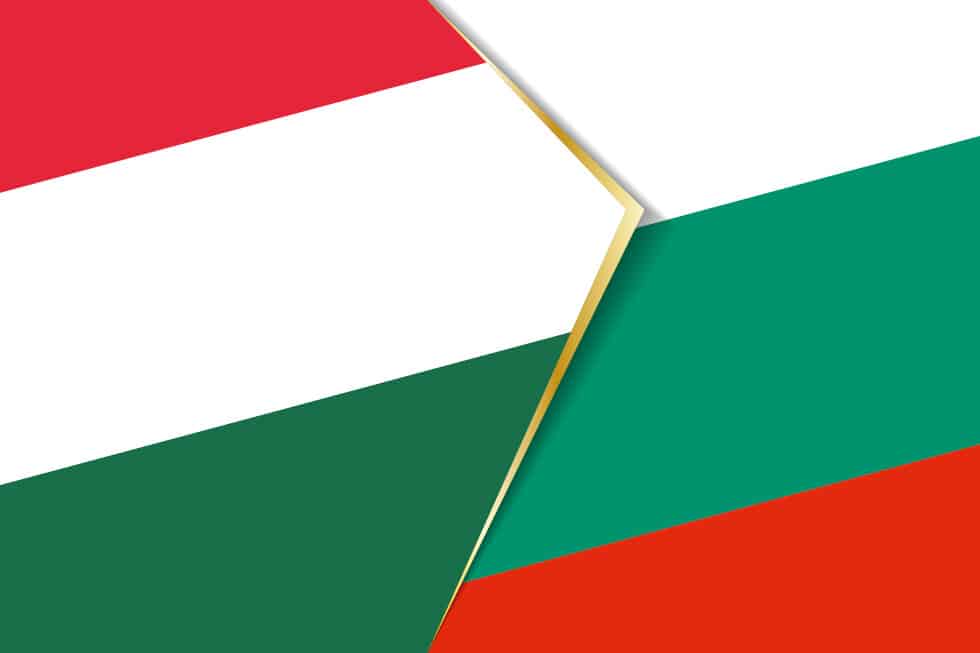
Dear FO° Reader, Greetings from the United States. In this edition of the FO weekly newsletter, we decided to focus on two parallel events, both in the EU: Viktor Orbán’s defeat in Hungary, ending his 16 years of rule over the country; and Bulgaria’s election, where the old political establishment was swept away in favor of the new Progressive Bulgaria party. At first glance, these two events don’t seem particularly closely related, but on closer examination, they both have some key parallels. Firstly, both were widely seen as referenda against an established government widely regarded as corrupt. Secondly, the two victorious candidates differ on one key foreign policy point: EU sanctions against Russia.
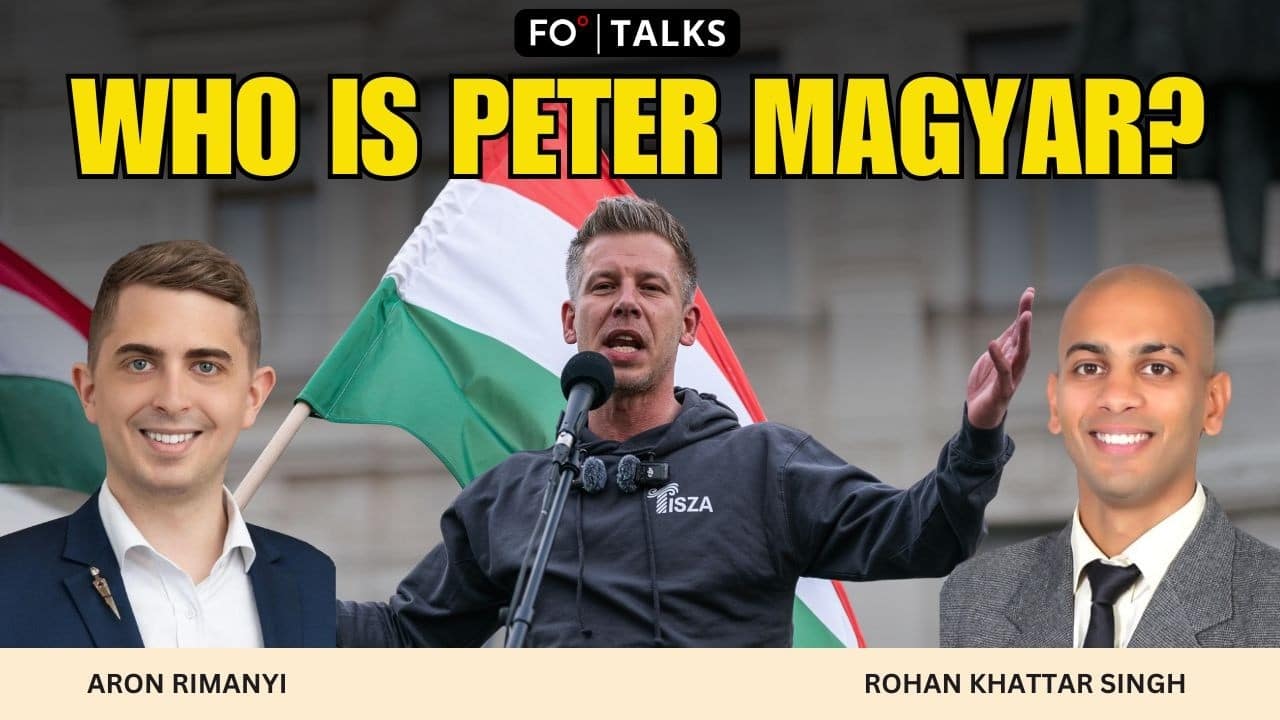
via Shutterstock Péter Magyar, Hungary’s new Prime Minister, has promised to reduce the country’s dependence on Russian oil, a relationship the Orbán government spent years cultivating. In contrast, Rumen Radev, the leader of Bulgaria’s new leading party, has argued against sanctions on Russia and seemed to be unsupportive of Ukraine in the context of the ongoing Russia–Ukraine War. As both Hungary and Bulgaria are EU members, and Orbán’s government made a habit of doing what it could to delay EU assistance to Ukraine, the question is now posed: What do these two elections mean for the EU and Ukraine’s struggle? The end of an era: Hungary after 16 years of Orbán The present is eerily familiar to Hungary’s recent past. In 2010, Orbán rode a wave of anti-establishment sentiment against the then-ruling party to victory as Hungary struggled with a failing economy in the wake of the 2008 financial crisis. Over the next 16 years, Orbán and his party, Fidesz, implemented a number of conservative reforms aimed at entrenching Christian values within the country, while also gifting enormous economic windfalls to friends and inner-circle members. These actions ultimately led to extreme wealth inequality within Hungary, with the bottom half of the population only owning 7% of the country’s wealth. The top 10% own 70% of Hungary’s wealth, with the 100 richest people in the country controlling a full 13% of the nation’s wealth. The economic gap between the haves and have-nots was a major point of contention in this election cycle and was one of the big reasons Magyar was propelled to victory. Orbán’s government also established close ties to Putin’s Russia, which had similar political goals. This eventually solidified into increased and repeated interference on the side of Russia in the ongoing Ukraine War, mostly by holding up funding and other aid packages from the EU. Sources: 2010 Hungarian parliamentary election | Wikipedia One hundred billionaires own one-eighth of the Hungarian population’s wealth | Telex Hungary’s opposition Tisza promises wealth tax, euro adoption in election programme | Reuters A Timeline of Hungary’s Moves Against Ukraine Under Orbán’s Rule | UNITED24 Media How Viktor Orbán’s Hungary Eroded the Rule of Law and Free Markets | Cato Institute Magyar’s victory The question then turns to Péter Magyar. The 45-year-old politician was a former member of Orbán’s Fidesz Party and was married to the minister of justice before their divorce in 2023. Magyar has made a number of promises to fight corruption and undo the damage done by Orbán, and time will tell if he can make good on any of them. But more importantly for our topic today, he is seen as an alternative to Orbán’s glowing friendship with Putin. However, that does not mean that he is an outspoken critic of the Kremlin. As Hungary’s economy is still deeply tied to Russia’s due to Orbán and Putin’s relationship, there can be a number of interpretations to his relative silence. Still, despite saying he wanted to keep relations with Russia friendly, Magyar has said he would ask Putin to end the war if he called, which is considerably more than his predecessor. How exactly this will affect EU parliamentary votes is uncertain, but many Orbán critics are hopeful. Sources: 5 things to know about Péter Magyar, Hungary’s new prime minister | NPR Péter Magyar’s Historic Victory Holds Implications for Russia and Ukraine | Jamestown Bulgaria elections: The rise of Rumen Radev On April 19, Bulgaria held its Parliamentary elections, its eighth election in five years. The pro-Russian candidate Rumen Radev won in a landslide, securing an absolute parliamentary majority, winning 132 seats out of 240. The result marked the first time since 1997 that a single party secured outright control of Bulgaria’s parliament and potentially ended a prolonged period of political instability. Radev campaigned to end the “mafia state” and political instability in the EU’s poorest member state. Radev’s Progressive Bulgaria movement benefited from growing public frustration with corruption, inflation and years of unstable coalition governments. Several smaller nationalist and protest parties that had previously divided anti-establishment voters lost support or failed to gain significant traction, allowing Radev to consolidate a broader coalition of disaffected voters around a single political movement. With Hungary leaving Viktor Orbán behind and opting for a center-right candidate, Bulgaria keeps things even in the EU. Radev plans to challenge aspects of EU foreign policy and seek warmer relations with Russia while affirming Bulgaria’s continued membership in both the EU and NATO. In that sense, Radev may ultimately resemble Robert Fico more than Orbán — critical of Brussels rhetorically, but less willing to obstruct European institutions fundamentally. Sources: Bulgaria’s election and what it means for Europe | European Council on Foreign Relations Bulgaria’s Kremlin-friendly ex-president wins election in landslide | Reuters Bulgaria’s election tests how far the EU can contain pro-Russia drift | European Policy Center Moscow-friendly Rumen Radev wins absolute majority in Bulgarian elections | The Guardian The new obstacle: will Bulgaria block Ukraine aid? Bulgaria has played an important, if sometimes overlooked, role in supporting Ukraine throughout the war. During the conflict, the EU repeatedly attempted to pass military aid and spending packages for Kyiv, many of which required unanimous approval from member states. Viktor Orbán and Hungary frequently emerged as the primary holdout, delaying or threatening to veto funding packages intended to provide Ukraine with ammunition, financial assistance and military equipment. Those delays frustrated EU officials and raised concerns about the bloc’s ability to maintain a unified position on Ukraine. Bulgaria’s shift toward Radev has raised questions about whether he will take over Orbán’s place and block further EU aid packages to Ukraine. Radev has repeatedly criticized military aid to Ukraine and opposed Bulgaria’s participation in joint EU ammunition procurement initiatives, prompting fears that Sofia could emerge as another obstacle to coordinated European support for Kyiv. This sentiment was captured by The Brussels Times, which warned that Bulgaria risks becoming a “Trojan horse.” There are still important differences between Radev and Viktor Orbán. While Orbán frequently used Hungary’s veto power to delay or block EU aid packages for Ukraine, Radev is more likely to limit Bulgaria’s direct involvement rather than openly paralyze EU decision-making. Bulgaria’s defense industry remains closely tied to European ammunition production, particularly for Soviet-standard munitions that are still heavily used by Ukraine. Sources: Hungary blocks €50bn of EU funding for Ukraine | BBC Hungary is blocking release of €500 million in EU military aid to Ukraine | EuroNews Bulgaria risks becoming ‘Trojan horse’ after election, EU centrists warn | The Brussels Times Radev’s victory in Bulgaria raises questions over Europe’s ammunition supply to Ukraine | Euractiv International reactions: Brussels and Moscow respond Across Europe, observers closely watched Rumen Radev’s victory, as officials in Brussels considered the election another test of the European Union’s ability to maintain unity on the topic of Ukraine. Concerns centered less on whether Bulgaria would leave Western institutions and more on whether Sofia could become a less reliable partner on sanctions, military aid and ammunition production. European analysts warned that Bulgaria’s political shift could complicate efforts to sustain long-term support for Kyiv, particularly as the war in Ukraine continues to strain European resources and political cohesion. The reaction reflected broader anxieties inside the EU following years of tension with Viktor Orbán and Hungary over aid packages and sanctions policy. While many officials do not expect Radev to obstruct EU decision-making as aggressively as Orbán, his criticism of military aid to Ukraine and calls for a more pragmatic relationship with Russia have raised concerns about a possible expansion of pro-Russian sentiment within the bloc. Moscow viewed the result differently. Russian officials and pro-Kremlin media framed Radev’s victory as evidence of growing political fatigue within Europe over continued support for Ukraine. Radev has consistently opposed escalating military involvement and has argued that the conflict requires a negotiated settlement rather than a prolonged military strategy. While Bulgaria remains a member of both NATO and the EU, Moscow views the outcome as a sign that European consensus on Ukraine may be weakening over time. The concern in Brussels is less that Radev will become a second Orbán and more that Bulgaria could gradually shift from being a key supplier to Ukraine to a less reliable partner in future EU defense coordination. Sources: Bulgaria: Pro-Russia Rumen Radev wins election | Deutsche Welle Bulgaria’s future relationship with Western EU governments Bulgaria’s election is unlikely to produce an immediate rupture inside the European Union. Radev has signaled that Bulgaria will remain committed to both the EU and NATO, and the country’s defense industry remains economically tied to broader European security initiatives. But the election does reflect a broader challenge facing Europe: maintaining unity on the topic of support for Ukraine as the war drags on and political fatigue deepens across the continent. For Brussels, the concern is not simply whether another government will veto aid packages. It is whether more European leaders begin adopting Orbán’s rhetoric without fully embracing Orbán’s obstructing tactics. Bulgaria may not become the EU’s next spoiler, but Radev’s victory suggests that skepticism toward continued military support for Ukraine is no longer isolated to Hungary. As the war continues, Europe’s challenge may become less about overcoming a single holdout and more about managing a growing bloc of governments increasingly willing to question the long-term political and economic costs of supporting Kyiv. Casey Herrmann and Liam Roman Assistant Editors Related Reading
| ||||||
We are an independent nonprofit organization. We do not have a paywall or ads. We believe news
must
be free for everyone from Detroit to Dakar. Yet servers, images, newsletters, web developers and
editors cost money.
So, please become a recurring donor to keep Fair Observer free, fair and independent. 
| ||||||
| ||||||
| About Publish with FO° FAQ Privacy Policy Terms of Use Contact |






Explore More FO° Spotlight

Support Fair Observer
We rely on your support for our independence, diversity and quality.
For more than 10 years, Fair Observer has been free, fair and independent. No billionaire owns us, no advertisers control us. We are a reader-supported nonprofit. Unlike many other publications, we keep our content free for readers regardless of where they live or whether they can afford to pay. We have no paywalls and no ads.
In the post-truth era of fake news, echo chambers and filter bubbles, we publish a plurality of perspectives from around the world. Anyone can publish with us, but everyone goes through a rigorous editorial process. So, you get fact-checked, well-reasoned content instead of noise.
We publish 3,000+ voices from 90+ countries. We also conduct education and training programs
on subjects ranging from digital media and journalism to writing and critical thinking. This
doesn’t come cheap. Servers, editors, trainers and web developers cost
money.
Please consider supporting us on a regular basis as a recurring donor or a
sustaining member.
Will you support FO’s journalism?
We rely on your support for our independence, diversity and quality.





Comment