





Historical turning points are rarely obvious in real time. It took many years before historians could evaluate the sources without partisan passion and render the verdict that the Progressive Era had truly displaced the Gilded Age or that the civil-rights revolution had finally superseded the complacency of the Eisenhower era. Even the Thatcher–Reagan Revolution, which ushered in Friedrich Hayek and Ludwig von Mises as economic guideposts and moved beyond Kissinger-style detente to a more hawkish foreign policy, was not viewed by conservatives at the time as an inevitable wave but rather as a series of defensive battles against the status quo. Only in hindsight can we determine that what is called “neo-liberalism” was an actual watershed in history.
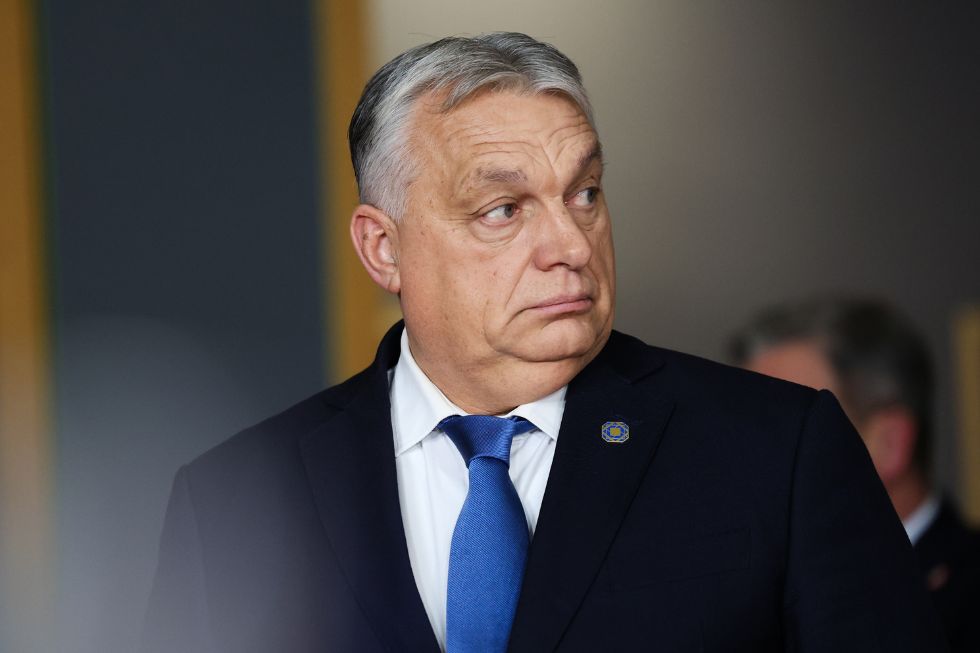
Historical modesty warns us to view Prime Minister Viktor Orbán’s stunning defeat in Hungary last Sunday as only possibly another such historical inflection, not necessarily an actual turning point. Orbán could come back to power if the opposition fails to live up to its promises. Autocrats in other countries might see the situation in Hungary as a warning sign and crack down even harder on their populations. Nevertheless, his electoral defeat was important.
Orbán was not just a local strongman, but rather a central model and muse for an entire generation of nationalist right-wing leaders, including US President Donald Trump and his Make America Great Again (MAGA) imitators. If the architect of “illiberal democracy,” as he boasted, can be routed, despite a captured media, tilted institutions and deep corruption, that raises implications far beyond Budapest.
We cannot yet know whether this is the beginning of a long global backlash against authoritarian nationalism or a localized setback. But several forces now converging — from economic strain and war fatigue to Trump’s visible physical and mental decline and the humiliation of his chosen lieutenants — suggest that the winds may finally be shifting against the nationalist right.
Orbán’s illiberal model
Orbán’s importance was never just about Hungary’s just under ten million citizens. Since returning to power in 2010, he consciously branded himself as the avatar of a modern form of illiberalism, democratic in form but authoritarian in practice. He tightened control over broadcast media and large parts of the press, channeled state contracts to cronies, reshaped the courts and electoral rules, and used xenophobia and culture-war politics as glue.
For American and European populists, Hungary became a kind of nationalist TED talk convention. Conservative Political Action Conference (CPAC) held gatherings in Budapest while former White House Chief Strategist Steve Bannon, American political activist Tucker Carlson, Claremont Institute intellectuals and social-conservative activists paraded through Orbán’s orbit. Conservative activist, former FOX News commentator and lobbyist Matt Schlapp’s Center for Fundamental Rights received approximately €1 million (~$974,659) in 2022 and over €2 million (~$2,173,913) in 2023 from state-funded Hungarian foundations to co-organize the CPAC conferences. There is substantial evidence of Hungarian government funding for CPAC events, primarily through state-linked foundations and think tanks.
Hungarian Prime Minister-designate Péter Magyar alleged after his victory that Orbán diverted taxpayer money to fund CPAC as part of a “criminal offense” involving party financing. Magyar announced an immediate halt to taxpayer funding for CPAC and pledged to establish anti-corruption agencies to investigate these payments. Out in the open, meanwhile, Republican politicians from US Secretary of State Marco Rubio to Vice President JD Vance flew to Budapest to pay homage to Fidesz and learn from what they openly espoused as a model for the US.
The rise of Magyar
Despite all the countervailing winds, Orbán did not merely lose; he lost badly. His party’s vote collapsed after years of seemingly unassailable dominance. He had designed a system to entrench himself and suffocate the opposition. Yet voters, mobilized by a new movement under Magyar, broke through. For American politics, the symbolism is powerful. The regime that MAGA elites openly admired as a blueprint has just been overthrown at the ballot box.
The story of Magyar’s rise matters because it shows how to beat a deeply entrenched populist regime. Magyar is not a left-wing revolutionary. He is a center-right figure who came out of Orbán’s own party, roughly analogous to former US Representatives Liz Cheney or Adam Kinzinger, who finally, from inside the Grand Old Party (GOP), broke decisively with Trump. That background gave him credibility with voters who had once supported Orbán.
Magyar built a movement, not merely a party. Deprived of fair access to the media, he went directly to voters, especially in rural areas where Orbán’s media environment had been most suffocating. Magyar traveled relentlessly, holding town halls and rallies, using social media as a force multiplier. The opposition parties, including the left, swallowed their pride, thought strategically and accepted Magyar’s leadership, uniting behind him even though he was to their right on most issues.
Magyar notably rooted his campaign in everyday concerns, what we call the affordability crisis, health care, education and, above all, the cost of living, while still framing Orbán as a threat to Hungary’s democratic future and European orientation. He often referenced the Russian invasion of Hungary in 1956 to arouse patriotic feelings and turn the citizenry against Russian domination and interference. Hungarians didn’t just tire of Orbán’s culture war and Russian President Vladimir Putin’s influence; they tired of stagnant living standards, demographic decline and the sense that neighboring countries were doing better.
During the Cold War, Hungary enjoyed “Goulash Communism,” the highest standard of living within the Warsaw Pact. Today, the Hungarian economy (in terms of purchasing power) has fallen behind Romania, a significant blow to national pride. Hungarians look across their borders and see that their economic decline was not inevitable, but rather the product of bad, corrupt governance.
Magyar’s campaign promises to defend democracy and fix people’s material problems were crucial. The anti-Trump forces in the US should take note, however, that he did not exaggerate Orbán’s threat to democracy, nor did he concentrate on wedge-issue culture wars; instead, he focused on bread-and-butter issues. Liberal democracy won in Hungary not as an abstraction, but as a promise to improve daily life under an honest government.
The limits of populist governance
Trump’s rise in 2016 was part of the same global upsurge that lifted Orbán and fueled Brexit. Nationalist parties and leaders could channel legitimate grievances about migration, globalization and the failures of centrist elites into a politics of resentment. They could promise simple solutions and muscular “strongman” leadership without having to demonstrate competence.
But demagoguery governs badly. Orbán’s Hungary offers a case study. Once in power, strongmen face the same stubborn realities as democrats: pandemics, inflation, geopolitics and economic complexity. Populism cannot protect a domestic economy by erecting barriers against the entire globe. Populism cannot pretend to listen to the voice of the people while it silences any dissent. Populism cannot pretend to be defending the interests of the common man while enriching the already wealthy and powerful. After all the bluster, populist authoritarians tend to revert to crony capitalism, institutional hollowing-out and theatrical nationalism instead of sound policies.
Trump fits this pattern. Twice now, he has ridden anti-incumbent waves to power, first in 2016 against the Obama-era Democratic establishment, and again in 2024 against President Joe Biden and Vice President Kamala Harris amid post-COVID inflation. Americans who voted for Trump did so primarily because they believed he would turn the economy around for them. But Trump and his family have profited enormously, while the net worth of average Americans has stagnated. As of March 2026, Trump’s net worth has increased by approximately $3 billion to $4.2 billion since returning to office in January 2025, with Forbes estimating his total wealth at a record $7.3 billion, up from $4.3 billion in 2024.
Trump’s second presidency is already visibly failing on its own terms. His Iran War, launched impulsively and then managed erratically, has rattled oil markets, worsened an already acute affordability crisis and brought the Strait of Hormuz to the brink of closure. Gasoline prices, already a source of voter anger, have climbed further. Voters may not follow every twist of Middle Eastern diplomacy, but they understand six-dollar gas.
Like Orbán, Trump tries to distract from policy failure with melodrama: social-media tirades, personalized feuds and symbolic gestures designed for the base. But there are growing signs that the spectacle is wearing thin. Even many Americans who once voted for Trump now show signs of exhaustion and disillusionment. The man who once seemed, to his admirers, like an iconoclastic outsider now looks like a tired, angry incumbent.
Trump’s late-night screeds on his own Truth Social platform have become longer, more erratic and more self-pitying. At least on Twitter, he was limited to 140 characters. Posting an image of himself as Jesus, not merely blessed by Christ, but as Christ, and lashing out at the pope is the kind of grandiose behavior that, in any other era, would raise urgent questions about a president’s fitness for office. The “stable genius” shtick is shading into something more disturbing.
Corruption and cronyism exposed
Corruption also lies in plain sight. Americans are increasingly aware that Trump governs as he does business, by enriching family, cronies and co-investors. From Middle East envoys with vast financial stakes in the region to cronies profiting from regulatory changes, the pattern is unmistakable. Special envoys Steve Witkoff and Jared Kushner not only have no credentials to negotiate an end to the Iran War — they have no technical expertise in the details of nuclear weapons, nor any background in history and diplomacy, as is normally required of high-level negotiators — but they also have substantial business dealings in the region and the outcome of the war will personally affect their own self-interest. Orbán’s downfall reminds voters that crony corruption is not just “how politics works” but rather is what happens when populists with disdain for expertise run a government.
Vance embodies this problem. Once a bestselling critic of Trumpism, he reinvented himself as a loyalist and is now tied to Trump’s misadventures abroad and at home. He campaigned publicly for Orbán just before the Hungarian strongman’s rout. The high mark of chutzpah was Vance complaining about foreign interference in domestic elections while he was actively on the stump for Orbán’s party. He then traveled to Islamabad to help sell Trump’s Iran policy and came home empty-handed as the war worsened. Even Trump’s treatment of Vance, sending him to do the dangerous, thankless work while Trump enjoyed an Ultimate Fighting Championship (UFC) event with Rubio, underscores the dynamic.
In any other presidency, a foreign war would take precedence over just about any other issue. But Trump thought it would be a good idea to take Rubio to watch UFC fake fighters put on a Vaseline-rubbed mixed-martial-art cosplay rather than deal with statecraft. This is not the behavior of a confident leader grooming a serious successor, but rather that of a flailing boss toying with subordinates.
Authoritarian decline and coalition fractures
Trump’s actions are reminiscent of late-stage authoritarian movements elsewhere, when once-feared lieutenants begin to look ridiculous, and being close to the leader starts to look like a political liability rather than an asset. Vance’s much-touted conversion to Catholicism now sits awkwardly alongside a public feud with an American pope who embodies a morally serious, anti-authoritarian Catholicism, and who clearly wants nothing to do with Trump’s court. The Pope is also a savvy organizer, against whom Trump is flailing.
When US President Richard Nixon was behaving as erratically as Trump does now, as the Watergate scandal consumed his presidency, there were similar worries about whether the chief executive was mentally capable of carrying out his duties. The 25th Amendment (which addresses presidential succession and the temporary transfer of power) was seriously considered. But in Trump 2.0, there is no adult backup in the White House or conscientious generals in the military — such as former Secretary of Defense James Mattis, retired Lieutenant General Herbert Raymond McMaster or retired General Mark Milley — to guide us through such a constitutional crisis.
The clash with the pope matters politically because it exposes a fissure inside Trump’s own coalition. For years, many white evangelicals and conservative Catholics offered elaborate rationalizations for their support of Trump, casting him as a flawed but necessary instrument in a larger culture war. Many believed God had chosen him to lead America. They accepted his insults, his affairs and even his boasts about sexual assault as the price of power.
But many of those voters are recoiling from the imagery of Trump as a quasi-divine figure and from direct attacks on a pope who speaks in recognizably Christian terms about peace, human dignity and the perils of idolatry, with a Chicago accent. When rank-and-file evangelicals and Catholics criticize Trump openly on these grounds, they offer what political scientists call “permission structures,” the cues elites give their followers to take unpopular stances. These kinds of changes do not happen overnight.
In Hungary, Orbán retained impressive support on paper until quite late. But once a critical mass of respectable figures begins to defect, or simply to speak candidly about a leader’s failings, momentum can shift quickly. Voters suddenly feel they are not alone in their misgivings. What was once unthinkable, breaking with “their” leader, becomes, at first, possible, and then inevitable.
Historical parallels and future implications
History does not repeat itself, or even rhyme, as the old cliché goes, but it does offer patterns. The current moment has resonances with several earlier inflection points in liberal democracies. The Progressive Era marked a reaction against the corruption and inequality of the Gilded Age. Reformers did not overthrow capitalism, but they imposed constraints, antitrust laws, regulation and social insurance, which made it survivable for ordinary people.
The civil-rights movement equally represented a profound moral and political break with the “respectable” segregationist laws of the mid-20th century. For years, it was unclear whether the cause would prevail. Then, abruptly, the combination of movement pressure, political leadership and cultural change produced a new consensus and a new generation of leaders that would have been hard to imagine in the 1950s.
The Thatcher–Reagan era then saw a turn away from postwar social democracy and activist government toward market liberalism and limited government. For young conservatives at the time, UK Prime Minister Margaret Thatcher’s 1979 victory, soon followed by US President Ronald Reagan’s in 1980 and the emergence of Pope John Paul II in the Vatican, created a sense that history’s momentum had shifted in their favor.
Orbán’s defeat, President Volodymyr Zelensky’s resistance in Ukraine and Magyar’s emergence in Hungary may play a similar galvanizing role for defenders of liberal democracy today. Two leaders from small countries with big megaphones in Central and Eastern Europe are showing that it is still possible to both resist Kremlin-linked illiberalism and speak convincingly to their citizens’ immediate material needs. Their example should put to rest the idea that only a nationalist strongman can channel popular frustration or that only the far left can credibly oppose inequality and corruption. A broadly liberal, anti-authoritarian politics can be tough on borders and security, serious about economic grievances and uncompromising on democratic norms.
If Orbán’s defeat offers lessons for the US, they are not about importing Magyar’s precise policy platform. They are about coalition, leadership and moral clarity. In Hungary, long-time liberals and leftists accepted a center-right, ex-Orbán figure as their standard-bearer because he was the candidate best positioned to win. In the US, that translates into a willingness among Democrats, moderates and anti-Trump conservatives to unite behind candidates, sometimes imperfect ones, who are serious about defending democratic norms, fighting corruption and improving living standards. Above all, it means jettisoning purity tests and focusing on the issues that matter to regular voters instead of to the loud fringe.
Voters respond not to ideological checklists, but to leaders who seem to understand their lives and can explain in plain language how things can get better. The most effective Democratic voices today are those who treat affordability, education, safety and the border as real problems, not as talking points to be brushed aside, while drawing a bright line against authoritarianism and bigotry.
The centrality of anti-corruption and the need for action
As the Hungarian opposition showed, opposing corruption and illiberalism is not ancillary to economic progress; it is central to it. In the US, that means making clear that Trump’s crony capitalism is not an unfortunate side effect, but a primary reason why ordinary people keep losing ground while insiders thrive. It is important to resist two temptations. The first is despair, the conviction that Trumpism is an unalterable feature of American life. The second is complacency, the belief that history has now turned, that liberal democracy is once again “inevitable” and that our only task is to ride the wave.
The truth lies between. Orbán’s fall, the limits of Trump’s war and the visible fraying of his personality cult all suggest that we may be entering a period of backlash against nationalist authoritarianism. New coalitions are forming, new leaders are emerging and even some former loyalists are beginning to peel away.
But history offers no guarantees. Inflection points only become turning points when people act, when citizens organize, when parties make courageous choices, when leaders articulate a compelling alternative and when institutions prove stronger than demagogues.
Hungary’s voters have reminded the world that even a deeply entrenched illiberal regime can be defeated democratically. The question now is whether Americans, facing a weaker but still dangerous form of Trumpism, can learn from their example and seize the moment before it slips away.
[Kaitlyn Diana edited this piece.]
The views expressed in this article are the author’s own and do not necessarily reflect Fair Observer’s editorial policy.
FO° Talks: The Future of Europe — How War and Migration Are Fueling Right-Wing Politics
In this episode of FO° Talks, Peter Isackson and Mikael Pir-Budagyan explore how Europe’s politics are shifting as the Czech...

Viktor Orbán, the Other Transgressor: Hungary’s Role in the Erosion of International Justice
Israeli Prime Minister Netanyahu recently visited Hungary despite his outstanding arrest warrant from the International Criminal Court (ICC). Hungary’s invitation...
Fascism Is Back and With a New Weapon: Conspiracy Theory
Neofascist politics are on the rise as an increasing number of Western nations boast ultra-right leaders. Social disillusionment has pushed...
Support Fair Observer
We rely on your support for our independence, diversity and quality.
For more than 10 years, Fair Observer has been free, fair and independent. No billionaire owns us, no advertisers control us. We are a reader-supported nonprofit. Unlike many other publications, we keep our content free for readers regardless of where they live or whether they can afford to pay. We have no paywalls and no ads.
In the post-truth era of fake news, echo chambers and filter bubbles, we publish a plurality of perspectives from around the world. Anyone can publish with us, but everyone goes through a rigorous editorial process. So, you get fact-checked, well-reasoned content instead of noise.
We publish 3,000+ voices from 90+ countries. We also conduct education and training programs
on subjects ranging from digital media and journalism to writing and critical thinking. This
doesn’t come cheap. Servers, editors, trainers and web developers cost
money.
Please consider supporting us on a regular basis as a recurring donor or a
sustaining member.
Will you support FO’s journalism?
We rely on your support for our independence, diversity and quality.





Comment