







 | ||||||
| ||||||
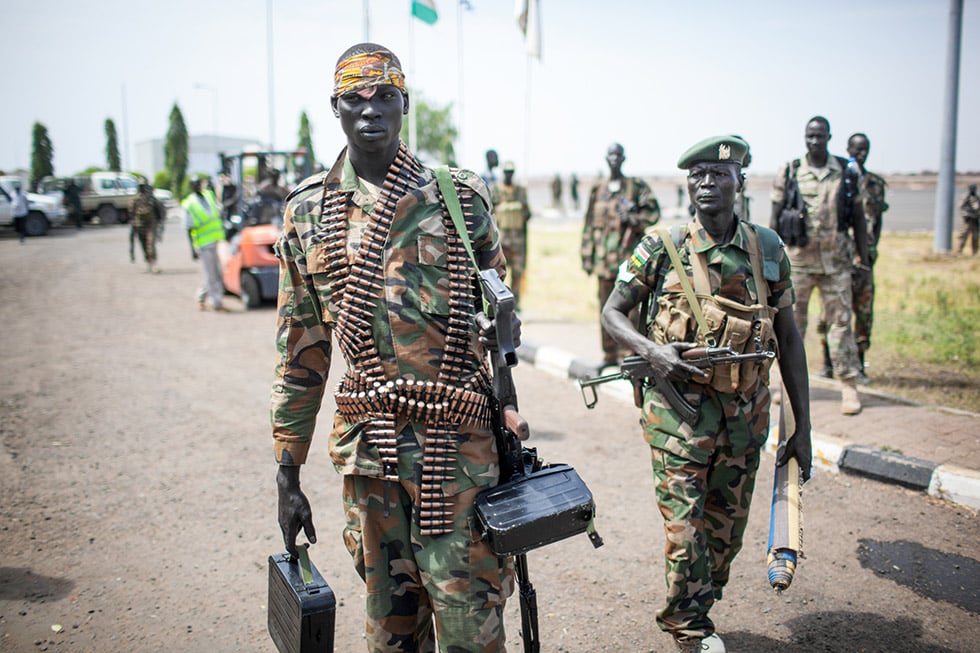
Dear FO° Reader, Greetings from North Central Pennsylvania and Northern California. This week, Sudan’s civil war is entering its fourth year and has pushed the country into one of the world’s most severe humanitarian crises. What began as a power struggle between rival military forces has evolved into a prolonged conflict marked by widespread displacement, economic collapse and growing regional risk. At the same time, the war has received limited sustained international attention, raising questions about why a crisis of this scale remains largely out of focus. Sudan Civil War entering its fourth yearSudan’s civil war is now entering its fourth year with no clear end in sight. What began in April 2023 as a power struggle between the Sudanese Armed Forces and the Rapid Support Forces has evolved into a prolonged and fragmented conflict. Fighting has centered on Khartoum, Sudan’s capital, but it has spread across the country, leaving key regions contested and infrastructure severely damaged. Control over territory continues to shift, with neither side able to secure a decisive advantage.
via shutterstock The Rapid Support Forces, based in Darfur, were formed in 2013 by the Sudanese government to combat rebel groups. What began as an auxiliary force gradually evolved into a parallel military structure with its own leadership, funding networks and political ambitions. The conflict originated from Sudan’s unsuccessful political transition after President Omar al-Bashir’s ousting in April 2019. This led to a delicate power-sharing deal between civilian authorities and military groups, which eventually fell apart. The former allies, now adversaries, are competing to dominate the state and its resources. Since 2023, the RSF and SAF have waged a war for supremacy that has devastated the country. The conflict reflects the long-term consequences of a system in which parallel security forces were allowed to develop competing loyalties and interests. What was once a tool of the state has become one of its primary challengers. Reports from the United Nations and other observers highlight the scale of violence associated with the conflict, particularly in Darfur. In late 2025, RSF forces killed thousands of civilians over several days, engaging in mass killings, summary executions, sexual violence and ethnically targeted attacks. The war has also intensified Sudan’s economic decline. Widespread displacement, damage to agricultural and industrial infrastructure, and the breakdown of state institutions have left civilians struggling to survive in an increasingly fragmented and unstable environment. Sources: Civil War in Sudan | Council on Foreign Relations Inside Sudan’s army-controlled capital as civil war enters fourth year | The Hill Sudan enters a fourth year of war as officials lament an ‘abandoned crisis’ | The Associated Press Sudan under Bashir | Britannica Rapid Support Forces | Britannica At least 6,000 killed over 3 days during RSF attack on Sudan’s el-Fasher, UN says | NPR Under Fire: Making a Living in Wartime Sudan | The Tahrir Institute for Middle East Policy Sudan: A humanitarian crisisThe civil war in Sudan has become, in terms of the number of people who need humanitarian aid, the world’s worst humanitarian crisis. This crisis has displaced 14 million people and left 33.7 million, about two-thirds of their population, in need of aid. This number has grown from 15.8 million, which was the number of people in need of aid even before the war started. The scale of the displacement underscores the severity of the crisis. More than 10 million people have been forced from their homes, making Sudan the largest displacement crisis in the world. Millions have fled to neighboring countries, placing additional strain on regional systems that are already fragile. The crisis is not solely defined by displacement. Sudan’s healthcare system has largely collapsed, leaving millions without access to basic medical services. At the same time, food systems have broken down. Ongoing fighting has disrupted markets and agricultural production, cutting off supply routes. Delivering aid has become increasingly difficult. The continuous violence has damaged infrastructure, and shifting front lines have restricted humanitarian access across large parts of the country. As a result, assistance is not only insufficient, it is often unable to reach the populations most in need. Crisis in Sudan: What is happening and how to help | The International Rescue Committee The international response: dithering and inadequate Other nations, especially worldwide power players, have been shocked and appalled at the news, but have done very little to actually try to stop the conflict, a pattern that has continued for the four long years since the war began in earnest. This is due to a number of factors, the first, of course, being economic. A number of countries, including Sudan’s regional neighbors in Egypt, Ethiopia and the UAE, have been sending or selling weapons to a number of the warring factions. There are also reports of other, more distant countries, such as Turkey, China and Iran, working to help their selected faction. Even Russia’s infamous Wagner Group has been deployed in the fighting. The most invested actors can likely be named as Egypt. Egypt is taking action because the Nile, the country’s most important resource, flows directly through Sudan’s borders. Keeping the water flowing is essential for Cairo, as well as the possibility of using Sudanese forces to attack Ethiopia’s Grand Central Dam, located at the source of one of the Nile’s tributaries. Other countries that are not so directly involved are still heavily connected to the deteriorating situation. For instance, the US, which did not have a particularly strong response under the Biden administration, made matters worse when the Trump administration ended food aid to the country. This has exacerbated many of the root causes of the war by cutting off an estimated 6 million people from humanitarian support. Sources: World failing Sudan as war enters a fourth year, UN relief chief warns | un.org Civil War in Sudan | Global Conflict Tracker Conflict in Sudan: A Map of Regional and International Actors | Wilson Center Russian mercenaries in Sudan: What is the Wagner Group’s role? | Explainer News | Al Jazeera Millions stranded as conflict and aid cuts in South Sudan drive surge in suffering | Oxfam A disinterested media: history does not repeat itself The world news headlines have been very busy lately. The Ukraine War is also entering its fourth year, and as it is directly at the EU’s doorstep, it has drawn much more attention from European and American journalists. Furthermore, the latest war between Israel and Gaza has similarly consumed international attention for more than two years now. With that conflict spilling into and expanding to the economically-paralizing Iran War between Israel, Iran and the US, it can be easy to see how Sudan, a country that has never captured the world’s, and more particularly the West’s, imagination, could easily slip past many people’s attention. Finally, it is an unfortunate fact that many people around the world have come to expect civil wars in African and Middle Eastern nations. And with so many other conflicts raging much more close to home, a war in Sudan simply isn’t as eye-catching, no matter how brutal. But that was not true twenty years ago. The Darfur genocide of 2003 claimed a massive amount of media attention, even with the US engaged in two wars in the Middle East, with the Iraq War starting just a month after the genocide began in earnest. The media attention was enough to push the UN to send a peacekeeping force and made then-president al-Bashir infamous. But even as a new Darfur genocide rages, there is seemingly very little interest in stopping it. Sources: Darfur Conflict, Genocide, War Crimes | Britannica The Specter of Genocide Returns to Darfur | Council on Foreign Relations To late to stop, but still time to act While atrocities are already happening in Sudan, and while the international response has been tepid at best, there is still time to act. While much has changed in the past twenty years, the international community did help de-escalate the Darfur genocide in the 2000’s by paying attention. There is still time to do that now. If the countries of the world act as they did two decades ago, with immediate UN action in the form of sanctions, peacekeeping forces, greater media attention and more public awareness of the war, they might just help put a stop to this wave of senseless killing and brutal oppression. It will not be easy, but the human toll in Sudan is already too high and too bloody. But if they, and we, fail to act, the worst will likely be yet to come. Liam Roman and Casey Herrmann Assistant Editor Related Reading
| ||||||
We are an independent nonprofit organization. We do not have a paywall or ads. We believe news
must
be free for everyone from Detroit to Dakar. Yet servers, images, newsletters, web developers and
editors cost money.
So, please become a recurring donor to keep Fair Observer free, fair and independent. 
| ||||||
| ||||||
| About Publish with FO° FAQ Privacy Policy Terms of Use Contact |








Explore More FO° Spotlight

Support Fair Observer
We rely on your support for our independence, diversity and quality.
For more than 10 years, Fair Observer has been free, fair and independent. No billionaire owns us, no advertisers control us. We are a reader-supported nonprofit. Unlike many other publications, we keep our content free for readers regardless of where they live or whether they can afford to pay. We have no paywalls and no ads.
In the post-truth era of fake news, echo chambers and filter bubbles, we publish a plurality of perspectives from around the world. Anyone can publish with us, but everyone goes through a rigorous editorial process. So, you get fact-checked, well-reasoned content instead of noise.
We publish 3,000+ voices from 90+ countries. We also conduct education and training programs
on subjects ranging from digital media and journalism to writing and critical thinking. This
doesn’t come cheap. Servers, editors, trainers and web developers cost
money.
Please consider supporting us on a regular basis as a recurring donor or a
sustaining member.
Will you support FO’s journalism?
We rely on your support for our independence, diversity and quality.





Comment