



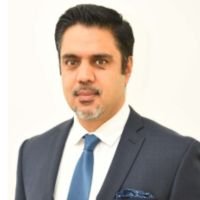

Fair Observer’s Video Producer Rohan Khattar Singh speaks with Ambassador Ashraf Haidari, a former Afghan diplomat and the president of Displaced International, about US President Donald Trump’s renewed interest in Afghanistan and the geopolitical battle there over Bagram Air Base. The discussion explores how Bagram’s history as a symbol of foreign intervention now intersects with shifting regional power dynamics involving the Taliban, China, Russia and the United States itself.
Bagram’s strategic weight
Haidari begins by outlining why Bagram Air Base has always loomed large in the Afghan story. Built by the Soviets in the 1950s, it sits 40 kilometers (nearly 25 miles) north of the Afghan capital of Kabul and forms one of the most valuable pieces of military real estate in Asia. The base has changed hands repeatedly — from Soviet forces to the communist regime, to the Mujahideen, the Taliban and then the US after September 11, 2001. Under American control, Bagram became a city within a city, complete with a 12,000-foot runway and vast logistics and intelligence infrastructure. Its location at the crossroads of South and Central Asia gave Washington a launch pad to project power from the Middle East to the Far East.
When the US withdrew in 2021, it left behind more than empty hangars. To Haidari, the loss of Bagram symbolized the collapse of the international order’s last major foothold in Afghanistan. The Taliban’s takeover soon after turned the base from an anchor of global security into a potential hub for renewed instability. Now, Trump’s suggestion that the US could retake Bagram has reignited debate over sovereignty, legality and strategy in the region.
Sovereignty and stability
Haidari argues that any attempt by the US to reoccupy Bagram “would foremost violate Afghanistan’s sovereignty, independence and territorial integrity.” He sees such a move as legally impossible under international law and politically disastrous. Instead, he calls on Trump to support a UN-led peace process that brings together all Afghan factions — including reconcilable Taliban elements — to reach a sustainable settlement.
This diplomatic path, Haidari says, would stabilize Afghanistan and enhance regional and global security. He envisions an Afghanistan free from terrorism, drugs and separatism, capable of anchoring peace between Asia’s major powers. The goal, he stresses, is not to re-militarize Afghanistan but to rebuild it through collaboration with its neighbors.
The Taliban’s unreliability
Turning to Trump’s reputation as a dealmaker, Haidari warns that the Taliban are “a non-state actor and a proxy that is available for rent by any actor in the region and beyond.” He considers them unreliable and dangerous partners. Afghanistan already has two formal agreements with the US, the 2011 Strategic Partnership Agreement and the Bilateral Security Agreement, both signed with the former Islamic Republic. The Taliban, by contrast, remain sanctioned under multiple UN Security Council resolutions, and several of their leaders face International Criminal Court warrants.
According to Haidari, Afghanistan under Taliban control harbors more than twenty terrorist networks, including al-Qaeda, the Tehrik-e-Taliban Pakistan, the Islamic Movement of Uzbekistan, the East Turkestan Islamic Movement and Islamic State Khorasan Province. These groups, he says, threaten every power that borders or once intervened there. Making a deal with such actors would only perpetuate violence.
Regional power play
Haidari’s analysis of regional dynamics is equally blunt. India, which recently hosted the Taliban’s acting foreign minister, should not, in his words, “miss the forest for the trees.” The “forest” represents the Afghan people, democracy and human rights; the “trees” are the temporary Taliban regime, which he sees as mercenary and transient. He criticizes the Doha peace process for devolving into a deal process that handed Afghanistan’s future to the Taliban while excluding legitimate representatives of the former republic.
Pakistan fares no better. While Haidari acknowledges the compassion of ordinary Pakistanis, he accuses the Pakistani state and military of undermining Afghanistan for decades, including after September 11, when US funds were allegedly diverted to rebuild and redeploy the Taliban. Pakistan and Iran, he notes, are now deporting Afghan refugees in great numbers, compounding the humanitarian crisis.
China and Russia, meanwhile, oppose Trump’s interest in Bagram and pursue transactional engagement with the Taliban — pragmatic deals to protect their own borders and investments while ignoring repression. He points to the Shanghai Cooperation Organization’s warnings about terrorism emanating from Afghanistan but notes that the Taliban continue to consolidate power, even banning Internet access for women and girls. For Haidari, no power should tolerate a “medieval terrorist extremist group [that] rules over 40 million Afghans.”
The road ahead
Haidari concludes that Afghanistan today is ruled by the threat of violence. The myth of a moderate “Taliban 2.0,” he says, has been shattered; the group is more menacing than before. As long as the world engages the Taliban on transactional terms, Afghanistan will continue exporting refugees, terrorism and narcotics. The solution lies not in isolation or coercion, but in coordinated diplomacy. Haidari calls for enforcing existing UN resolutions and launching a UN-led process to form a legitimate, inclusive government.
Only such an approach, he argues, will open the door for meaningful cooperation — and perhaps, one day, a lawful, consensual US return to Bagram. Afghanistan’s future, like its most famous air base, depends on whether global powers choose expedience or principle.
[Lee Thompson-Kolar edited this piece.]
The views expressed in this article/video are the author’s own and do not necessarily reflect Fair Observer’s editorial policy.




























Comment