





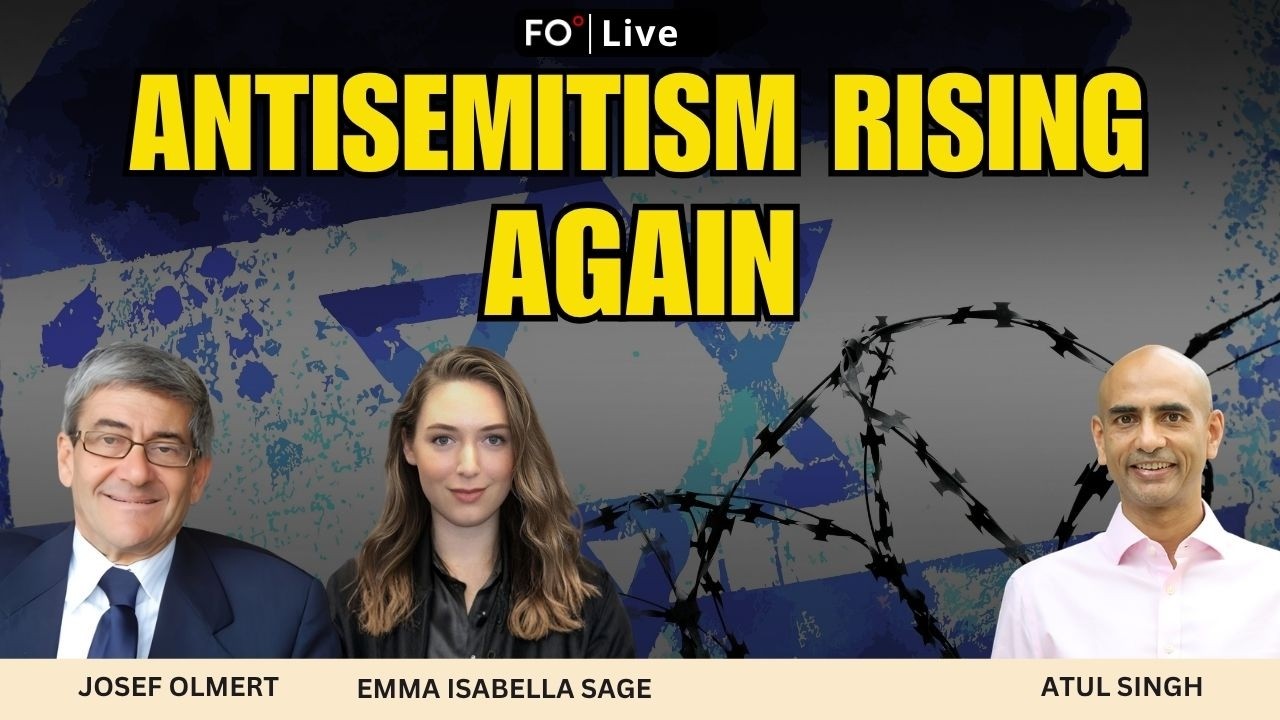
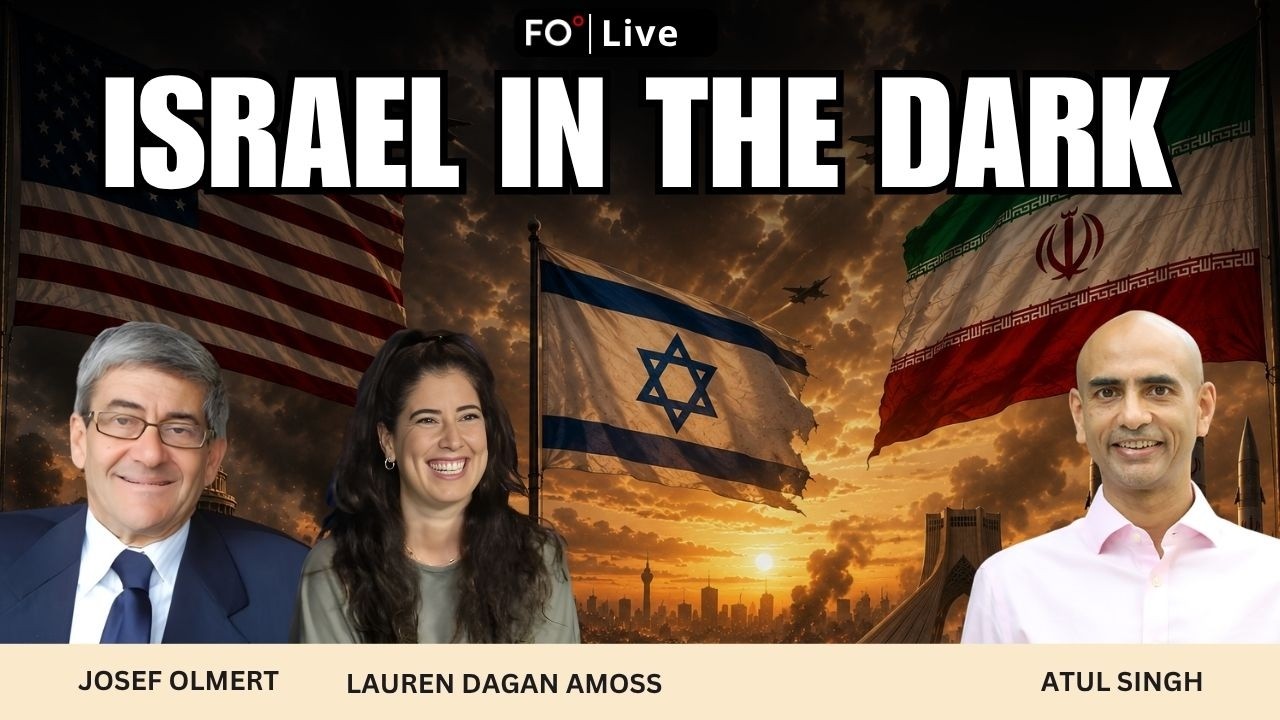
Editor-in-Chief Atul Singh and former Israeli Government Official Josef Olmert explore the diplomatic and political fallout after several Western powers formally recognized the State of Palestine. The two examine how this shift affects Israel’s global standing, its internal politics and broader regional alignments.
Recognition of Palestine
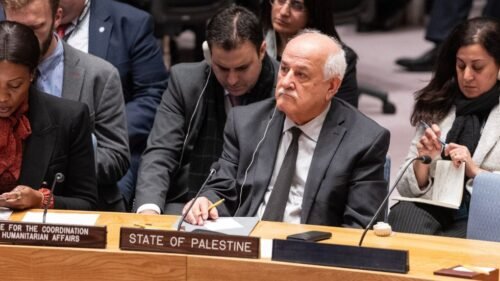
On Sunday, September 21, the United Kingdom, Canada and Australia recognized Palestine, followed by France the next day. Olmert calls this a symbolic yet consequential moment. In his view, the gesture has little immediate legal impact but carries deep political implications for Israel, marking what he calls “bad days for Israel.” He adds a touch of irony, noting that Britain’s supposed reward was an enormous demand for reparations from the Palestinian Authority.
Olmert sees the recognition as largely political signaling. He explains that the governments are responding to domestic pressure rather than to developments on the ground. Yet even symbolic acts can have real-world consequences when they alter perceptions and embolden political movements.
Is Israel’s popularity declining?
Olmert’s first major point concerns what he describes as a shift in public opinion against Israel across the West. He attributes it to changing demographics and new political coalitions, particularly in the UK. The Labour Party now appeals both to Muslim voters and to liberals who frame Palestine as an anti-colonial cause. Once firmly pro-Israel, the country’s major trade union federation has also reversed its stance.
These trends complicate relations between Israel and its traditional allies. Olmert recalls that under former Labour leader Jeremy Corbyn, Palestinian flags outnumbered British ones at party conventions, a symbolic sign of how opinion has turned. Large street demonstrations illustrate how the issue has become a moral rallying point for many voters.
He also predicts political backlash, suggesting that Britain’s right-wing Reform Party might gain ground in the next election. France is facing political paralysis reminiscent of its pre-war instability. The overall trend points to growing polarization: Sympathy for Palestinians is rising, while support for Israel among mainstream parties is eroding.
Israel’s military actions
The second major consequence, Olmert says, lies in the potential diplomatic and operational problems recognition may cause. He expects friction if Western nations try to open consulates for a new State of Palestine that requires access through Israeli territory. Israel, he warns, could respond by limiting cooperation or restricting diplomatic access.
Olmert explains Israel’s diplomatic prickliness within a much older Jewish experience of persecution. External pressure, he explains, tends to reinforce the sense of isolation that has historically defined Jewish identity. He recalls an old Hebrew expression that “the more you torture them, the stronger they get.” This idea, he says, reflects centuries of resilience shaped by exile and discrimination.
Outside criticism often strengthens Israel’s internal unity, especially during war. They agree that the charge of genocide leveled at Israel is false. Olmert emphasizes that Gaza’s population continues to grow and insists that wartime casualties, while tragic, do not constitute genocide. Drawing historical comparisons, he points out that civilian losses in past conflicts, such as the bombing of Tokyo in 1945, were far greater without being labeled as genocide.
Israel’s goals
Turning to domestic politics, Olmert is blunt about his disappointment in Israeli Prime Minister Benjamin Netanyahu. As Israel’s longest-serving leader, he says, he understood the country’s diplomatic challenges but failed to act on them. Olmert argues that Netanyahu should have rebuilt bipartisan goodwill abroad and moderated his government but instead allowed extremists like Minister of National Security Itamar Ben-Gvir and Minister of Finance Bezalel Smotrich to dominate the political narrative.
Olmert attributes Israel’s loss of international support to three converging trends: demographic change in Western cities, the ideological evolution of Europe’s social democracies and a new alliance of progressives, leftists and Islamists united by hostility toward the West.
On strategy, both speakers agree that Hamas, the Sunni Islamist Palestinian nationalist political group, remains Israel’s chief obstacle to peace. Destroying its military infrastructure, Olmert says, is essential to prevent another crisis on par with the October 7 attacks. Yet he also urges restraint: For Israel’s own long-term interest, the war should end as soon as possible. He proposes that Israel declare a short ceasefire to allow the unconditional release of hostages, resuming military operations only if that demand is ignored. Olmert believes peace requires neutralizing those who violently oppose it.
Saudi–Pakistani defense pact
Singh and Olmert also examine regional geopolitics. The Abraham Accords, once a centerpiece of Israeli diplomacy, have stalled, while new alliances are emerging, such as the recently announced Saudi–Pakistan defense pact. Olmert interprets it as a diplomatic signal from Saudi Crown Prince Mohammed bin Salman to US President Donald Trump, conveying that the Saudi capital of Riyadh “may have other options.” He argues that the agreement is not directed against Israel but could, paradoxically, strengthen ties between Israel and India as both countries coordinate more closely on security.
Despite Israel’s current diplomatic challenges, Olmert remains cautiously hopeful. Netanyahu still holds valuable leverage and could yet restore Israel’s standing if he acts decisively. Israel’s immediate challenge is to balance its security imperatives with the need to rebuild trust abroad. Ultimately, the recognition of Palestine by the two former European imperial powers and the two former Anglo-Saxon colonies is not the end of the story but the beginning of a new, unpredictable phase in the Middle East’s evolving power dynamics.
[Lee Thompson-Kolar edited this piece.]
The views expressed in this article/video are the author’s own and do not necessarily reflect Fair Observer’s editorial policy.































Comment