





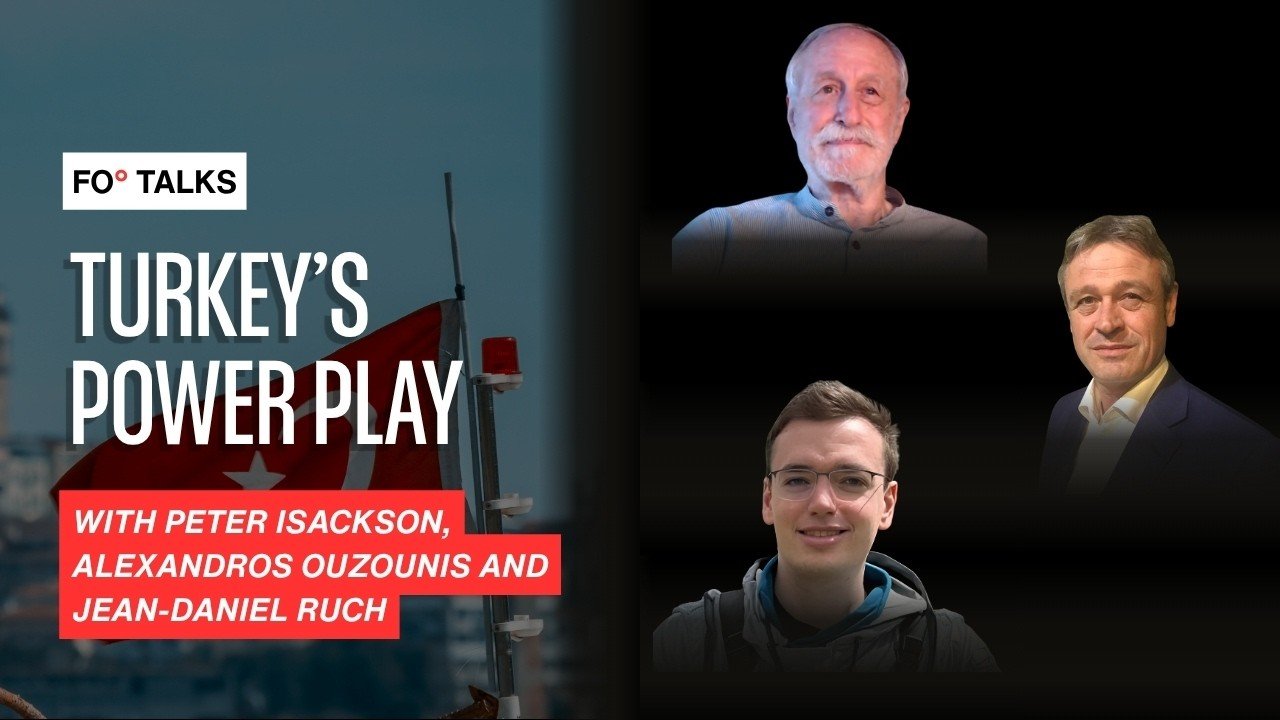
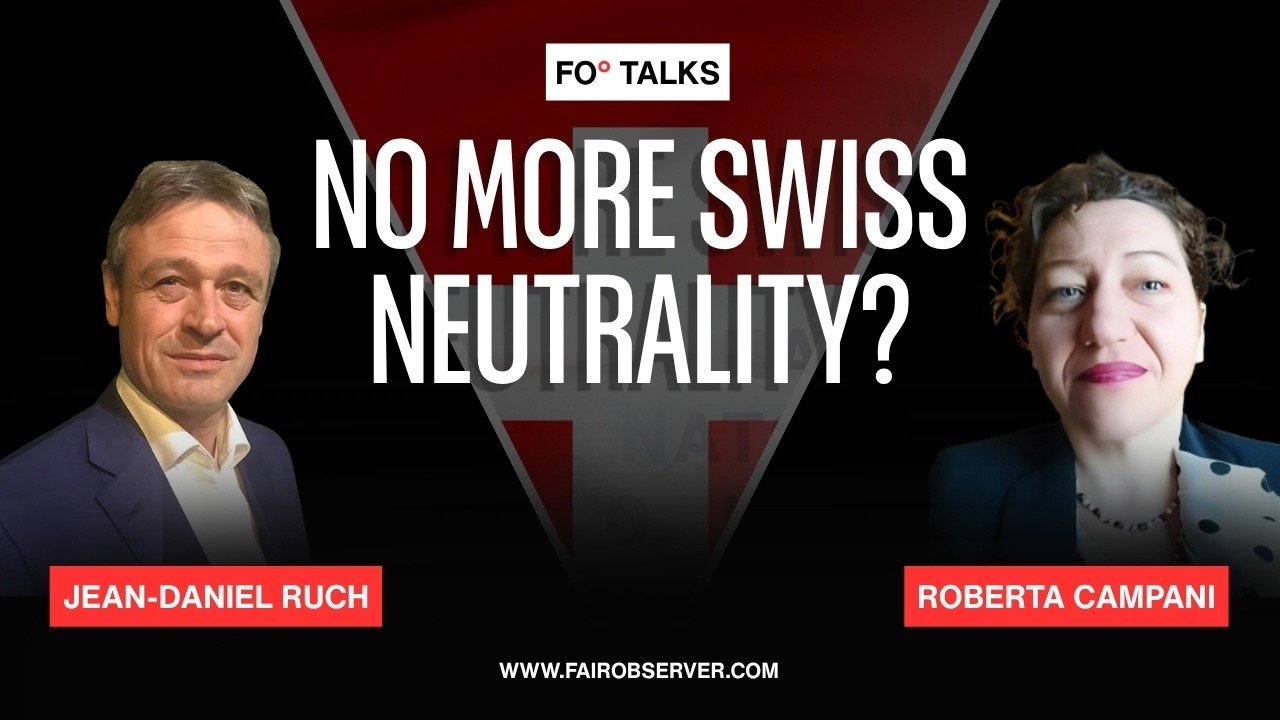
Fair Observer Editor-in-Chief Atul Singh and former Swiss Ambassador to Israel Jean-Daniel Ruch examine the growing momentum in Europe toward recognizing Palestinian statehood, Israel’s internal and external reactions and the broader implications of the Gaza conflict. They explore symbolism, strategy, ideology and the deep fractures driving both sides of the conflict.
Will Europe recognize Palestine?
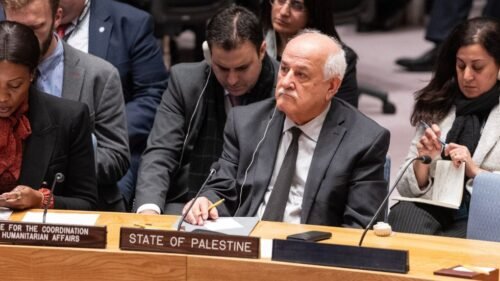
Ruch notes that while many countries have long recognized Palestine, new momentum emerged in 2024 when six European states joined the list. France, Portugal, Malta and San Marino plan recognition in September, while the United Kingdom and Canada condition theirs on a ceasefire and humanitarian access.
[Since Singh and Ruch spoke, the UK, Australia, Canada and France have recognized Palestine.]
Ruch stresses that recognition is largely symbolic. He believes Western governments highlight recognition to avoid substantive measures that could truly pressure Israel, such as halting trade with settlements or restricting arms and intelligence flows. He calls recognition a “tree which is hiding the forest,” performative rather than transformative. Singh agrees, saying it disguises Western reluctance to confront Israel.
Israel’s reaction
The two-state solution, once the international consensus, Ruch dismisses as a “fairy tale.” He points out that the Israeli parliament declared there would “never be any Palestinian states.” Furthermore, he says, continued settlement expansion makes contiguity impossible. Efforts such as pushing Gaza residents out of Gaza City or advancing E1 settlements, which would split the West Bank, signal irreversibility.
US policy has enabled this trajectory. Ruch recalls that even former US President Barack Obama, despite clashing with Israeli Prime Minister Benjamin Netanyahu, approved the largest-ever military aid package — $38 billion. He contrasts this with former US President George W. Bush, the last US leader he believes exerted genuine pressure.
Rise of Israel
Singh and Ruch highlight the internal composition of Israeli society: 20% Arab citizens and a rapidly growing ultra-Orthodox population that largely avoids military service. Singh argues these divisions put Israel “on the verge of a civil war.” Ruch acknowledges deep tensions but insists that existential fear of annihilation binds Jewish communities together. This survival instinct explains widespread support for the war effort after the infamous October 7 attacks.
Singh compares Israel to a “modern-day crusader state,” living under constant siege. Ruch agrees that Israel’s survival instinct shapes its disproportionate military responses and underpins its rejection of Palestinian statehood.
Why Europe is worried
European countries, Ruch argues, are keen to appear proactive. Their recognition announcements mask a refusal to pursue meaningful policies that would disrupt relations with Israel. Symbolism has psychological and political weight, but without measures that bite — economic or diplomatic — Ruch insists it will not change Israeli behavior in Gaza or the West Bank.
Singh underscores that Europe’s fear of sanctions or political backlash ensures recognition remains rhetorical rather than consequential.
Genocide in Gaza
Ruch recalls a Likud political party insider telling him after October 7: “Now is the moment we will finally do what we always wanted — empty Gaza.” Singh recounts a religious Israeli who expressed a similar view: Palestinians would eventually be pushed out by force.
Ruch believes this intent qualifies as ethnic cleansing and may legally constitute genocide. He cites both evidence of intent — ministerial statements — and overwhelming facts on the ground: 62,000 killed, including 17,000 children, alongside starvation caused by blocked aid. He concludes there is “really a case to make for genocide, unfortunately, in Gaza today.”
Singh notes that while some Israelis claim restraint, even defenders admit leaders’ statements are irresponsible.
Israel’s offensive expands
Ruch sees Israel’s decisions in Gaza as designed to make return impossible, from the destruction of Gaza City to the prospect of resettling cleared areas. These tactics, combined with West Bank settlement expansion, cement permanent control.
Singh emphasizes that such actions are justified domestically by existential fear, but internationally, they are viewed as collective punishment.
Radicalization of Palestinians
The October 7 attacks are traced to three dynamics:
- Radicalization of Hamas: After the Hamas political organization accepted 1967 borders in 2017 — a concession ignored by Israel and the West — hardliners like Palestinian militant Yahya Sinwar gained ground.
- Saudi normalization: Hamas feared Saudi Arabia’s move toward ties with Israel would bury Palestinian aspirations.
- International neglect: With global focus on Ukraine, the Palestinian issue had all but vanished until October 7 thrust it back to the center.
Singh recalls former US National Security Advisor Jake Sullivan’s declaration that the Middle East had “never been more peaceful.” He dismisses it as proof of shallow analysis. Ruch agrees it was foolish to think the conflict was dormant.
Israel’s ideology
Ruch underscores that Israel and Iran practically stand alone in openly rejecting a Palestinian state. For him, Israel’s ideology — rooted in expansion and survivalism — explains both settlement policy and military excess. Palestinians, meanwhile, radicalize under oppression, humiliation and loss of land.
Ruch draws a controversial comparison: Palestinian commitment to resist is driven by the same moral weight he once encountered among Jewish Holocaust survivors who regretted not resisting more fiercely.
Looking ahead
Ruch concludes grimly: A Palestinian state is now “an impossibility.” Israel, bound by existential fear, continues to act disproportionately. Palestinians remain fragmented and under siege. Singh echoes that the conflict shows no sign of resolution, with recognition campaigns in Europe little more than symbolic gestures against entrenched realities.
[Lee Thompson-Kolar edited this piece.]
The views expressed in this article/video are the author’s own and do not necessarily reflect Fair Observer’s editorial policy.



























Comment