





Rohan Khattar Singh, Fair Observer’s Video Producer & Social Media Manager, speaks with Saya Kiba, an associate professor at Japan’s Kobe City University of Foreign Studies, regarding the growing importance of the Philippines in Southeast Asia and its deepening partnership with Japan. Their conversation traces history, new security arrangements and the potential role of India in shaping regional dynamics.
Japan–Philippines relations
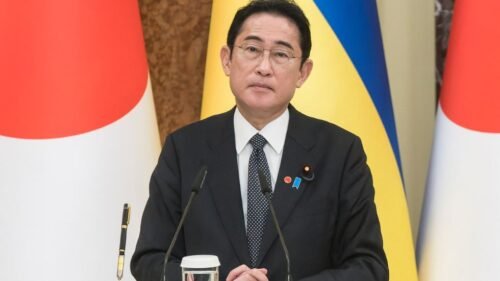
Khattar Singh notes that the Philippines is seen as Japan’s most trusted ally in Asia. Kiba recalls how former Japanese Prime Minister Fumio Kishida called the relationship a “golden age” two years ago, echoed by Filipino President Ferdinand Marcos Jr. during Japanese Prime Minister Shigeru Ishiba’s visit this year.
Post-World War II relations were strained. Reparations concluded by the 1970s, but anti-Japanese sentiment lingered. Over time, “people-to-people exchange” transformed perceptions. Japanese businesspeople gained a reputation for being sincere, unlike wartime memories. In the 1980s and 1990s, Filipino entertainers migrated to Japan, married and settled there, deepening social links.
This exchange expanded further after the 2008 Free Trade Agreement, when Filipino nurses and caregivers began working in Japan, aiding its aging society. Japanese youth also traveled to the Philippines for English education, as they admired Filipino teachers. Conversely, Filipinos valued Japan’s public order, safety and cleanliness, qualities seen as rare in the region. Khattar Singh calls this transformation a “brilliant case study” in how grassroots connections foster alliances beyond formal diplomacy.
Tensions with China
China’s assertive actions in the West Philippine Sea remain the “elephant in the seas.” Kiba describes rising tensions, and Khattar Singh notes Beijing’s bullying behavior toward the Philippine capital of Manila.
Japan and the Philippines share a commitment to freedom of navigation. Japan has bolstered the Philippines’ maritime capacity with advanced incoherent scatter radar systems. Though Tokyo’s rules forbid lethal weapons, these exports strengthen the Philippines’ monitoring and defense capacity.
Japan also supplies Coast Guard vessels through Official Development Assistance. Though framed as tools for law enforcement, they are deployed in contested waters like Scarborough Shoal in the South China Sea, often facing Chinese challenges. These moves show how Japan balances pacifist limits with real-world security needs and growing pressure from its regional environment.
Balikatan 2025
Cooperation accelerated with the 2024 Reciprocal Access Agreement, which eased joint operations between the Philippine military and Japan’s Self-Defense Forces. As a result, Japan joined the 2025 Balikatan exercise as a full participant.
Kiba calls this shift remarkable, given Balikatan’s historic focus on Philippine-US ties. Japan’s inclusion demonstrates Tokyo’s growing seriousness and signals that its role in regional security is changing. For Khattar Singh, it also illustrates how Japan’s cautious stance is giving way to more proactive engagement, driven by shared concerns over China and regional stability.
India–Japan–Philippines partnership
Khattar Singh and Kiba then turn their attention to India. Kiba highlights former Japanese Prime Minister Shinzo Abe’s lasting impact, which linked Japan’s strategy with India. India has supplied BrahMos supersonic cruise missiles to Manila, and President Marcos visited the Indian capital of New Delhi recently. These developments signal stronger defense ties.
A trilateral alliance of India, Japan and the Philippines is not formalized, but analysts are discussing it at the Track II level — when non-state actors converse to reduce tensions between conflicting groups. India, unlike Japan, does not face pacifist constraints on arms exports. It can provide maritime awareness systems and equipment more freely, making it an attractive partner for Manila. Khattar Singh and Kiba agree that a future framework could significantly boost Indo-Pacific security.
What do Filipinos feel?
Based on her personal experience, Kiba praises the Philippines’ vibrant political culture, with voter turnout exceeding 80%, far higher than Japan’s. She admires Filipinos’ civic engagement and commitment to free speech.
Filipinos increasingly see Japan as a top tourist destination and model of governance. Once viewed mainly as a source of jobs, Japan is now sought out for education and business opportunities. For many, Japanese institutions embody stability, order and reliability. Kiba concludes that Filipinos hold strong respect for Japan’s achievements and admire its ability to maintain social cohesion.
Future of Japan–Philippines ties
Kiba notes that the Philippines has a median age of 25 and believes Japan must refresh its view. Her generation saw the Philippines as a developing aid recipient, but today’s Japanese youth see it as modern and even a source of teachers.
Khattar Singh agrees Japan must adapt. The Philippines is emerging as a provider of regional public goods. For example, in 2021, the Japanese government issued disaster relief equipment to aid the Philippines during Typhoon Rai. Then, in February 2023, Philippine forces reused this equipment to aid Turkey, providing earthquake relief. Manila is also exploring South–South cooperation, supporting other developing nations and aspiring to donor status.
Kiba predicts such initiatives will grow. With shared democratic values, expanding defense ties and deep cultural links, Japan and the Philippines have positioned themselves not just as allies but as co-providers of stability in Southeast Asia and the broader Indo-Pacific.
[Lee Thompson-Kolar edited this piece.]
The views expressed in this article/video are the author’s own and do not necessarily reflect Fair Observer’s editorial policy.


































Comment