






Fair Observer Founder, CEO & Editor-in-Chief Atul Singh talks with Richard Fontaine, the CEO of the Center for a New America, and Robert Blackwill, a former ambassador to India. The guests discuss their book, Lost Decade: The US Pivot to Asia and the Rise of Chinese Power, which examines US foreign policy in Asia after the 2011 “Pivot to Asia” announcement. They argue the 2010s were a critical missed opportunity: While China’s power grew rapidly, Washington failed to follow through on its own strategic shift. By the decade’s end, the United States found itself in a weaker position in Asia than in 2011; it had allowed military, diplomatic and economic imbalances to widen in Beijing’s favor.
The Pivot to Asia: ambition vs. reality
In 2011, Secretary of State Hillary Clinton unveiled a landmark change in US grand strategy — it would be the first time Washington prioritized Asia over Europe. Blackwell and Fontaine agree this was the right call strategically, yet stress it was never carried out in practice.
Multiple forces undercut the Asia Pivot:
- The assumption that US wars in Iraq and Afghanistan were winding down proved false, keeping troops and resources tied up.
- Budget sequestration cut defense spending at precisely the moment Asia required greater investment.
- Russia’s 2014 annexation of Crimea pulled US attention and assets back to Europe.
- Years of diplomatic effort on the Trans-Pacific Partnership (TPP) ended with congressional rejection, followed by US President Donald Trump’s withdrawal.
- Changes in top-level officials and shifting crises made diplomacy inconsistent, blunting the message and the momentum.
Blackwell says the Iraq invasion of 2003 was a strategic mistake on par with Vietnam, noting that the Middle East has repeatedly derailed Asia-focused policy.
The need for the Asia Pivot
Asia’s strategic centrality was already undeniable by 2011. Blackwell outlines its weight: The continent is home to 60% of the global population, 40% of the GDP and two-thirds of global growth. It’s home to half the world’s active-duty personnel and several of its largest defense budgets. Most importantly, it is the base of China, the only country capable of challenging the US as a global leader.
At the time, Washington’s elite consensus still considered the idea that China could be coaxed into becoming a “responsible stakeholder.” Fontaine recalls that US policy in the 2010s leaned heavily toward engagement, with relatively little hedging. It took until halfway through Trump’s first term for the US to formally declare China a strategic competitor.
Current US strategy and limits
Under then-US President Joe Biden, a new Pivot to Asia is underway in concept, yet the authors describe it as overdue and incomplete. The lack of a trade pillar, which has been absent since the TPP’s collapse, remains a glaring weakness.
Fontaine and Blackwill argue the US cannot abandon Europe or the Middle East, but it must make deliberate tradeoffs. Naval and air assets could shift to Asia, with surge deployments available for emergencies like Gaza. In Europe, as allies boost defense budgets, US forces could redeploy eastward. The authors judge a Russian attack on NATO territory as very unlikely, freeing space for reallocation.
Alliances as a strategic anchor
Strong alliances are essential to balancing China’s rise:
- Japan is doubling its defense spending over five years, acquiring strike capabilities and quietly preparing for a Taiwan conflict scenario. Blackwell notes growing Japanese acknowledgment that non-involvement in such a contingency is “almost unthinkable.”
- The Philippines has allowed renewed US access to bases under Filipino President Ferdinand Marcos, reversing a 1991 decision to expel US forces.
- Networking among allies is growing, with Japan–India, Japan–Australia and Japan–Philippines ties deepening. The Quadrilateral Security Dialogue (or the Quad), first conceived by former Japanese Prime Minister Shinzo Abe, shows that partners — not only Washington — are driving regional defense coordination.
Economic gaps
The absence of a major trade strategy undermines US influence. While the Comprehensive and Progressive Agreement for Trans-Pacific Partnership and the Regional Comprehensive Economic Partnership move forward without the US, domestic politics make reentry unlikely. Fontaine and Blackwell stress that smaller-scale digital or sectoral agreements could keep the US economically relevant. Without deeper integration, however, China’s trade influence will continue expanding.
Consultation and credibility
The 2011 Asia Pivot rollout suffered from minimal prior consultation with allies. Many in Asia, Europe and the Middle East were blindsided, leading to fears of abandonment. Blackwell warns that similar missteps now — such as withdrawing from Ukraine — would deeply shake Asian allies’ faith in US commitments. Fontaine underscores that US credibility depends on global consistency, as allies in different regions see their security as interconnected.
China–Russia partnership
Beijing and Moscow now enjoy their closest relationship since before the Sino–Soviet split. This “No Limits” partnership features oil sales, dual-use technology flows and military coordination. They share an ambition to weaken the US-led order, and while they stop short of a mutual defense pact, they cooperate in ways that undermine sanctions and reduce dollar dependence. Fontaine labels their alignment, alongside Iran and North Korea, as an “axis of upheaval.”
US–China relations and Taiwan
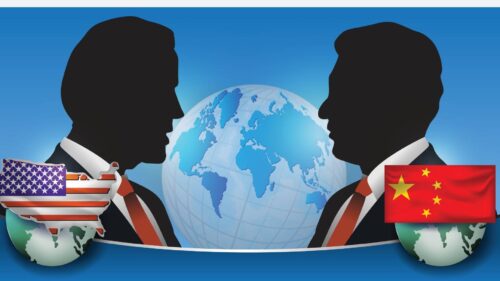
Relations are in decline, with Taiwan as the most likely flashpoint. Fontaine sees war as possible but not inevitable, citing strong incentives on both sides to avoid catastrophe. Blackwell stresses that a robust US deterrent reduces the odds of Chinese aggression. Both authors insist that diplomacy must work in tandem with military readiness to manage competition without sliding into open conflict.
[Lee Thompson-Kolar edited this piece.]
The views expressed in this article/video are the author’s own and do not necessarily reflect Fair Observer’s editorial policy.





































Comment