




[Though this video is not recent, the authors’ discussion remains relevant today.]
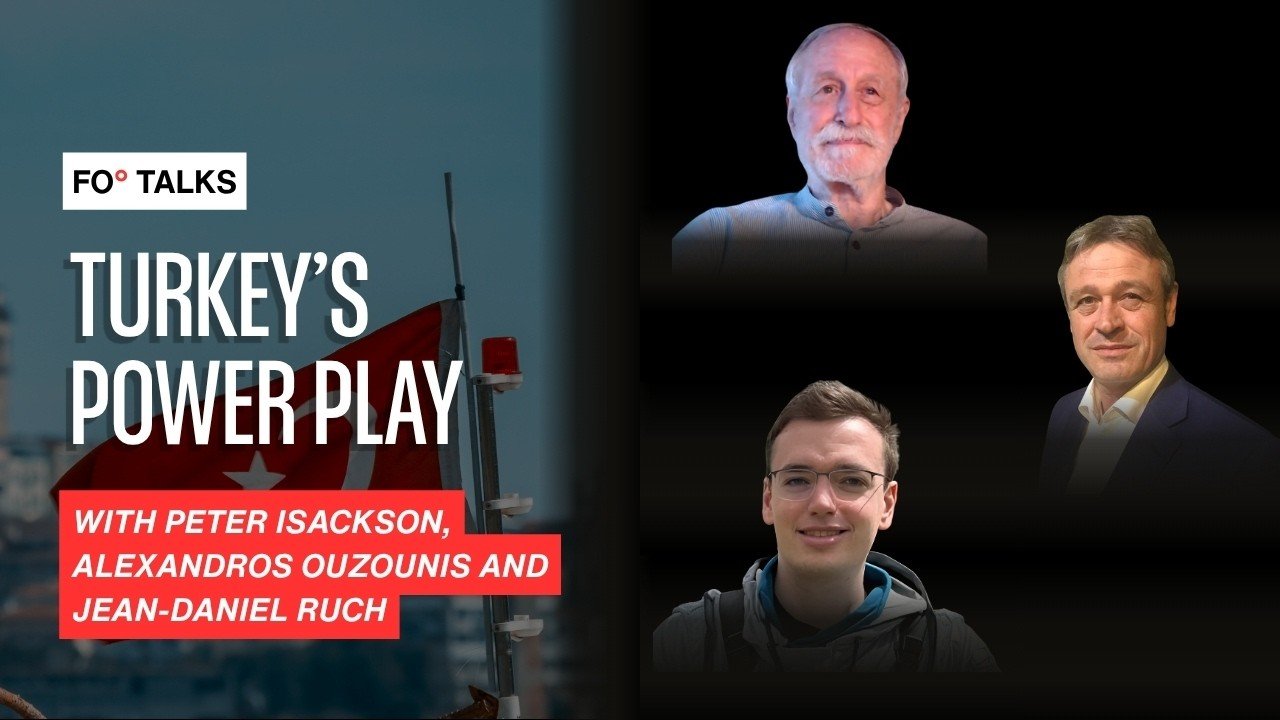
Fair Observer Founder, CEO & Editor-in-Chief Atul Singh and Swiss diplomat Jean-Daniel Ruch, a veteran of the Turkish capital of Ankara and the Middle East, explore Syria’s dramatic upheaval and its regional consequences. The conversation highlights the fall of the Assad dynasty, the ascent of new Sunni leadership and the recalibration of regional power involving Turkey, Iran, Saudi Arabia and Israel.
Strategic shifts in the region
Ruch opens by stressing that Syria is undergoing profound strategic changes. He recalls predicting a decade ago that the old Syrian order would collapse, though he did not foresee such rapid change. He lists key developments: the collapse of Iran’s land corridor to the Lebanese Shiite military group Hezbollah, Turkey’s renewed influence, Russian and American hesitation and the re-emergence of energy projects such as a long-discussed Qatari pipeline through Turkey to Europe. These shifts, he argues, will shape not only the Middle East but also West Asia and Europe, especially regarding refugees.
The fall of the Assad regime
Singh summarizes the dramatic recent events: former Syrian President Bashar al-Assad fled to Moscow, ending 54 years of Ba’athist rule. The Alawite minority, dominant since 1970, has lost power, while Sunnis, led by Abu Muhammad al-Julani, the head of the former Islamist military group Hayat Tahrir al-Sham (HTS), seized Damascus in a lightning ten-day offensive. Turkey’s intelligence chief prayed with Julani in the Umayyad Mosque, underscoring Ankara’s backing. Celebrations erupted across Sunni communities, from Pakistan to Bangladesh, marking the symbolic return of the Umayyad Mosque from Shia to Sunni hands.
Historical burdens and Turkish ambitions
Singh asks about Syria’s troubled past. Ruch traces its modern shape to the Sykes–Picot agreement and subsequent French mandate. He notes that outside powers have long dictated order in the region, from the Cold War to the Arab Spring. He emphasizes Turkey’s central role today, with President Recep Tayyip Erdoğan, intelligence head İbrahim Kalın and Foreign Minister Hakan Fidan projecting power rooted in Ottoman legacy. Turkey’s ambitions rest on military strength, economic reach and religious conviction. However, Ruch notes Arab mistrust persists, recalling how Egyptian women during the Arab Spring dismissed Turkish claims of returning.
New balances and fragile alliances
Ruch argues that Julani’s victory is significant but unstable. The challenge lies in power-sharing among Sunnis, Arabs, Kurds, Druze and Alawites, with mediation from Turkey, Saudi Arabia, Egypt and Qatar. He cites the risk of fragmentation: Lebanon may split, Druze may seek Israeli protection, Kurds resist HTS and Alawites retreat to Russian-backed enclaves. Regional powers must negotiate a new balance, while outside actors such as Russia seek to preserve bases in Tartus and Latakia. The 2012 Geneva Communiqué, Ruch believes, still offers a guiding roadmap.
Turkish grooming of HTS and Western involvement
Ruch attributes Julani’s success to Turkish grooming over at least four years, with HTS supplied and trained through Turkey. He estimates HTS commands around 30,000 fighters and speculates that Gulf or even Western funding contributed to the group’s rise. Turkey also relies on the Syrian National Army, effectively an extension of its military, to pressure Kurdish forces.
Ankara’s strategic aim is to establish a 30-kilometer buffer zone free of Kurdish fighters, possibly with US President Donald Trump’s backing. Singh adds reports that Assad’s army collapsed partly because soldiers were unpaid, while Julani benefited from foreign funding. Ruch notes Western efforts to rebrand Julani, once hunted with a $10 million US bounty, into a suit-wearing political leader named Ahmed al-Sharaa, raising doubts over whether this transformation is cosmetic or substantive.
The wider geopolitical picture
The conversation turns to broader dynamics. Ruch highlights Christian minorities’ anxiety, Alawite resentment and the risk of revenge killings. He stresses that justice mechanisms will be essential to avoid cycles of violence. Regionally, he underscores rivalry among Saudi Arabia, Turkey and Egypt for Sunni leadership. Iraq, he suggests, could mediate despite its limitations, recalling its role in the 2023 Iran–Saudi rapprochement. Israel, meanwhile, destroyed Syrian air defenses and sought to prevent a hostile Sunni coalition.
While normalization with Gulf states advanced under the Abraham Accords, Ruch doubts lasting peace without a Palestinian state. He warns that, absent such a resolution, hostility will fester and could erupt in future crises as severe as the infamous October 7 attack on Israelis in 2023.
The broken map
Singh and Ruch agree that Syria, as once defined, will not return. The Humpty Dumpty metaphor looms over their discussion: the old order is shattered and cannot be rebuilt. Whether Julani and his Turkish patrons can forge an inclusive and durable framework remains uncertain. Regional rivalries, sectarian divides and unresolved grievances threaten renewed instability. Yet the stakes are immense: the future of Syria will ripple across West Asia, Europe and the balance of global power.
[Lee Thompson-Kolar edited this piece.]
The views expressed in this article/video are the author’s own and do not necessarily reflect Fair Observer’s editorial policy.


























Comment