

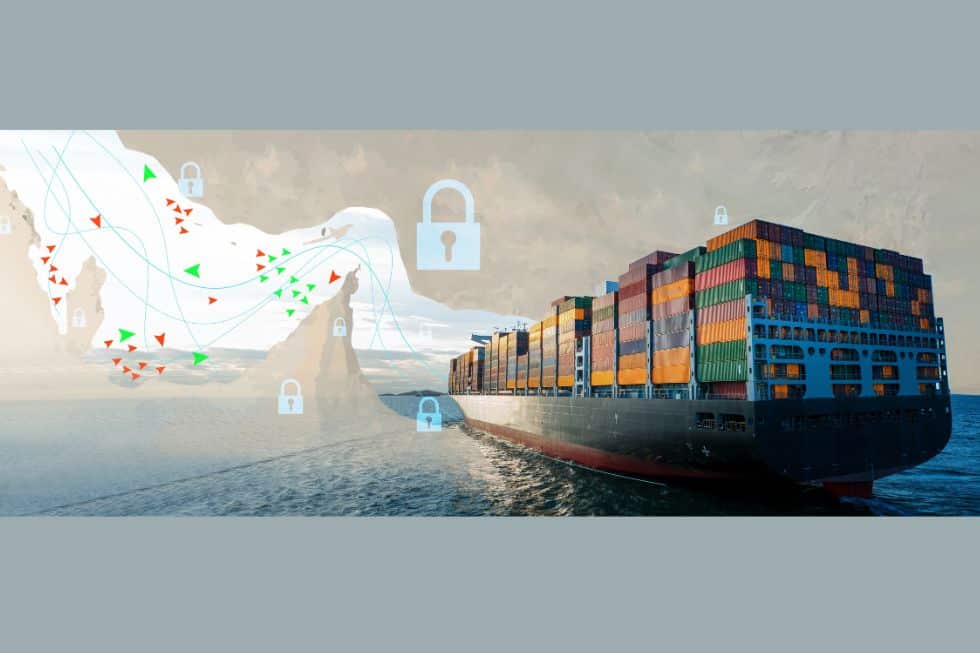



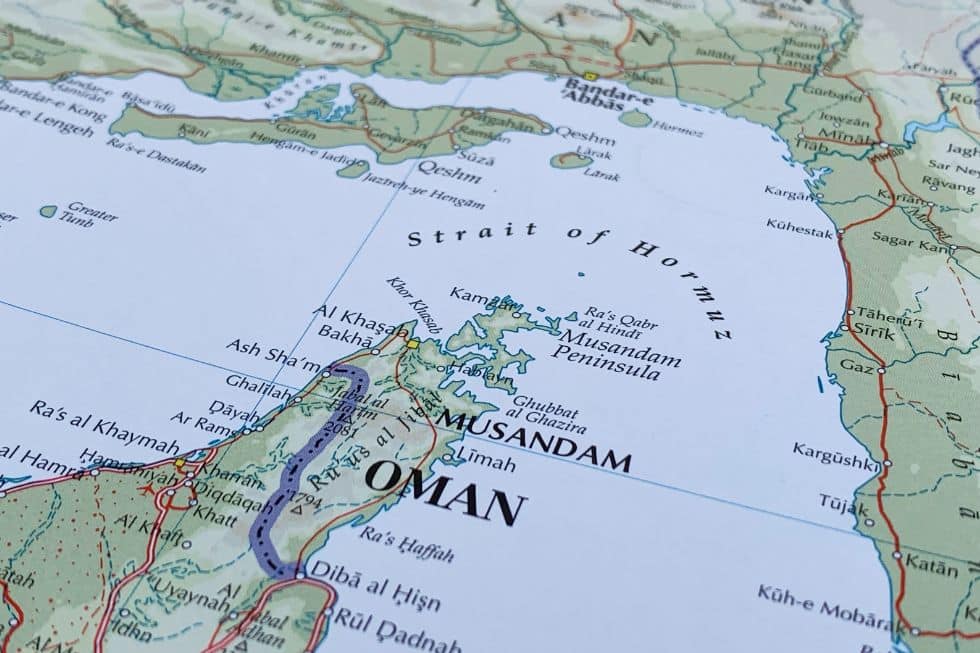
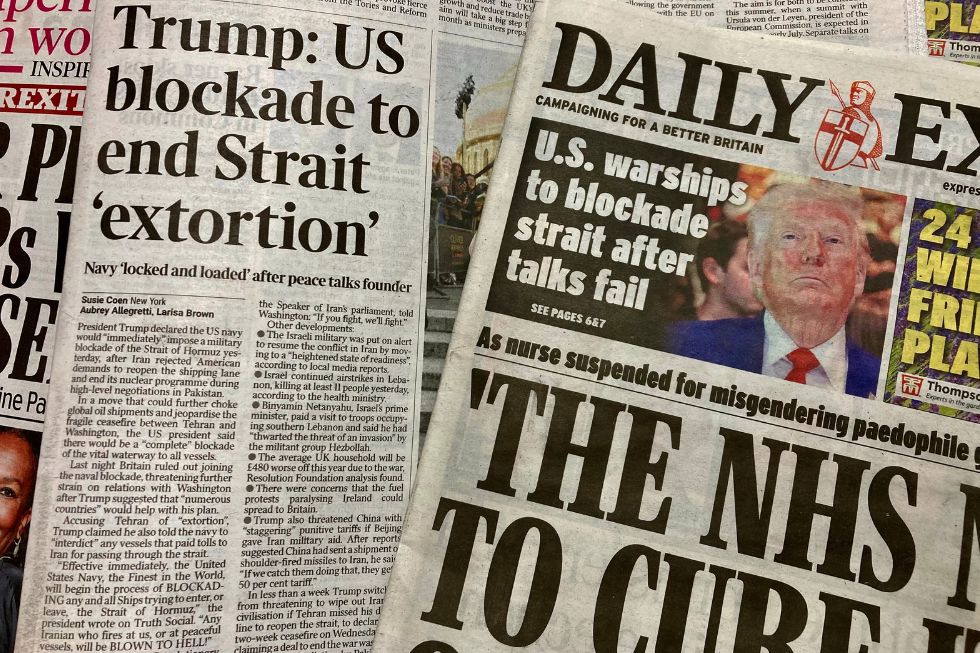
The recent war in the Gulf has caused a series of crises to fall into each other like dominoes. On March 2, Iran closed the Strait of Hormuz by declaring that it would attack any ship that transgressed the waterway. Then, on April 12, US President Donald Trump announced that the US would impose a naval blockade of the Strait of Hormuz despite Iran’s assurances that the Strait would reopen. However, the intended effects, timeline and implementation of the blockade remain vague. Because of Trump’s confusing policy, Iran has now closed the Strait yet again.
With the Trump administration still selling Operation Epic Fury as a triumph and evidence of decisive American power, the gap between performance and policy is impossible to miss. At the start of the war, the killing of Iran’s Supreme Leader Ali Khamenei was supposed, in the minds of its defenders, to shatter Tehran’s will. Instead, the assassination only hardened the regime’s posture. The leadership that emerged rejected de-escalation proposals, which meant compromise became harder to achieve. It sent the message that Washington acted with no regard for the consequences — which later came in the form of the closure of the Strait of Hormuz.
Iran’s closure of the Strait as a response to US actions and the subsequent race by Gulf importers to reroute food, medicines and factory supplies is more than a temporary logistics headache. It is a reminder that the region’s prosperity still rests on a narrow maritime doorway that can turn into a trap after one misstep in US overseas policy.
Trump is therefore stuck in the worst possible position. If he pushes harder, as he seems to be doing with the recent blockade, the costs rise fast. If he backs away, the failure is obvious. He cannot claim easy success because the Strait remains contested, the casualties keep rising and the market shock keeps spreading. This is what a rock in front and a ditch behind really looks like in foreign policy. It looks less like strength than like a leader who now hopes volume can pass for strategy.
This is not clever brinkmanship. Trump started with slogans, and now the Gulf is boxed in by the consequences of US actions. If Trump wishes to solve the crisis, he cannot treat a war zone like a stage and a maritime chokepoint like a prop. The US must pivot to realistic policy and action before the effects of the Strait of Hormuz crisis on the Gulf are irreversible.
A US gamble puts the Gulf at risk
As Gulf oil producers scramble to bypass Hormuz, the old assumption that trade will always keep flowing looks badly shaken. That was always a fragile belief. The US Energy Information Administration (EIA) has long described the Strait of Hormuz as the world’s most important oil transit chokepoint. For years, Gulf economies enjoyed the efficiencies of concentration, fast ports, short sea links and lean inventories. Now they are learning that efficiency without backup is not strength, but exposure.
The costs are already visible. Oil prices have surged, American troop casualties are mounting and the death toll numbers in the thousands. The Financial Times reports that shipping in the region has turned into a kind of commercial wild west, with bookings suspended, cargo dropped at substitute ports and rates shooting higher. Meanwhile, oil prices have pushed above $108 a barrel during the latest escalation, and the pressure is even sharper in physical markets, where Oman-related crude grades have surged above $150 a barrel.
Shipping companies are making the same calculation in harsher terms. The commercial chaos is reinforced by Maersk’s own operational updates, which show surcharges, disruptions and a constant rewriting of schedules. Reuters reports that Maersk is redistributing vessel fuel and prioritizing critical cargo such as food and medicine. The International Energy Agency says the closure is also putting more than 4 million barrels a day of refining capacity at risk, which means this is no longer only about ships waiting offshore. It is about refineries filling up, downstream production losing outlets and the whole trade system becoming more brittle by the day.
What makes this crisis especially serious is that it is not confined to crude exports. Even humanitarian concerns are now entering the debate, with a senior United Nations official calling for food and medicine cargo to be allowed through. Once a trade route becomes a corridor for exceptions and emergency pleas, the illusion of normal commerce is already gone.
The Gulf’s problem is its reliance on the Strait
Anyone who bothered to read the EIA or its warning that Hormuz is the world’s most important oil transit chokepoint knew this crisis was always going to turn on the Strait. All that was needed was a bad security gamble on the part of the US, and suddenly, the Gulf infrastructure is easily overwhelmed. This points to the larger problem of the Gulf’s heavy reliance on the Strait.
Gulf officials often talk about the region’s world-class logistics, and there is truth in that. Jebel Ali connects to more than 150 ports worldwide, and the wider Gulf has spent decades building ports, free zones and storage facilities that many regions would envy. But scale is not the same as resilience. International Monetary Fund (IMF) work on Gulf Cooperation Council (GCC) resilience shows just how large the region’s trade exposure remains, while the United Nations Conference on Trade and Development (UNCTAD) continues to document how central Hormuz is to tanker, bulk and container traffic. My view is that the Gulf’s real mistake was not relying on trade. It was relying on a model that prized speed and concentration over redundancy. That model looked modern in calm times. In a crisis — such as the one Trump’s strongman efforts created — it looks dangerously thin.
The larger lesson goes beyond this week’s headlines. Reuters notes that the current energy shock is already pushing countries to rethink dependence on vulnerable fossil fuel routes. The Gulf should apply that same lesson to food, medicines and industrial inputs. It needs backup corridors through Oman and the Red Sea, deeper shared reserves, faster cross-border customs coordination and supply contracts that value reliability as much as price. The closure of Hormuz is exposing a development model that became very rich, very fast, and a little too confident that geography could be managed like an accounting line.
To the region’s credit, the search for alternatives has been immediate and practical. Saudi Red Sea exports are surging, which shows that bypass routes can soften the blow when the Gulf route is blocked. The kingdom is not improvising from nothing, because Aramco’s annual reporting makes clear that the East–West pipeline was built to give Saudi Arabia export flexibility.
The same logic is now spreading into the non-oil trade. Emirates Global Aluminum is moving exports and raw materials through Oman, a striking example of how companies are trying to stitch together land and sea corridors on the fly. These are sensible moves, but they also expose a deeper problem. A system that depends on emergency rerouting every time a single chokepoint is hit is not resilient, merely adaptive under stress. That shouldn’t be a long-term solution.
This matters more in the Gulf than in many other regions because import dependence is so deep. An IMF study notes that GCC countries import about 85% of the food they consume. When a place relies this heavily on imported essentials, every delay becomes political, every detour becomes expensive and every freight decision starts to look like a national security issue.
What infrastructure issues reveal about US policy
Failure to overcome such an infrastructure issue doesn’t just point to a strategic shortcoming on the part of the Gulf. It also points to the US’s security and policy shortcomings. That is not the message of strength Trump wanted to send. Now his actions read as reckless. Trump has also sent mixed messages, hinting at winding down one day and fresh coercion the next.
A more stubborn regime in Tehran can read that confusion as clearly as anyone else can, and it is acting accordingly. First, Tehran responded to the US’s actions in the Gulf by saying it can completely close the Strait, while also saying it had already begun limiting access by enemy-linked ships. Then, after Trump delivered a 48-hour ultimatum, Tehran issued threats against Gulf energy and water systems. Finally, when Trump declared a US blockade of the Strait, he also said Iran promised to keep the Strait open indefinitely. Iran disputed this, saying there was no new agreement, and promptly closed the Strait once again.
That is why Trump’s insistence that Hormuz must simply be opened on his command sounds childish, not presidential. A president cannot order a chokepoint open the way a hotel boss demands a door be unlocked. A president must understand that naval access, insurance, shipping confidence, allied cooperation and retaliation all matter. Trump acts like he forgot every one of those facts, and now it seems that forgetfulness is driving US policy.
The US must act reasonably, rationally and realistically
Even worse for Trump, US allies still do not want to be a part of Trump’s war. That is the part he either forgot or never understood — this is a war of choice. The countries he has called upon are restrained by legal limits, political limits, public pressure and their own judgment about whether this war was launched wisely. Trump’s actions paint the picture that he believes America can always bark orders and others will fall in line. But allies are not props either.
As for Pete Hegseth, the Pentagon biography page and the department’s own office page no longer even call him Secretary of Defense. They call him Secretary of War. Fine. Then let us speak plainly about war. Hegseth does not look like an independent steward of military judgment. He looks like Trump’s facilitator, the man who helps convert presidential impulse into operational momentum.
Trump should stop talking magic. The situation now goes beyond the slogans. If Washington insists on reopening Hormuz on American terms, there may be no remaining path except military force, and even that would not be clean, quick or cheap. As the global energy system remains hostage to Hormuz, any serious effort to force open the passage would be costly in lives and regional stability.
Yet the opposite path also carries a brutal political truth for Trump. If he does not reopen it, his failure is plain. If he does reopen it by force, the price will expose how careless he was to stumble into this position in the first place. That is not victory. That is an expensive confession.
A president serious about changing the balance of power in the Gulf would have immediately considered geography, shipping, escalation risk and allied limits. Trump started with slogans, and now the Gulf is boxed in by the realities he believed he could talk away.
[Cheyenne Torres edited this piece.]
The views expressed in this article are the author’s own and do not necessarily reflect Fair Observer’s editorial policy.





Join the conversation
Share your perspective
Log in to share your thoughts and take part in the discussion.