





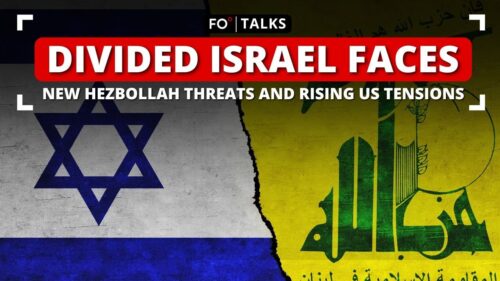
Hezbollah, the Iran-backed Lebanese militia, has suffered its worst week in its 40-year history. Hezbollah boasts a vast arsenal of rockets and increasingly accurate precision-guided missiles, and tens of thousands of fighters.
Although they belong to different sects of Islam, Hezbollah has solidarity with fellow-Iranian-backed Islamist militant group Hamas. In the wake of the October 7, 2023, Hamas attacks on Israel and the subsequent Israeli invasion of Gaza, Hezbollah has targeted Israel with rocket strikes. They succeeded in displacing 60,000 Israelis from their homes. Since Israel is small and much of it is uninhabitable desert, this interdiction of a significant part of the north is a serious threat.
On September 17 and 18, Israel upped the ante and conducted a stunning operation blowing up thousands of pagers and walkie-talkies used by Hezbollah. At least 37 people died and thousands were wounded. One of the wounded was the Iranian ambassador to Lebanon. When Hezbollah called a clandestine meeting of 15 elite officers on September 21, an Israeli air strike killed off all of them.
The attacks demonstrated just how pervasive Israeli intelligence’s penetration into Hezbollah’s command control and communications is. Israel appears to have disrupted Hezbollah’s ability to coordinate itself. The militant group has so far failed to mount an effective response. Hezbollah operatives have launched many missiles, but they’ve been uniformly unable to penetrate Israel’s Iron Dome air defense system.
The devastating strike has called into question Hezbollah’s legitimacy as the most powerful force in Lebanon. Will Hezbollah risk total destruction by fighting a full-scale war with Israel, or will they decide to take the strikes on the chin?
What is the way forward for Jerusalem?
The Israeli strikes were a historic tactical victory. But will Israel achieve strategic victory? The present situation recalls Israel’s devastating 1982 air assault on the Palestine Liberation Organization (PLO), then based in southern Lebanon. Israel succeeded in demolishing the PLO. But, in so doing, it created a power vacuum within a destabilized Lebanon that enabled Hezbollah to rise to dominance. Israel had replaced one Islamist group with another more radical one.
If history repeats itself, Jerusalem may not want to see what replaces Hezbollah. There is no telling what that would look like, but a post-Hezbollah Lebanese militia would likely be less technologically sophisticated and thus harder to infiltrate, as well as more desperate and thus potentially willing to use chemical weapons.
For Iran, the strikes are a wake-up call. Hezbollah was Iran’s insurance against Israel — the constant threat on Israel’s northern border deterred the Jewish state from being too aggressive against Iran. Now, Israel has shown this safety to be illusory and demonstrated that it is willing and able to kill Iranian leaders wherever they are, including in Iran itself.
If a hot war between Israel and Iran broke out, the Islamic Republic, which is already tottering due to internal strife, would probably topple. Still, victory might prove to be Pyrrhic for Israel. Since the start of its current engagement with Hamas, Israel has already seen its economy shrink by 20%. A larger war might leave Israel alive but just barely, impoverished and dependent on foreign protection.
[Anton Schauble edited this piece.]
The views expressed in this article/video are the author’s own and do not necessarily reflect Fair Observer’s editorial policy.



































Comment