


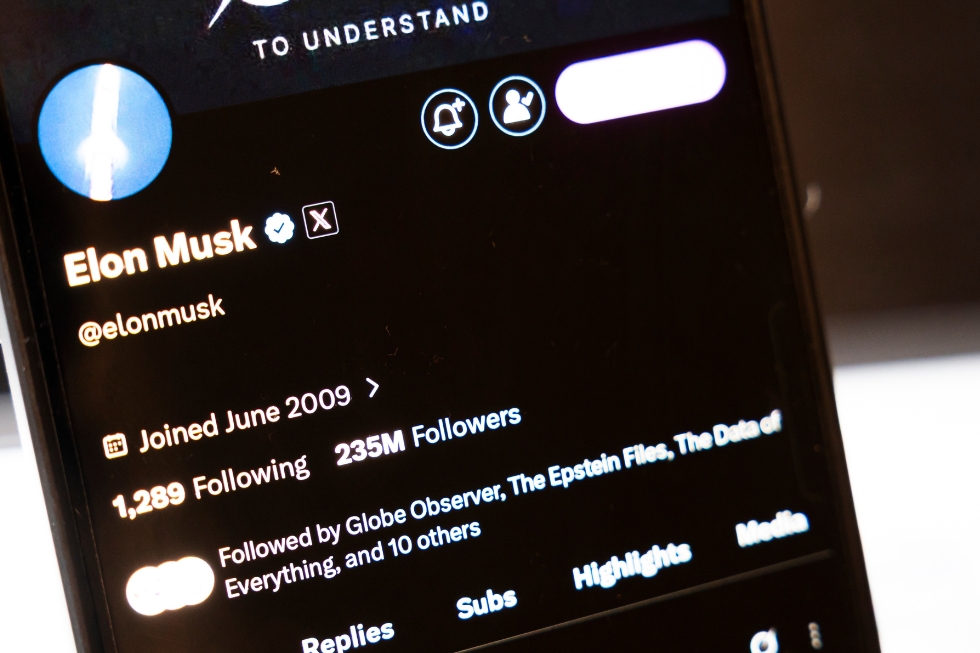



There’s a version of this story that gets told as celebrity gossip. Baby mama drama. Rich man, young woman, texts leaked on stream. That version is easier to dismiss, and the people it implicates are counting on you to dismiss it.
But American political commentator Ashley St. Clair is not simply a woman scorned. She was, until recently, a card-carrying member of the machine she’s now describing from the inside.
She’s 27 years old. A million followers on X. A former brand ambassador for Conservative activist Charlie Kirk’s Turning Point USA. An author of a children’s book attacking transgender acceptance. A fixture on Fox News, a presence at Mar-a-Lago. She knew the game because she was playing it. Then she got pregnant with the child of businessman and CEO Elon Musk, had the baby in secret and watched everything she thought she understood fall apart.
In February 2025, she went public. Since then, she has been talking. And talking. And talking. The Make America Great Again (MAGA) ecosystem would very much like her to stop.
The sordid saga of Elon and Ashley
St. Clair says the relationship began in direct messages (DMs) in May 2023. By her account, Musk was funny in private. Down to earth. Normal, even. Then she got pregnant, and something shifted. “No one’s going to believe me,” she said in one of her TikTok monologues, “but I swear he was so much more normal before I got pregnant. He just got so fucking weird, man.”
The weirdness she’s describing is partly personal, partly civilizational. She has said that during the 2024 campaign season, Musk would bring up, apparently out of nowhere, the future of human civilization, simulation theory and the nature of reality. According to St. Clair, this happened with a particular frequency after sex. Her account, more or less: He would finish, and then start talking about space lasers.
In one story that spread across the internet, she described a night when he told her he had ten thousand lasers in space ready to deploy and called it “an anomaly in the Matrix.” He then apparently suggested the piece he was describing shouldn’t even be on the proverbial chessboard. St. Clair says she told him to stop talking because she didn’t want to be deposed later.
A source close to Musk told outlets the comments were metaphorical and the allegations were inaccurate. Which is, of course, exactly what a source close to Elon Musk would say.
What makes the detail stick is not that it confirms some grand conspiracy. It’s that it sounds exactly like the man we’ve all been watching for the past several years. Nobody heard the space lasers story and thought, “that doesn’t track.” The reaction, almost universally, was something closer to resigned recognition. Of course that’s how he talks. Of course that’s what the richest man on earth sounds like in a post-coital haze with the woman carrying his child.
Who is Elon Musk really?
Elon Musk currently has 14 known children by four women: six with his ex-wife, Justine Wilson; three with the musician Grimes; four with Shivon Zilis, a Neuralink executive; and one with St. Clair. Fourteen. That we know of. The Zilis children were kept secret for months. The Wall Street Journal reported that Musk privately propositioned at least one other woman, crypto influencer Tiffany Fong, to have his child, with no prior romantic relationship between them. Nobody knows how many conversations like that have happened and simply never surfaced.
The ideological framework Musk offers for all of this is that the world faces an existential “underpopulation crisis.” When the secret Zilis twins were revealed in 2022, he responded on Twitter: “Doing my best to help the underpopulation crisis. A collapsing birth rate is the biggest danger civilization faces by far.” At a Wall Street Journal event, he told the room: “There are not enough people. I can’t emphasize this enough.” He reportedly told St. Clair he wanted a “legion” of children, and suggested surrogates would be needed to achieve that before, in his words, the apocalypse.
The UN, for the record, projects that the global population will continue to grow until at least 2080. The underpopulation crisis is not currently happening. This has not slowed Musk down.
What makes his rationale more troubling than simple eccentricity is what lies underneath it. Musk has repeatedly lamented that it’s specifically “smart people” who aren’t having enough children, which critics have called openly eugenicist. According to Musk biographer Walter Isaacson, Zilis “was persuaded by Musk to consider him as the donor” because of his “advocacy for procreation among the intellectually inclined.” He and Zilis reportedly used a genetic screening startup that claimed to select embryos for intelligence potential. The company insisted it wasn’t eugenics. Critics pointed out that selecting embryos for intelligence using proprietary algorithms is, by most reasonable definitions, exactly that.
His estranged daughter Vivian, who came out as transgender in June 2022 and legally severed all ties with her father, has called him a “pathetic man-child” and described him as cold, emotionally absent and unwilling to accept her identity. She called his supposed Nazi salute at US President Donald Trump’s 2025 inauguration celebration “definitely a Nazi salute” and characterized his politics as “fucking cringe.” Meghan McCain, the daughter of a former Republican presidential nominee and not exactly a left-wing firebrand herself, wrote a scathing op-ed about Musk’s “impregnate the planet mentality.”
Why is Musk like this?
Musk grew up in apartheid South Africa, under a system where the state violently enforced racial hierarchy. His relationship with his father Errol is deeply troubled; major reporting in recent years surfaced allegations against Errol involving sexual abuse of stepchildren, documenting a chaotic and harmful home environment by any measure. None of that is Elon Musk’s fault. But it is the psychological terrain from which his most persistent anxieties appear to grow.
Those anxieties have not stayed private. They have been broadcast to hundreds of millions of people from the platform he owns.
And to be fair to the original impulse, there was a real case for what Musk said he was doing when he bought Twitter in 2022. The previous ownership had suppressed the Hunter Biden laptop story in the weeks before a presidential election. The Twitter Files, released after the takeover, showed systematic back-channel coordination between government agencies and the platform’s content moderation teams to quietly throttle speech, including legitimate political speech. The grooming gangs scandal in the UK, one of the worst institutional failures of child protection in modern British history, had been sitting in plain sight for years while a media and political establishment paralyzed by accusations of racism looked the other way. Some of that buried reality did get louder after Musk took over.
The frustration that brought people to his side was not manufactured. Something had gone genuinely wrong with how powerful institutions handled information, and a lot of ordinary people knew it even when they couldn’t prove it. Musk gave that frustration a platform and a megaphone, and for a moment it felt like accountability.
Musk takes the mask off
On January 8, 2026, Musk reposted a message on X that claimed, “If White men become a minority, we will be slaughtered,” and added a hundred-points emoji, signaling apparent agreement. Civil rights advocates called it a ratification of white nationalist talking points tied to the great replacement conspiracy theory. In November 2023, he replied to another user’s claim that “Jewish communities push dialectical hatred against whites” with “You have said the actual truth,” an endorsement of an antisemitic conspiracy theory that drew condemnation from the Anti-Defamation League and prompted major advertisers to flee the platform. In 2025, he posted repeatedly about alleged genocide against white South Africans, framing it as media bias, and retweeted posts claiming Somali immigrants “have no right to be in America” and pro-immigrant nonprofits were committing “treason.”
These are not isolated communication missteps. They are a pattern.
To be clear, nobody serious is arguing that immigration requires no management. Unvetted, unregulated immigration does create real pressures on housing, public services, and social cohesion, and France, Germany, and the UK have all learned that the hard way. The problem is not that Musk noticed immigration was a legitimate policy issue. The problem is where he went from there: from reasonable concern straight into great replacement theory, white genocide panic, and wild rants about white men being slaughtered.
A Guardian investigation into Grokipedia, the AI encyclopedia launched by Musk’s xAI in October 2025, found that the site’s entries lionized white-supremacist and segregationist regimes including Rhodesia, framing them in terms of “effective resource management.” Rhodesia’s flag has been adopted by white supremacists in the US and Europe precisely because it symbolizes a society built on racial hierarchy and minority rule by force. The entries sanitized historical oppression and helped normalize extremist viewpoints by simply ignoring mainstream historical scholarship. This is the AI product of the man who owns the world’s most influential public square.
Major media outlets have also reported on Musk’s acknowledged use of ketamine, a drug known for causing severely dissociative states. Former associates and multiple journalists have raised concerns about how that habit intersects with his judgment and his impulsive posting behavior. Musk denies misuse.
His fixation on population decline, his repeated engagement with white genocide narratives, his eugenicist reproductive philosophy, his post-coital space laser monologues: taken individually, any one of these could be written off as the eccentricity of a very rich and very online man. Taken together, they describe something more coherent and more alarming: a worldview. One that now has the power to shape elections, amplify extremists, and determine what two hundred million people see when they open their phones in the morning.
The richest man on earth refuses to pay child support
After St. Clair went public, Musk posted on X that he wasn’t sure if the child was his. He claimed he had already given her $2.5 million and was paying $500,000 a year. St. Clair fired back that he had refused a paternity test she’d requested before their son Romulus was even born, and that he’d cut her payments by 60% as punishment for what he characterized as “disobedience.” She sold the Tesla he’d gifted her. She said she started a podcast to avoid eviction.
Meanwhile, Grok, the AI chatbot running on Musk’s own platform, was generating sexually explicit images of her and circulating them to her harassers, some based on photos taken when she was underage. She sued xAI. xAI countersued, arguing she’d filed in the wrong jurisdiction. The machine she helped build, the platform she promoted and the man she’d defended as a free speech warrior all turned on her with the particular efficiency of a system optimized to punish former apparatchiks who step out of line.
Far-right political streamer and Trump associate Laura Loomer publicly called her an unfit mother and urged Musk to seek full custody after St. Clair appeared on a Twitch stream with left-wing streamer Hasan Piker. On that stream, St. Clair pulled out her phone and showed Piker text messages from the richest man in the world. He read them aloud. They both laughed.
St. Clair’s revelations
St. Clair has spent months describing, in near-daily TikTok videos, what she calls the hidden machinery behind online conservative politics. She claims that the movement is not a grassroots phenomenon. She alleges that top MAGA personalities portrayed as organic voices are “mercenaries of the attention economy.”
She describes multiple group chats where talking points are distributed, and says these chats often include Trump administration officials. You can see it without her confirmation. Following the presidential assassination attempt at the White House Correspondents’ Dinner, a whole lineup of right-wing influencer accounts, including Jack Posobiec, Chaya Raichik of Libs of TikTok, Nick Adams and Mike Cernovich, all tweeted about the necessity of building Trump’s pet project, the White House ballroom, with the same tone, within hours of each other. The coordination is barely hidden. St. Clair simply names what everyone watching already suspected.
Musk’s role as platform owner matters most in this context. X was once a tool that helped people organize, challenge authoritarian censorship and expose abuses of power. That capacity still technically exists. But the same architecture now amplifies paranoia, resentment and racial fear. When the most powerful user on the platform repeatedly signals approval of extremist talking points, it doesn’t just affect online discourse. It trains the algorithm. What was fringe becomes mainstream. What was hyperbolic becomes acceptable. Free speech is a principle. Free amplification of dangerous ideas by a billionaire who owns the microphone is something very different.
St. Clair has also gone after specific individuals. Her sharpest allegations involve Benny Johnson, one of the movement’s most prolific content creators, whom she accuses of workplace harassment, not paying his staff and coordinated political messaging with questionable money trails. She says she stayed quiet for years, and that what broke her silence was Johnson joining the online pile-on against her child.
Her critics would say she has obvious motives. She’s in a custody fight. She’s broke. She has every incentive to burn things down. They’re not entirely wrong. But the fact that someone has a motive to tell the truth does not make the truth less true.
The real tragedy
Ashley St. Clair used to be a true believer. She was not a cynical operator from the start. She was a young woman from inside conservative culture who thought she was part of a genuine political movement, who idolized Musk as a free-speech warrior, who took selfies at Mar-a-Lago and felt like she was on the right side of something. She says she only started reading about the history of slavery in her late 20s, and that it changed how she understood things. She apologized for her anti-trans activism. That apology triggered Musk’s custody application and the MAGA pile-on. The machine doesn’t tolerate apostasy. It can’t afford to.
St. Clair actually exposes something more mundane and in some ways more alarming than a secret cabal: a political ecosystem held together entirely by incentives, fear and money. People post because they’re paid. People stay silent because they’re afraid. People perform outrage because the algorithm rewards it, the donors fund it, the administration coordinates it and the man who owns the platform amplifies it.
The funniest thing about all of this is that nobody is particularly shocked. The space lasers land as a punchline, not a revelation. The white nationalist reposts barely make a news cycle anymore. Benny Johnson running a toxic operation? Sure, fine. The influencers being paid to coordinate? Obviously. Of course. We knew.
The tragedy is not that Elon Musk is broken. Lots of people are broken. The tragedy is that this particular broken person bought the public square, and the rest of us are still living in it.
[Rita Roberts edited this piece.]
The views expressed in this article are the author’s own and do not necessarily reflect Fair Observer’s editorial policy.
Palantir and the Techno-Oligarchs: Honeyed Reason, or Crushing Hegemony?
Western democracies have entered a period dominated by techno-oligarchs, e.g., Elon Musk (Tesla, SpaceX, Starlink, X-Corp and xAI), Peter Thiel...

Are We Building the Infrastructure of Unfreedom?
As America celebrates 250 years of democracy, an uncomfortable question emerges: Are Western governments, through private actors like Palantir, constructing...
Paid in Mars: How the SpaceX IPO Engineers Away Accountability
SpaceX’s massive initial public offering (IPO) is not a marker of company success, but rather indicative of an eroding market....

Support Fair Observer
We rely on your support for our independence, diversity and quality.
For more than 10 years, Fair Observer has been free, fair and independent. No billionaire owns us, no advertisers control us. We are a reader-supported nonprofit. Unlike many other publications, we keep our content free for readers regardless of where they live or whether they can afford to pay. We have no paywalls and no ads.
In the post-truth era of fake news, echo chambers and filter bubbles, we publish a plurality of perspectives from around the world. Anyone can publish with us, but everyone goes through a rigorous editorial process. So, you get fact-checked, well-reasoned content instead of noise.
We publish 3,000+ voices from 90+ countries. We also conduct education and training programs
on subjects ranging from digital media and journalism to writing and critical thinking. This
doesn’t come cheap. Servers, editors, trainers and web developers cost
money.
Please consider supporting us on a regular basis as a recurring donor or a
sustaining member.
Will you support FO’s journalism?
We rely on your support for our independence, diversity and quality.





Comment