





Mediation between great powers is not something a country stumbles into. It requires a specific combination of access, credibility and restraint that is delicate and takes years to build. Pakistan built that combination without anyone in the international community noticing until the moment it mattered.
The US–Iran war disrupted roughly a fifth of the world’s oil supplies and killed more than 2,000 people in Iran within five weeks. When the war began on February 28, 2026, Pakistan was not on anyone’s shortlist of likely peacemakers. Amid rising oil prices, it was facing a near-bankrupt economy and imposed sweeping austerity measures such as school closures and a four-day workweek to conserve energy.
Its economic and political landscape was fragile, yet when Washington and Tehran needed a channel they could both trust, Pakistan was the one that answered. Understanding why Pakistan emerged as the key mediator in the US–Iran war requires looking at what Pakistan actually is, not what the foreign policy commentary has typically assumed it to be.
A structural position nobody else held
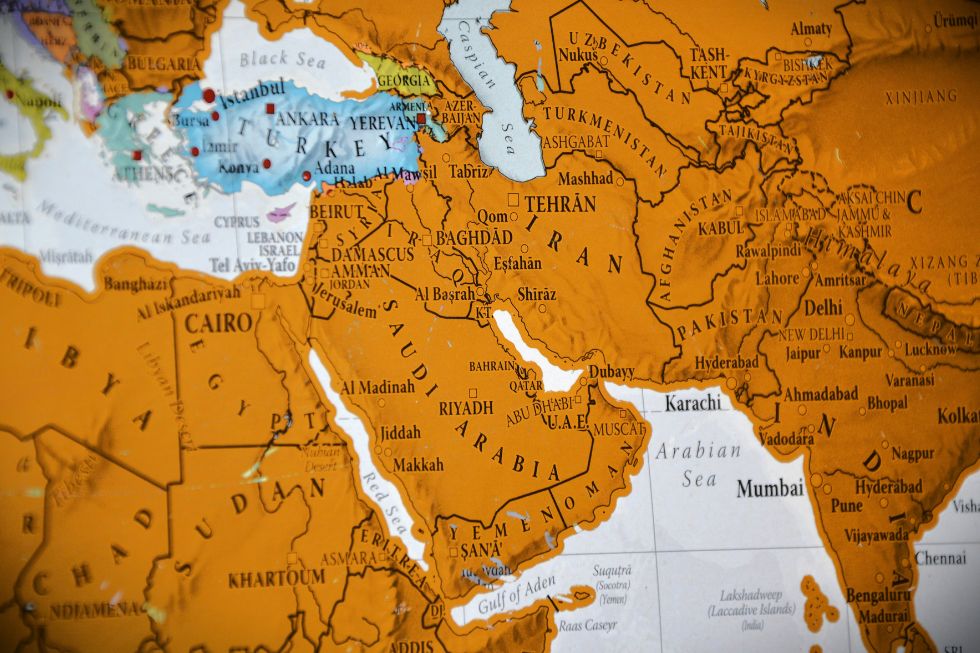
Located near significant global powers like India, China, the Gulf States and Iran, Pakistan’s geography is a strategic advantage. Despite being an American partner in the region, it hosts no US military bases and avoided being targeted by Iran during the conflict. That fact was diplomatically decisive as Iran needed a venue and an interlocutor that did not carry the stain of American military infrastructure on its soil. The absence of US bases in Pakistan provided Islamabad — the capital city of Pakistan — with credibility in Iranian eyes, while its designation as a Major Non-NATO Ally of the United States since 2004 kept it trusted in Washington.
Additionally, Pakistan’s relationship with the largest religious sects in Islam is structurally important. Despite Pakistan’s population being majority Sunni, they have the second-largest Shia Muslim population in the world after Iran. This provided Pakistan with a sectarian adjacency to Tehran that most Muslim states cannot emulate.
This proximity was shown in the nationwide protests at the start of the war following the assassination of Iran’s Supreme Leader Ayatollah Ali Khamenei. The civilian-led protests resulted in 22 deaths in Pakistan, including 10 outside the US Consulate in Karachi, as security forces fired at the crowd. Pakistan has powerful domestic reasons to want the war to end, and that motivation made it a more credible mediator.
A prolonged US–Iran war is likely to further destabilize Pakistan’s economy and domestic security environment; Pakistan had to utilize its geographic and theological proximity to broker peace for its own relief. Iran and the US accepted Pakistan in this role because the traditional alternatives were unsuitable. Iran would not accept India as it is diplomatically proximate to Israel. Türkiye and Egypt lacked the strategic religious alignment Pakistan enjoyed. China was not an ideal mediator due to its competitive involvement with the US. Lastly, Gulf countries, especially Qatar, had their regional alignment held against them.
Building the relationship with Washington
The personal rapport between Pakistan and US President Donald Trump did not materialize out of nowhere. Pakistan formally nominated Trump for the Nobel Peace Prize following the May 2025 India–Pakistan ceasefire. Trump publicly claimed credit for brokering the deal, and Pakistan acknowledged that claim while India rejected it. That sequence of events gave Pakistan legitimacy in the eyes of the US, accrediting its role as a rising geopolitical power.
In June 2025, Trump himself acknowledged Pakistan’s ties with Iran, stating that Pakistanis “know Iran very well,” after hosting Pakistan’s military chief, Field Marshal Asim Munir, for an unprecedented lunch. Trump made the operational assessment that Pakistan’s knowledge of Iran was the asset Washington needed.
In early April 2026, Trump posted on social media that “a whole civilization will die tonight.” This ultimatum sparked panic as the US President wagered the lives of many for the Iranian government to submit to his terms and reopen the Strait of Hormuz. His post came after rejecting a ceasefire proposal from Pakistan’s diplomats, and the threat of collective punishment concerned the official mediators.
A day before Trump’s ultimatum deadline to Iran expired, Munir personally made “a flurry of calls” to US leaders. On the night of April 7, Trump announced on Truth Social that he had agreed to a two-week ceasefire based on those conversations. Pakistan’s Prime Minister Shehbaz Sharif and Munir had requested that the US “hold off the destructive force” that he warned of in his post. At that time, Iranian Foreign Minister Abbas Araghchi confirmed the ceasefire, thanking both men for their “tireless efforts.”
What mediation actually looked like
The Islamabad Talks of April 11–12, 2026, marked the highest level of direct engagement between Washington and Tehran since 1979. They ended without a final agreement. What followed was weeks of sustained, unglamorous shuttle diplomacy that received little coverage. Immediately after the first round of talks, Sharif flew to the capital cities of Saudi Arabia, Qatar and Türkiye while Munir spent three days in Tehran mediating with Iranian leadership.
That division of labor is worth noting, and mediation between the US and Iran was not a single man’s achievement. Analysts cautioned against overstating the personal dimension, noting the talks were the result of “institutional alignment” between the country’s civil and military leadership. They also note the sustained engagement with Washington over the past year has significantly contributed to institutionalizing power in Pakistan.
The process eventually produced an agreement in June 2026. Sharif told the National Assembly that Munir “was awake all day and night” throughout the negotiations, and that without his persistence, “the dream of peace” would not have survived.
An honest assessment
Islamabad was meant to mediate and facilitate between world powers. Severe distrust remains between the parties, and negotiations are contingent upon sensitive regional flashpoints like Lebanon and the Strait of Hormuz.
Domestic costs to Pakistan during this war are rarely featured in media coverage as well. The country relies on Gulf states for more than 85% of its oil and liquefied natural gas supplies. Playing mediator between Iran and those same Gulf states was not a cost-free exercise. Pakistan absorbed domestic protest, sectarian tension, economic strain and diplomatic risk simultaneously.
What the record shows is a country that converted a specific, narrow structural position into a sustained diplomatic effort under genuine pressure. Pakistan’s involvement is thought to become a lasting component of the emerging regional order. Whether that proves true depends on what Pakistan does next, but Islamabad earned the biggest achievement of June 2026 — securing a signed agreement between Washington and Tehran after more than 100 days of war.
[Aliyah A. Omar edited this piece.]
The views expressed in this article are the author’s own and do not necessarily reflect Fair Observer’s editorial policy.
The Internet as a Tool of Wartime Governance in Iran
Iran has begun gradually restoring online access after the state imposed an 88-day internet blackout. However, Iran’s case raises questions...
FO Talks: Iran Won, the US and Israel Lost
In this episode of FO Talks, Atul Singh and Josef Olmert examine the ceasefire between the United States, Israel and...
Will Iran be Europe’s Zeitenwende?
Europe’s reluctance to engage in the Iran War is becoming increasingly untenable as the conflict disrupts energy supplies, fuels inflation...
The Disruptive Iran War, Limits of Western Power and Moral Costs of Grotesque Imperialist Wars
Western imperialism persists through economic sanctions, military interventions and control over global resources, as seen in Venezuela and Iran. Nations...
Support Fair Observer
We rely on your support for our independence, diversity and quality.
For more than 10 years, Fair Observer has been free, fair and independent. No billionaire owns us, no advertisers control us. We are a reader-supported nonprofit. Unlike many other publications, we keep our content free for readers regardless of where they live or whether they can afford to pay. We have no paywalls and no ads.
In the post-truth era of fake news, echo chambers and filter bubbles, we publish a plurality of perspectives from around the world. Anyone can publish with us, but everyone goes through a rigorous editorial process. So, you get fact-checked, well-reasoned content instead of noise.
We publish 3,000+ voices from 90+ countries. We also conduct education and training programs
on subjects ranging from digital media and journalism to writing and critical thinking. This
doesn’t come cheap. Servers, editors, trainers and web developers cost
money.
Please consider supporting us on a regular basis as a recurring donor or a
sustaining member.
Will you support FO’s journalism?
We rely on your support for our independence, diversity and quality.





Comment