


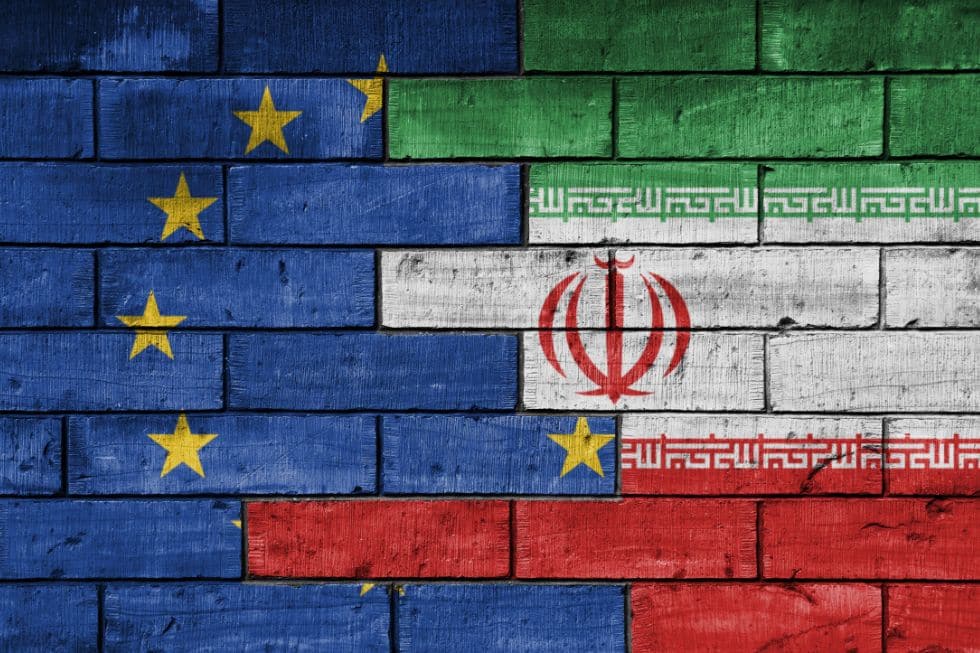




As the war in Iran enters its third month, US–Iran negotiations remain under pressure amid a fragile ceasefire that has been violated several times, while the blockade of the Strait of Hormuz continues to strain global energy flows. Europe, meanwhile, has faced mounting domestic pressures and tests to its relationship with the US. With the prospect of renewed US military action to reopen the Strait, the window of opportunity remains open for the continent to assume a more active role in managing the crisis.
The onset of Operation Epic Fury caught European leaders off guard. Unlike past foreign interventions, the US did not present a clearly articulated and coherent casus belli (an event or action that justifies or allegedly justifies a war or conflict) to its domestic audience, nor did it seek to win the buy-in of its Western allies before initiating hostilities. Instead, the fluidity of Washington’s justification of its war, ranging from stopping Iran from developing nuclear weapons to regime change, to feeling the need to precipitate a unilateral Israeli action, stood in contrast with the concreteness of the hard choices confronting Europe.
While Washington workshopped explanations for the war, Europe struggled to formulate a unified response to meet the moment. This initial hesitation gave way to a disjointed set of positions, with some European governments aligning with the US while others questioned the legality of US–Israeli strikes. Spain, eager not to relive the public backlash that followed its involvement in Iraq, denied the use of jointly-operated military bases in its territory, setting up a clash with US President Donald Trump. Europe’s scattered posture reflects the challenge of walking a fine line between appeasing the US, its main partner, and becoming a scapegoat for an unpopular war.
Facing difficulties in resolving the war on its own, President Trump called for allies to deploy warships alongside the US Navy to help open the Strait of Hormuz. While France demonstrated a resolve to protect its interests by sending an aircraft carrier group to the region, there has been a general reluctance among Europeans to engage militarily. Adding this to the decision of some European countries to close their airspace or prohibit the use of jointly operated bases has fueled Make America Great Again’s (MAGA) long-standing portrayal of Europeans as free-riders, unwilling to stick their necks out to protect shared interests. Though criticism of NATO from the White House is nothing new, comments made by Secretary of State Marco Rubio questioning the alliance’s value are an unmissable signal.
Security squeeze
Despite their reluctance to get involved, the security and economic spillovers of the conflict have become too significant for Europe to confine itself to rhetoric. What began as a joint US–Israeli aerial campaign meant to last a few days against the Iranian nuclear program, missile capabilities and leadership has devolved into a regional conflict with global implications, grinding on into its third month. Whether or not Europe agrees with the US rationale, the breadth of the war’s impact makes detachment untenable, compelling Europe to stand up for its fundamental values.
Europe has often justified its distance in the conflict by arguing that “this is not our war.” However, within days of the US–Israeli strikes, Iranian drones were launched at a UK Royal Air Force base in Cyprus, and NATO intercepted missiles over Turkey.
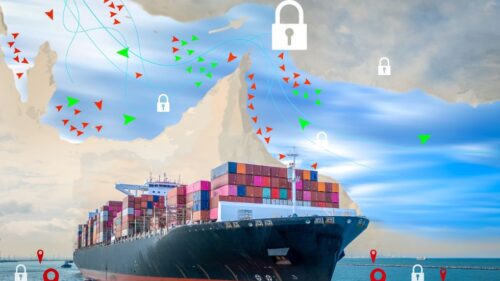
Tehran’s decision to close the Strait of Hormuz to commercial shipping has exposed Europe’s dependence on both energy and fertilizer imports. The EU had taken steps to wean itself off Russian oil and gas in the aftermath of the 2022 Russian invasion of Ukraine. That progress is now under threat, with rising energy prices causing inflation and fuel shortages across various industries. With the spring planting season already underway, European farmers are struggling to access the fertilizer they need at an affordable cost, threatening to drive up food prices.
While the energy squeeze constitutes a problem for Europe, it has proved a boon for Russia. Moscow is seeing fossil fuel revenues jump to a two-year high, which could serve as a counterweight to Ukraine’s intensifying campaign on Russia’s oil export infrastructure. The Trump Administration’s decision to lift and then extend a sanctions waiver until May 16 also contributed to Europe’s woes. Given a pass by the US, Russia’s President Vladimir Putin might be increasingly insulated from economic pressure, while European leaders face growing discontent in their electorates.
Turning with the times
These developments underscore how difficult it has become for Europe to insulate itself from the wider repercussions of the conflict. Furthermore, these should serve as a wake-up call to Europe and NATO that blind faith in America can no longer be placed.
The Trump Administration’s whiplash policy on Ukraine, Greenland, and now Iran is not a one-off incident, but rather evidence of a broader pattern in which Washington is steadily eroding its credibility on the global stage. Although disagreement between the transatlantic allies is to be expected, Europe cannot allow itself to be cowed into joining costly fights because one ally, no matter how important, has made a decision unilaterally.
Instead, European leaders ought to engage in the war on their own terms, with a unified voice that signals strength. They should continue to resist alignment with the US’ military-first approach. After the White House admonished the UK for being slow to offer help, Europe may find it more palatable to engage the issue on its own terms.
Europe’s extensive network of military bases and logistics centers, which facilitates US operations in the Middle East, provides the continent with leverage that should be used to prevent further escalation of the war. Europeans ought to strive to push for an end to the conflict; the sooner stability in the Strait is restored, the sooner pressure can be directed toward constraining Russia, while allowing the US to redirect military technology and capabilities back toward Ukraine.
Europe can monitor activity in the Strait to ensure freedom of navigation and safe transit. To that end, the UK and France announced on April 17 that they will be spearheading a mission similar to the coalition of the willing to secure maritime trade routes in the Strait of Hormuz. European Commission President Ursula von der Leyen has signaled readiness to team up with Gulf countries to create alternative energy export routes. Together, these moves represent a constructive step forward supporting the principle of freedom of navigation and improving energy security.
Stop start
With Washington and Tehran still miles apart in stop-start peace negotiations, Europeans could offer to support negotiations. While America today is not the ally they remember, Ursula von der Leyen emphasized that Europe must accept the world as it is: “The idea that we can simply retrench and withdraw from this chaotic world is simply a fallacy.” Only with a coordinated effort to advance a diplomatic resolution and restore safe navigation does Europe have the chance to prove that the continent can stand as an equal partner.
The Iran war may not have begun as Europe’s war, but its consequences have become Europe’s problem. The Iran crisis is sapping Europe’s resources and political capital and drawing its attention away from the Russian threat in Ukraine. Europe should seek to drive a wedge between Iran and Russia, isolating the latter. Expediting the peaceful resolution to the standoff in the Strait of Hormuz is the best action Europe can take today.
[Zahra Zaman edited this piece]
The views expressed in this article are the author’s own and do not necessarily reflect Fair Observer’s editorial policy.
FO Talks: The Iran War Could Crash the Global Economy, Here’s How
In this episode of FO Talks, Atul Singh and Manu Sharma examine how the Iran war is triggering a global...
The Value of the US “Foreign Policy of Restraint” in the World
As the Trump administration continues to pivot away from its campaign promise of no new wars, it is worth looking...
After the Ceasefire: Power, Limits and the Future of Global Order
The Iran war will shape global politics, exposing limits of military power while disrupting energy flows and security dynamics. The...
The Iran War Is a Reminder: Decarbonize Fast, But Do Not Gamble with Energy Security
The Iran war has disrupted global energy markets by targeting key infrastructure and closing the Strait of Hormuz, a vital...
The Disruptive Iran War, Limits of Western Power and Moral Costs of Grotesque Imperialist Wars
Western imperialism persists through economic sanctions, military interventions and control over global resources, as seen in Venezuela and Iran. Nations...
Support Fair Observer
We rely on your support for our independence, diversity and quality.
For more than 10 years, Fair Observer has been free, fair and independent. No billionaire owns us, no advertisers control us. We are a reader-supported nonprofit. Unlike many other publications, we keep our content free for readers regardless of where they live or whether they can afford to pay. We have no paywalls and no ads.
In the post-truth era of fake news, echo chambers and filter bubbles, we publish a plurality of perspectives from around the world. Anyone can publish with us, but everyone goes through a rigorous editorial process. So, you get fact-checked, well-reasoned content instead of noise.
We publish 3,000+ voices from 90+ countries. We also conduct education and training programs
on subjects ranging from digital media and journalism to writing and critical thinking. This
doesn’t come cheap. Servers, editors, trainers and web developers cost
money.
Please consider supporting us on a regular basis as a recurring donor or a
sustaining member.
Will you support FO’s journalism?
We rely on your support for our independence, diversity and quality.





Comment