



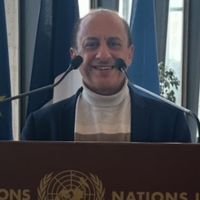

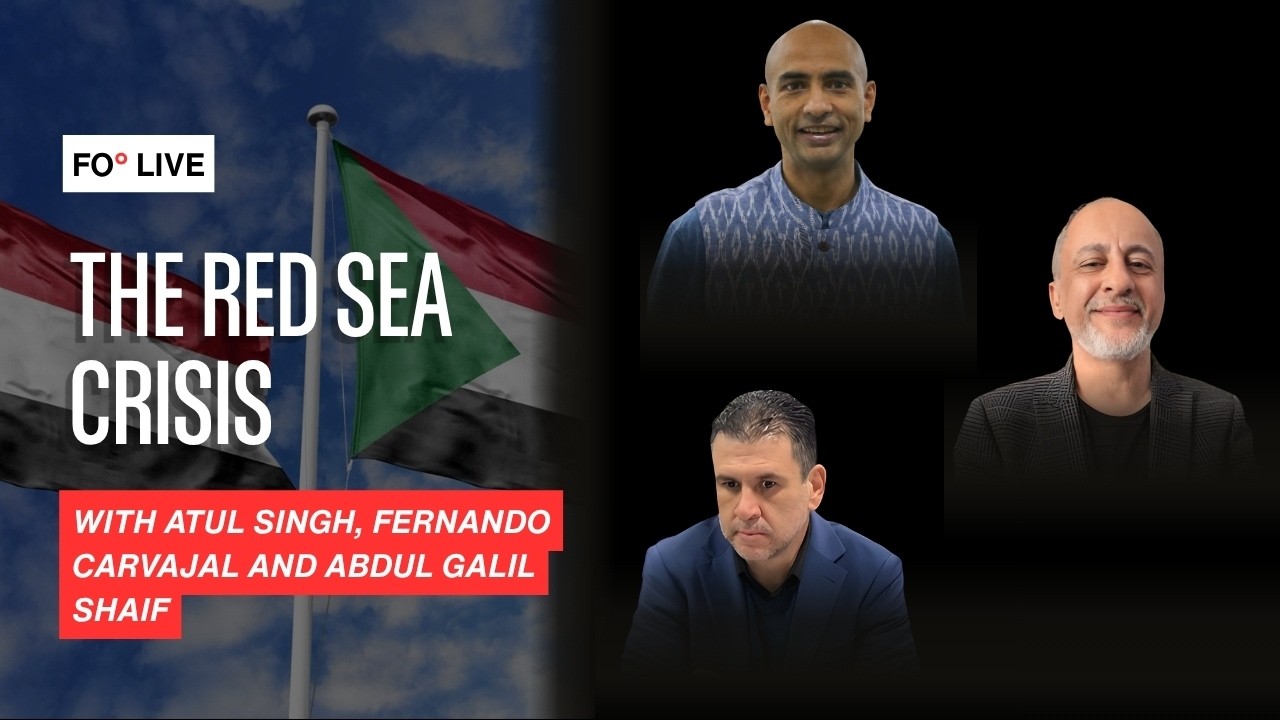
Editor-in-Chief Atul Singh speaks with Fernando Carvajal, the executive director at The American Center for South Yemen Studies, and former Aden Free Zone Chair Abdul Galil Shaif about Islamist extremism in Yemen and Sudan. They examine how armed and political factions obstruct dialogue, marginalize civil society and prolong conflicts on both sides of the Red Sea. They also preview a September 14 panel at the UK House of Commons, cohosted by Member of Parliament Sharon Hodgson, on the regional and international consequences of these crises.
Extremists obstruct Sudan’s democratic transition
Carvajal says recent developments demonstrate why the parliamentary discussion is timely. Investigations reported by The New York Times and The Washington Post have raised allegations that the Sudanese Armed Forces and the Port Sudan government used chemical weapons.
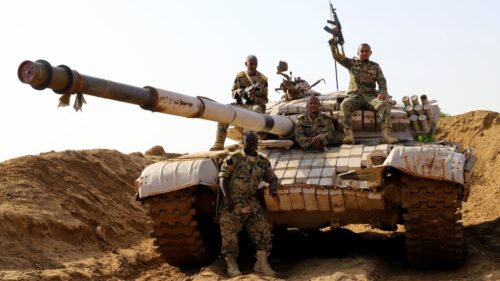
Sudan’s current civil war erupted in April 2023, following the 2021 military coup that dismantled the civilian-led transitional council formed after the overthrow of former Sudanese President Omar al-Bashir. Carvajal states that Islamist factions embedded within the military establishment are now seeking to preserve the authoritarian system associated with Bashir.
In September 2025, Egypt, Saudi Arabia, the United Arab Emirates and the United States proposed a humanitarian ceasefire followed by an inclusive political dialogue. General Abdel Fattah al-Burhan initially appeared receptive but reversed course after Muslim Brotherhood elements rejected foreign involvement. He later proposed a military-managed national dialogue that excluded important civilian parties and civil society organizations.
Yemen’s factions benefit from political paralysis
Across the Red Sea, the Houthis continue to threaten Saudi territory and attack targets in southern Yemen. Carvajal points to strikes on military bases in Hadhramaut and the near destruction of Mokha port. He says forces associated with the Muslim Brotherhood-linked al-Islah party have hesitated to confront the Houthis directly, leaving much of the fighting to local forces around the cities of Hodeidah, Mokha and Taiz.
Shaif describes Yemen as a “forgotten war” that attracts international attention primarily when instability threatens economic interests. He argues that al-Islah is exploiting the confrontation with the Houthis to rebuild its political influence through government institutions, charities and nongovernmental organizations.
Although the Houthis are the immediate military adversary, Shaif regards al-Islah as a longer-term strategic danger. He believes its ideological project threatens the secular and progressive traditions of southern Yemen, including the advances in women’s rights achieved before unification.
The Red Sea becomes an economic lifeline
The conflicts have implications far beyond Yemen and Sudan because they surround one of the world’s most important commercial corridors. Singh notes that the Strait of Hormuz has effectively been closed since March 1 amid the US/Israel–Iran war. Shipping companies and Gulf states have consequently become more dependent on the Bab el-Mandeb Strait and the Red Sea.
Shaif explains that this dependence gives the Houthis considerable leverage over international commerce. Disruption at Bab el-Mandeb could place a substantial share of global trade at risk while restricting the remaining routes available for Gulf oil exports.
Saudi Arabia is therefore exploring a pipeline through Hadhramaut and Mahra that would bypass vulnerable maritime chokepoints. Shaif argues that Yemen’s humanitarian suffering still receives insufficient attention, while the possibility of disrupted energy supplies and rising transportation costs has finally made its instability an urgent international concern.
Western debates miss the larger threat
Carvajal connects these regional conflicts to intensifying Western debates about Islamist organizations. Some US states are pursuing measures against groups affiliated with the Muslim Brotherhood, while right-wing politicians in France have proposed banning the hijab. Britain has experienced similar controversy, including former Prime Minister Boris Johnson’s comparison of veiled women to letter boxes.
Shaif says banning the hijab lacks broad support among the British public and distracts from the political structures that allow extremist movements to expand. He calls the debate a “red herring” that reduces a complicated security problem to religious clothing.
He also warns that Islamic extremism must be considered alongside far-right extremism. Western governments, he contends, contributed to present instability by funding jihadist forces in Afghanistan without accounting for the movements and networks that would subsequently emerge.
Civil society needs a place at the table
Carvajal sees a common pattern in Yemen and Sudan. Armed Islamist factions reject inclusive negotiations because democratic dialogue could weaken their power. Sudan’s military leadership excludes civilian organizations, while the Houthis seek direct negotiations with Saudi Arabia rather than a broader Yemeni political process. Southern dialogue in Yemen has also stalled, benefiting al-Islah and other entrenched actors.
Shaif and Singh criticize the United Nations for failing to deliver a political settlement in Yemen. Without institutional reform and stronger support for representative civil society, they see little prospect of meaningful progress.
The House of Commons panel will bring together Shaif, former UK Ambassador Edmund Fitton-Brown, Sudanese civil rights activist Anes Himemed and other regional experts. Moderated by Fair Observer Chair Claire Whitaker, the event aims to show policymakers how extremist networks on both shores of the Red Sea undermine peace, accountable government and global economic security.
[Lee Thompson-Kolar edited this piece.]
The views expressed in this article/video are the author’s own and do not necessarily reflect Fair Observer’s editorial policy.


































Comment