


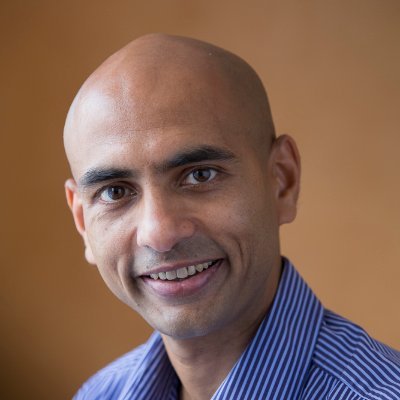


Editor-in-Chief Atul Singh and retired CIA officer Glenn Carle examine Germany in this episode of their flagship podcast, The Dialectic. Glenn and Atul are also partners at FOI, which advises companies and governments on geopolitical risk, and both of them spend a lot of time researching the major issues of our times.
 Spotify
 Amazon Music
Atul and Glenn explain how Germany rose from the ashes of defeat in World War II to create a postwar economic miracle. After the Berlin Wall fell in 1989, Germany faced integration problems but reemerged as an exporting powerhouse. Since the 1990s, Chinese demand has fueled the German success story.
Today, Germany is in crisis. Chinese demand has plummeted. The Russia-Ukraine War has pushed up energy costs for German manufacturing and unleashed inflation in the economy. American protectionism has not helped. To make matters worse, German bureaucracy is a millstone around the neck for every business and even leading politicians admit this publicly. In short, the powerhouse of the EU economy is sputtering.
In addition to economic troubles, Germany faces a big challenge in assimilating a massive influx of immigrants. Over one in five people living in the country was born outside Germany. Assimilation is a problem. So is the rise of the far right in response to German fears of being swamped by outsiders and the failure of the main political parties to address key national problems.
Both Atul and Glenn go on to conjure scenarios of Germany’s future. They delve into many questions on the minds of geopolitical gurus, business leaders, politicians, economic policymakers and concerned citizens. Will Germany remain the engine of Europe? Will the country experience a clash of cultures? Will a coherent government emerge that enacts regulatory reform, immigration reform and takes a leadership role in the EU?
Postwar Germany became an economic miracle
Germany ended 1945 shattered by World War II. The postwar issues it faced were only compounded by the partition of Germany among the Allied victors, meant to prevent the rebirth of German nationalism and militarization. East Germany (the German Democratic Republic) became a communist satellite state under the Soviet Union.
Meanwhile, West Germany (the Federal Republic of Germany), under the US leadership, became the frontline state against the Soviet Union during the Cold War. NATO totally defined German security. Importantly, Germany was to have no defense or foreign policies independent of NATO. In this postwar era, Germany’s focus was largely domestic, and, thanks to sensible economic policies and extraordinary hard work, the country emerged as an economic miracle.
This “German Model” was a phenomenal success. Under the American security umbrella, West Germany recovered spectacularly from the catastrophe of World War II. The country followed an export-led economic model and a form of collaborative capitalism in which both capitalist owners and labor unions worked together to be globally competitive. The Mittelstand — small- and medium-sized industries — were scattered across the country and were the backbone of the West German economy.
Today, Germany continues with this West German postwar model. Exports still power the economy. They accounted for 46% of the German GDP in 2022 and 42% in 2024. German supply outstrips demand. After World War II, Germany exported to the US, the rest of Europe and other parts of the world. Today, exports to China fuel the German economy.
The fall of the Berlin Wall triggered economic troubles
Yet Germany’s postwar model is in trouble. In fact, trouble began with the fall of the Berlin Wall. Until then, West Germany had been enjoying the postwar baby boom, GDP growth and improving living standards. After reunification, West Germany had to fund economic development in a devastated East Germany that had lived under the heavy yoke of the Soviet Union.
At the time of the fall of the Berlin Wall, Europe feared a rebirth of German nationalism and the country’s remilitarization. Both British Prime Minister Margaret Thatcher and French President François Mitterrand were initially opposed to German reunification. American President George H. W. Bush acted like a true statesman and backed German Chancellor Helmut Kohl’s quest for reunification. Both pledged that a united Germany would remain democratic as well as committed to both NATO and the EU.
As Kohl had promised, German nationalism did not prove to be a problem. Ironically, it was the economy that ran into trouble. After reunification, Germany came to be called “the sick man of Europe.” Over 40 years of communism and Soviet depredations had left East Germany an economic wreck. West Germany had to spend a lot of money to rebuild East Germany, and taxpayers had to shoulder a heavy burden. The one-to-one exchange of the two regions’ currencies also drained West German finances. The implementation of a national mandatory minimum wage proved to have downsides because factories moved to Poland or Slovakia instead of the former East German territory. This lack of new economic activity in the east proved to be a millstone around the neck for the German economy.
Yet, thanks to the Hartz reforms under Chancellor Gerhard Schröder, the German economy made a comeback. Growing Chinese demand, especially since the start of the 21st century, helped. Recently, that demand has declined. Energy costs have increased after the Russia-Ukraine War broke out in 2022. American protectionism under both President Donald Trump and President Joe Biden has hurt the Germans, too. German GDP declined by 2.3% and grew by merely 0.2% in 2024.
Social challenges compound economic stagnation
Not only the economy but also demography is a matter of concern to Germany. In 2024, German deaths outpaced births by nearly 1.5 to 1. The current fertility rate of 1.39 sits well below replacement levels. There has been a roughly 0.25% decline in population per year since 2009, and the population is likely to decline from 84 million to 79 million by 2050. In addition, the share of the German population aged 65 and older rose from 16% in 1997 to 23% in 2023. At the current rate, the worker-to-pensioner ratio is likely to fall from 2.1:1 today to 1.6:1 by 2050.
As of now, the German federal pension system cannot support the increased number of pensioners. The German pension system depends on a government subsidy that currently stands at over $130 billion (€113 billion). It is expected to exceed $231 billion (€200 billion) by 2040. Currently, federal pension reserves cover less than two months of payouts.
In order to prevent a collapse of the federal pension system, Germany needs foreign workers to bolster its working population. Foreign-born workers enable Germany’s low-wage sector to survive, but that depresses wages. Germans, unwilling to work for low wages, thus prefer to collect social payments.
With increased immigration, however, come challenges. Roughly 20.7% of German residents are foreign-born, a percentage higher than in the US. This has led to increased resentment towards immigrant populations among the native German population. There is also the issue of assimilation of immigrants, which is a multi-generational issue. Religion complicates matters, and many devout Muslims struggle in Germany’s secular society. Today, anti-immigration sentiments are on the rise, and some political parties are fanning this sentiment.
Economic stagnation results from both internal and external factors
Germany’s postwar economic miracle was built on an export-led model. Almost every second euro Germany earns comes from exports. However, international competition has increased. China has been the biggest importer of German products for years. Since COVID, Chinese demand has been falling. More worrying for Germany, Chinese companies have begun to outcompete German ones. In particular, China’s electric car manufacturers have come up dramatically and overtaken Germany’s traditional cars powered by internal combustion engines. German vehicle production has declined by nearly a third, from around six million in 2015 to four million in 2023.
Furthermore, Germany is no longer a lead innovator and has not been so for over 50 years. The state has become a prisoner of its own postwar success — Germany is still locked in older technology markets such as internal combustion engine cars and machine tools. There hasn’t even been a major breakthrough in German software since SAP in 1972.
Much of this lack of innovation can be attributed to the regulatory sclerosis that plagues the state. Excessive regulation and ridiculous red tape have become self-inflicted wounds that even socialist leaders bemoan. Taxes and labor costs are high. Skilled workers are in short supply and Germany’s fabled apprentice model is under tremendous strain.
Also, the corporatist model that had once propelled postwar Germany to economic heights has also slowed down the economy. Decision-making is slow and painful. German companies struggle to move with speed and scale.
Germany is seeing an uptick in political polarization
Germany’s domestic political struggles are a product of its structural economic problems and its social struggles. Political fragmentation has increased, with both the far right and the far left on the rise. Recent opinion polls show a particularly worrying trend: The far-right party Alternative für Deutschland (AfD) commands 27% support, while Chancellor Friedrich Merz’s Christian Democrats command 24%. If the AfD keeps winning greater support, then it might one day be in power. At the moment, no other party is willing to form a coalition with AfD. However, this might change in the future. Currently, the “firewall” against the AfD has held, but it may collapse in the future. This could occur first not at the federal level but in some of Germany’s 16 states — especially in those in former East Germany, which could see AfD-led governments.
Atul and Glenn also highlight the rise of the far left. Sahra Wagenknecht’s party, Buendnis Sahra Wagenknecht, got 4.97% of the vote in the 2025 national election, barely missing the 5% threshold. Wagenknecht is a populist who is Eurosceptic, anti-immigration and opposed to Germany’s involvement in the Russia-Ukraine War. Had Wagenknecht’s party gotten a few more votes, forming a coalition government would have become even harder.
Germany’s future remains unknown
Glenn predicts that Germany’s status as the engine of Europe will persist. However, he also sees the status quo evolving slowly. Fragmentation will persist, and so will decline, if German cohesion declines and the country is unable to make structural changes. Atul foresees fragmentation and decline as well. However, he argues that decline will most likely manifest in an even more polarized society, particularly with the clash of cultures between the AfD and increased Muslim radicalization.
Furthermore, economic and social inequality will exacerbate the breakdown of political cohesion. Germany has over one million millionaires, most of whom inherited their wealth from the postwar recovery period. Tax cuts and loopholes have only cemented the power of economic elites. Sadly, German society has fossilized. There is no more upward social mobility, and young families are struggling.
On the international stage, Germany faces an irredentist Russia and economic competition from China. EU integration has also begun to stumble, as Europe is faced with wider political fragmentation and immigration challenges. Overregulation in the EU has caused German resentment towards Brussels and towards immigrants.
Glenn points out how history offers the cautionary pessimism that an existential crisis is the only way to change the distribution of wealth. His optimistic viewpoint has Germany achieving political cohesion, thus enabling regulatory reform, which would lead to economic innovation and growth.
Finally, Glenn quotes German economist and Fair Observer’s editor-at-large Alex Gloy to make an optimistic case for Germany:
“The revolution will come anyway. Either by the street, where extreme elements will fight for control of the narrative, or from top down. A revolution driven by the street will likely have a far-right tint, as their supporters outnumber far-left activists.
A top-down revolution would involve the dissolution of national governments (which are hated anyways) and Brussels’s bureaucratic overhead. The solution could be a “United States of Europe” or a “Europe of 50 regions”, where 50 regions of approximately equal population (10 million each) enjoy vast self-governing rights, giving more power to minorities within current nation states. Politics would become much more local, with constituents more likely to get involved and less disenfranchised. A Europe of Regions would have only one supra-national military, with common planning and procurement, decentralized production, but centralized command. There would have to be a charter of minimum common rules to ensure functioning. There would be no need for national borders.”
Sadly, this is an idealistic though unlikely outcome.
[Cheyenne Torres edited this piece.]
The views expressed in this article/podcast are the author’s own and do not necessarily reflect Fair Observer’s editorial policy.
The Story of World War II
On the 80th anniversary of the beginning of World War II, we look at the story of this tragic conflict....

The Dialectic: Can Germany and France Make Europe Great Again?
In this episode of The Dialectic, Atul Singh and Glenn Carle examine Europe’s rise from Renaissance brilliance to post-World War...
Lasting Peace in Europe Requires the Creation of a European State
The reluctance of EU member states to cede national sovereignty has left the EU unable to fulfill its promise of...
Viktor Orbán, the Other Transgressor: Hungary’s Role in the Erosion of International Justice
Israeli Prime Minister Netanyahu recently visited Hungary despite his outstanding arrest warrant from the International Criminal Court (ICC). Hungary’s invitation...
Is the German Economy Now Destined to Decline?
The German economy is in crisis and its much-vaunted economic model is in question. The Russia–Ukraine War, a contracting Chinese...
The Dialectic: Narendra Modi’s Vegetarian Stalinism Has Ruined the Indian Economy
In this episode of The Dialectic, Atul Singh and Glenn Carle explain how India’s current leader has rolled back the...
FO° Podcasts: Maduro, the War on Drugs and Trump’s Revival of the Monroe Doctrine
In this episode of FO° Podcasts, Atul Singh and Benjamin Delille examine US President Donald Trump’s confrontation with Venezuela, questioning...

FO° Podcasts: Myanmar Votes During a Civil War: Why This Election Could Tear the Country Apart
In this episode of FO° Podcasts, Rohan Khattar Singh and Asanga Abeyagoonasekera examine Myanmar’s December 28 elections against the backdrop...

FO° Podcasts: The Forbidden C-word, Class in America
In this episode of FO° Podcasts, Atul Singh and Kent Jenkins Jr. discuss how class shapes US identity and political...

The Dialectic: France: The Eternal Crisis Strikes Again. What Now?
In this episode of The Dialectic, Atul Singh and Glenn Carle examine France’s deepening polycrisis. Rising debt, political paralysis and...

FO° Podcasts: The Right to Play: How Women Fought and Won the Battle for Equality in Sports
In this episode of FO° Podcasts, Atul Singh and Lauren Greenberg explore how Title IX reshaped women’s sports and personal...

FO° Podcasts: Enemy of the Sun — How Palestinian Poetry Became a Weapon of Resistance
In this episode of FO° Podcasts, Atul Singh and Edmund Ghareeb trace the unlikely journey of the Palestinian poetry anthology...

FO° Podcasts: Why is the US Deporting Illegal Migrants to a Tiny African Nation Called Eswatini?
In this episode of FO° Podcasts, Rohan Khattar Singh and Zweli Martin Dlamini examine the secret deportation deal between the...

The Dialectic: Can Germany and France Make Europe Great Again?
In this episode of The Dialectic, Atul Singh and Glenn Carle examine Europe’s rise from Renaissance brilliance to post-World War...

Project 2025 and Donald Trump’s Dangerous Dismantling of the US Federal Government
In this episode of The Dialectic, Atul Singh and Glenn Carle dissect US President Donald Trump’s destruction of federal institutions....
FO° Podcasts: Why Has Trump Deployed Thousands of National Guard Troops in Washington, DC?
In this episode of FO° Podcasts, Atul Singh and Ankit Jain examine US President Donald Trump’s interventions in Washington, DC....

FO° Podcast: The Story of Millions of Syrian Refugees and Why They Can Never Return Home
In this episode of FO° Podcasts, Atul Singh and William McChesney examine why millions of Syrian refugees remain in exile...





Comment