


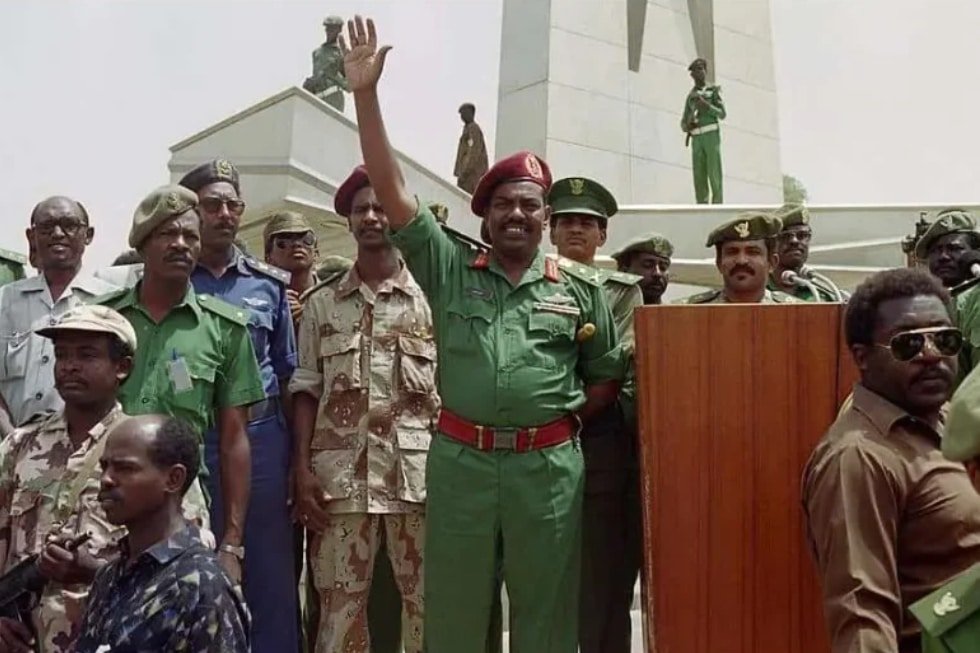



More than three years into Sudan’s war, the casualty that rarely makes headlines is the truth about who is responsible for the bloodshed.
Earlier this month, the UN Human Rights Council opened its 63rd session in Geneva with Sudan back on the agenda. Delegates heard renewed warnings from High Commissioner Volker Türk and testimony from the chair of the Fact-Finding Mission, Mohamed Chande Othman, who told them there are reasonable grounds to believe both the Sudanese Armed Forces (SAF) and the Rapid Support Forces (RSF) have committed war crimes.
That finding should shape how the world talks about Sudan; however, that is rarely the case. Diplomats and many reporters still lean on a familiar shorthand, casting the RSF as marauding outlaws and the SAF as a flawed but legitimate army trying to hold the country together. The shorthand is easy to repeat, and it does real damage. It lends cover to a military establishment riddled with Islamist networks, the same networks that gutted Sudan’s democratic transition years before the first shots of this war were fired.
To understand how, go back to 2019.
The coup
In 2019, mass protests drove President Omar al-Bashir from power and ended three decades of one-man rule. International pressure then produced the Sovereign Council, a transitional government in which military leaders and civilians shared power.
It did not last. On October 25, 2021, just over two years into the transition, army chief General Abdel Fattah al-Burhan dissolved the Sovereign Council, detained the civilian prime minister, Abdalla Hamdok, and declared a state of emergency. That coup, not the RSF’s later mutiny, marks the start of Sudan’s collapse.
It wiped out the power-sharing deal the protesters had won and put the army, backed and increasingly steered by Islamist factions, back in full control of a country neither had ever really let go of. Washington now says as much. The Treasury Department has concluded that Sudanese Islamists played a key role in derailing the democratic transition by undermining the civilian-led government.
Council members often describe the conflict as a national army fighting a paramilitary that broke away from it. That description leaves out who is actually fighting. The SAF has fought the war alongside Islamist brigades loyal to Bashir’s old regime. The RSF, for its part, says it wants to keep those Islamists out of power. To see why that matters, start with the forces backing the army.
Islamists behind the army
Sudan’s transitional government banned Bashir’s National Congress Party in November 2019, seized its assets and barred its members from politics for ten years. The ban did not end the movement. When war broke out in 2023, many of the party’s loyalists took up arms on the army’s side, often in newly formed units. The largest of these is the Al-Baraa Bin Malik Brigade.
The brigade traces its roots to the Popular Defense Forces, Bashir’s Islamist paramilitary, and has deployed more than 20,000 fighters as a frontline auxiliary to the SAF. Military sources credit fighters loyal to the banned party with playing a key role in breaking RSF sieges around Khartoum.
Last September, Washington sanctioned the brigade, along with Sudan’s finance minister, Gibril Ibrahim, whose Justice and Equality Movement sent thousands of fighters against the RSF. The Treasury said the aim was to curb Islamist influence in Sudan and Iran’s reach in the region, adding that the brigade’s fighters had been trained and armed by Iran’s Revolutionary Guard. In March, the State Department went further, designating the brigade and the Sudanese Islamic Movement as terrorist organizations.
Hamdok now leads an opposition coalition, the Civil Democratic Alliance of Revolutionary Forces, known as Sumud, Arabic for “steadfastness.” It blames Islamist loyalists for overthrowing the democratic transition and dragging the country into war. Analysts describe the army and the Islamists as bound together by a shared hostility to the civilian rule the 2019 revolution demanded. Cooperation serves them both.
The Fact-Finding Mission’s own conclusion is that both forces are implicated in mass atrocities. Human Rights Watch’s latest world report documents SAF retaliatory attacks on civilians, indiscriminate airstrikes on markets and abuses by SAF-allied forces against women accused of collaborating with the RSF.
The Council rightly renewed its investigative mandate through resolution A/HRC/60/L.18. However, by still treating Burhan’s government as Sudan’s default legitimate interlocutor, it is working against its own evidence.
Even Washington no longer extends that courtesy. Massad Boulos, President Donald Trump’s senior adviser for Arab and African affairs, said over the weekend that America deals with the army-aligned authorities only as a de facto entity and does not formally recognize them as Sudan’s government. The administration has also said that neither Burhan nor the RSF commander, Mohamed Hamdan Dagalo, should have a role in governing Sudan after the war.
Legitimacy in Geneva
The problem is practical, not just symbolic. At this session, as at others, SAF officials took Sudan’s seat in Geneva as the country’s representatives. Resolutions have called for an end to the fighting without saying who ended civilian rule. Several peace proposals assume the army will run Sudan after the war. Taken together, these choices give legitimacy to the generals and Islamists whom Sudanese protesters rose against in 2019.
That coalition is already planning for the future. Ahmed Haroun, chairman of the banned National Congress Party and wanted by the International Criminal Court (ICC), told Reuters last year that he expects the army to stay in politics after the war ends. Geneva shouldn’t be complicit in legitimizing that outcome, especially when Sudan’s most influential outside partners have already ruled it out.
Last September, the Quad of America, Saudi Arabia, the United Arab Emirates and Egypt declared that Sudan’s future cannot be dictated by “violent extremist groups part of or evidently linked to the Muslim Brotherhood.” Boulos repeated the point this weekend, saying such groups should have no place in the political process.
The Council’s mandate is accountability, not mediation. It must name the SAF’s crimes as plainly as it names the RSF’s. It must back the ICC’s limited but real jurisdiction over Darfur and support the Fact-Finding Mission’s work documenting violations by both parties. Moreover, it should hear from Sudanese civilian voices such as Sumud, which rejects rule by barracks and militia alike.
A human rights body that does anything less becomes an unwitting accomplice to the very coup Sudan’s people rose against.
[Kaitlyn Diana edited this piece.]
The views expressed in this article are the author’s own and do not necessarily reflect Fair Observer’s editorial policy.
FO Live: The Red Sea Crisis — Power Struggles in Yemen and Sudan
In this episode of FO Live, Atul Singh, Fernando Carvajal and Abdul Galil Shaif examine how Islamist factions obstruct political...
Is Sudan’s Bloody War Reaching a Tipping Point?
Sudan’s civil war has grown well beyond national conflict — it threatens to explode into a greater war across the...
The Deadliest War You’re Not Hearing About
The war in Sudan has become the world's largest humanitarian crisis, marked by famine, massive displacement and genocidal violence. Despite...
How Chemical Weapons Allegations Could Change Sudan’s War Stances and the World’s Response
Sudan’s civil conflict has escalated with allegations that its national army used banned chemical weapons, specifically chlorine gas. This accusation...
Support Fair Observer
We rely on your support for our independence, diversity and quality.
For more than 10 years, Fair Observer has been free, fair and independent. No billionaire owns us, no advertisers control us. We are a reader-supported nonprofit. Unlike many other publications, we keep our content free for readers regardless of where they live or whether they can afford to pay. We have no paywalls and no ads.
In the post-truth era of fake news, echo chambers and filter bubbles, we publish a plurality of perspectives from around the world. Anyone can publish with us, but everyone goes through a rigorous editorial process. So, you get fact-checked, well-reasoned content instead of noise.
We publish 3,000+ voices from 90+ countries. We also conduct education and training programs
on subjects ranging from digital media and journalism to writing and critical thinking. This
doesn’t come cheap. Servers, editors, trainers and web developers cost
money.
Please consider supporting us on a regular basis as a recurring donor or a
sustaining member.
Will you support FO’s journalism?
We rely on your support for our independence, diversity and quality.





Comment