

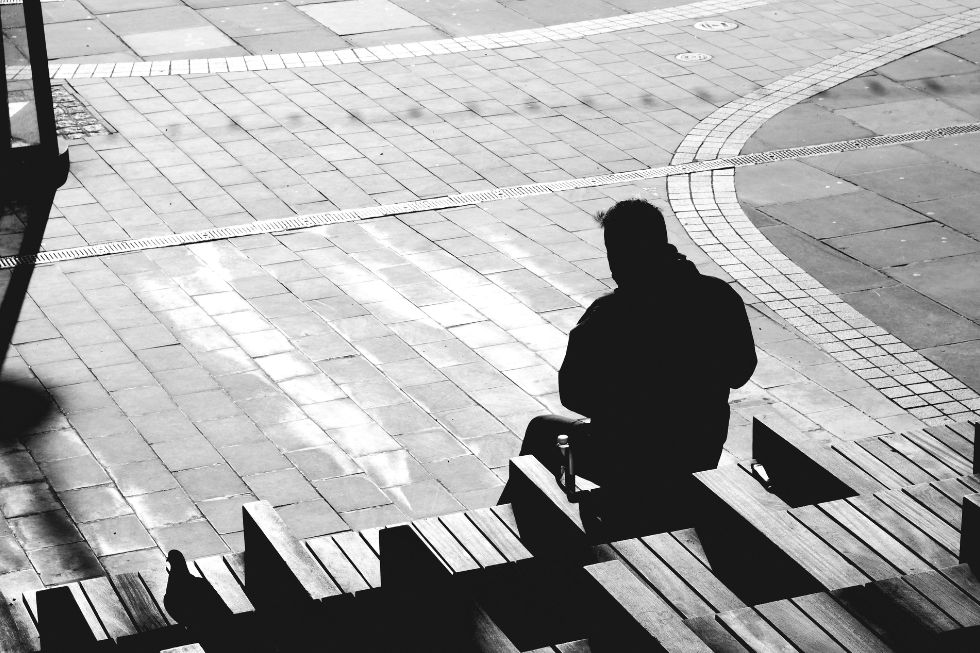



All the way back in 2023, US Surgeon General Vivek H. Murthy diagnosed Americans as suffering from an epidemic of loneliness. More recently, amid the rise of alleged American fascism, I started to notice that people were not only lonely but had also begun referring to the world as simply “the news.” Perceived that way — as a phenomenon pre-packaged via our devices — our bond with the world was distilled into just two options: consume the news or don’t. A sense of powerlessness is baked into such a perception.
By contrast, I remembered once reading an interview with billionaire Laurene Powell Jobs, who described the world as atoms constantly shifting and moving. With intention and focus, she pointed out, you can move those atoms yourself, and so move the world. Baked into that worldview was a sense of interconnectedness, not to mention power.
Was such a perspective a luxury of the billionaire class? In fact, no. Lots of non-billionaires, including many young people, regard the world as so many moveable atoms and they’re acting accordingly. In the process, they’re piercing the isolation in their neighborhoods, schools and even workplaces, while occasionally quelling their own loneliness, too.
A party in the park
In December, when thousands of Immigration and Customs Enforcement (ICE) agents descended on Minneapolis, Minnesota, neighbors started checking in on one another. A woman I’ll call by the pseudonym “M” learned something new about her South Minneapolis intersection: Dozens of Ecuadorian families live within just a few blocks of her. She also learned that many of those immigrants were not going to work because they were too afraid to make the commute. As a result, their families were struggling to pay bills.
That was when a few people got onto a chat thread and organized a rideshare system for the neighborhood. The thread quickly grew and now, M told me, there are more than 200 people on a chat thread covering just a handful of city blocks. Neighbors use this thread to connect for rides that get adults safely to work and kids safely to school.
“Just in our little neighborhood, we’re fielding 20 to 30 rides a day,” M told me. We spoke after the official end of the Trump administration’s Operation Metro Surge, its local deportation-machine operation. ICE is, however, still present in the area.
Their rideshare effort brought some unanticipated changes to the community. Neighbors who previously hadn’t known each other at all now spend time together daily, chatting and learning about each other’s lives.
“This whole experience has rewoven who we consider our community,” M told me. “When this is over, we’re going to throw a big party in the park.”
Meanwhile, as Operation Metro Surge raged in the Twin Cities, some 1,500 miles away in central Florida, high school students were walking out of class in protest — not once, but over and over again, despite threats from administrators that they would be suspended or expelled.
“We have immigrants at this school, we have people who are afraid at this school,” a senior at Viera High School in Viera West, Florida, told a reporter in early February. She was disputing her school administration’s position that the protests aren’t about a “school-based” issue and shouldn’t take place during class time. That same day, north of Orlando, a student at DeLand High School explained to a local news station that she felt a sense of community as she walked out with her peers to stand up for their classmates.
And central Florida is just one of many places where protesting ICE has become a community undertaking. Zoe Weissman was only 12 years old when she survived the 2018 school shooting in Parkland, Florida. She’s now a sophomore at Brown University, where she lived through a second shooting this past December. She told me that many young people at her school and elsewhere are involved in anti-ICE protests, in part because they feel a responsibility for keeping each other safe. This distinguishes her generation from older cohorts, who assumed that they could rely on the authorities to take care of that for them. Indeed, this winter, kids left class in cities ranging from Milwaukee, Wisconsin, and Indianapolis, Indiana, to Phoenix, Arizona, and Reno, Nevada.
But Weissman has personally observed people of all ages and from all walks of life starting to come together, both to take action against ICE and to support gun control (for which she’s a vocal advocate). “I’ve been really happy,” she said, “about how many different types of people and age groups I’ve seen protesting.”
The homeschooled Luhmann brothers from a suburb in Chicago, Illinois, are a notable example of such protesters. They began volunteering as community patrollers during Operation Midway Blitz in September 2025, as ICE agents arrested thousands of people across Chicago.
“We’re two white minors who have always had the privilege to live in America unbothered,” Ben Luhmann, 17, told a reporter in a video that earned over 250,000 likes on TikTok. “I’m going to use that privilege that shouldn’t be here, and do the right thing,” said his brother, Sam Luhmann, 16.
Their mother, Audrey, worries about her sons’ safety while they’re out observing ICE. And yet, motivated by her Christian faith to look out for neighbors, she was aware that Chicagoans of color worry every day about their kids’ safety. Given that reality, she asked me, “Why should my life be normal? Why should my family get to be safe and comfortable and go on about our days and just ignore what’s happening?”
As Sam put it, “We just need numbers of people out there keeping an eye on our neighbors.”
“A long-term strategy for survival against a fascist regime”
“One of the instincts in moments like this is to get as small as possible, so that you don’t get hit by whatever might be coming,” said Jonathan Feingold, a law professor who studies racism at Boston University School of Law. Recognizing that getting small and staying quiet is not what he considers “a long-term strategy for survival against a fascist regime,” Feingold started talking with fellow professors who, like him, had been troubled by mounting repression on their campuses even before Donald Trump entered the White House a second time.
In the spring of 2024, as Feingold recounted, universities around the country deployed militarized force against student groups that were protesting Israel’s killing of tens of thousands of Palestinians in Gaza. Universities explained this use of force as a necessity to protect the safety of Jewish students, though such students were well represented in the ranks of the protesters. Now, in US President Donald Trump’s second administration, the federal government is using allegations of antisemitism and claims of securing Jewish safety to justify a broad attack on free expression on college campuses. It is also using these claims to legitimize ICE abductions of noncitizens like Columbia University graduate student Mahmoud Khalil and Tufts University student Rümeysa Öztürk, who spoke up for the rights of Palestinians or criticized Israel.
“Jewish academics understood how Jewish identity was being wielded in order to come after our students, our colleagues, our institutions in deeply dangerous ways,” Feingold told me.
That’s why, a year ago, he cofounded a group called Concerned Jewish Faculty and Staff. Through that organization, he’s collaborated with colleagues both on his campus and elsewhere who decided that they needed to bring their religious background into today’s struggle for civil rights.
Feingold said their most significant achievement to date has been creating a community. “The way that life is structured in the United States is often isolating,” he told me, noting that the life of an academic can be particularly lonely. Today, however, he feels a sense of camaraderie with colleagues who are planning to meet to observe Passover for a second year in a row. As he put it, “On a personal level, it has created a source for me to reintegrate into Jewish communal life that I’m excited to be a part of.”
And he isn’t the only one who now feels excited. More than 1,400 people registered for the third Conference of the Jewish Left in Boston this February. I was among them. It’s true that, once upon a time, I often resented having to spend time working with other people in a shared effort to keep this world of ours from going completely to shit, even as I also felt lonely and didn’t know what to do about that. At some point last year, however, I realized I was starting to find the company I needed in the very sorts of gatherings I used to resent attending.
Indeed, I found it strangely enlivening to sit in a giant room with people so deeply motivated, even driven, to protect all our fundamental rights — so driven, in fact, that they were willing to show up on a frigid Thursday to form a new alliance to do so.
Breaking bread and pozole
Far from the Conference of the Jewish Left, in a warmer climate, the nonprofit LA Más supports the economic resilience of the working-class residents of northeastern Los Angeles, with a particular focus on people of color, non-native English speakers and undocumented immigrants. While the organization primarily works to preserve affordability in neighborhood housing — which, in Los Angeles these days, requires incredible financial creativity — it has also recently started operating an outdoor market in nearby Cypress Park.
That market began as a comparte, or “share:” a place where members could gather and swap or share goods the way that some of them had done in their home countries. Then, residents suggested that they cook the foods of their homelands and bring them and homemade crafts to the market to sell to the larger community. Over the past year, that idea has become a biweekly night market called Somos NELA (an acronym for Northeast Los Angeles).
“It’s more than a market, more than an exchange of money,” says Helen Leung, the executive director of LA Más. She pointed out that the food sold there is rooted in history, made with love and is outrageously tasty. The pozole (a Mexican soup) is her personal favorite.
Leung said that some people who used to be very social at the market are now staying home, seeing the way ICE has violently arrested community members. At the same time, she added, “We have seen more customers come out, customers who are showing up more and are spending more. They want to support the community members who are trying to make ends meet.”
Frequenting the Somos NELA market is one of an array of acts that people across the city have taken up to support one another. Leung, for instance, has been inspired by the formation of new collectives dedicated to helping families who have been separated, as well as emotionally and financially devastated, by ICE abductions. One group of eight women even took the striking step of renting a community space to offer support and mutual aid to families who have been harmed.
It’s not an official nonprofit like LA Más. “These are,” she told me, “people who are figuring out how to change the system by themselves.”
The world sometimes shifts
Hundreds of people filed into a church on a winter evening in Amherst, Massachusetts, where I live, to learn how to be effective bystanders during an ICE raid. So many showed up that they spilled out the doors and some had to be turned away, told to attend the next training session. Once the program began, staff from an immigrant rights organization offered practical advice and personal stories.
Here is just one of those stories: Upon noticing a vehicle with tinted windows idling in their neighborhood, a white citizen approached it, said a warm hello to those inside, and engaged them in polite conversation. “Where are you from? What brings you to the area?” they asked. In some cases, that has proven to be an effective, nonconfrontational way to communicate to ICE agents that they are being watched and encourage them to leave without abducting any residents.
In other words, sometimes you can change the way events unfold. Sometimes, you can even change the news.
The bystander training provided more than just practical advice. As I looked around, I saw plenty of neighbors I knew, but many more I didn’t. I was feeling something I couldn’t quite identify.
Political scientists have long understood that loneliness is a precondition for authoritarianism, which depends on people being isolated and mistrusting one another. Historian and philosopher Hannah Arendt wrote about that in her 1951 tome, The Origins of Totalitarianism, in which she described loneliness as tantamount to “the loss of one’s own self” because we are social creatures who confirm our identity in the company of others.
The news hasn’t improved since I started working on this piece. Still, while doing so, I’ve found myself in the company of others — and that’s reminded me of something. When you go out into the world, however scary it might seem, and act to make it better, the world does sometimes shift. The atoms really do move.
[TomDispatch first published this piece.]
[Lee Thompson-Kolar edited this piece.]
The views expressed in this article are the author’s own and do not necessarily reflect Fair Observer’s editorial policy.







Join the conversation
Share your perspective
Log in to share your thoughts and take part in the discussion.