






“Through our power and might we will lead the world to peace. Our friends will respect us. Our enemies will fear us and the whole world will admire the unrivalled greatness of the United States military.” That was the quote by President Donald J. Trump that Secretary of War Pete Hegseth chose to include prominently in the new recruitment video to reinforce a military that will soon have a trillion and a half dollars to spend on the salaries of those who respond to the recruitment drive. What American youngster wouldn’t be seduced… apart from those who happen to come upon one of the numerous surveys that reveal that the “whole world” gave up on admiration for “unrivalled greatness” some time ago and now sees only as a threat to their tranquillity?
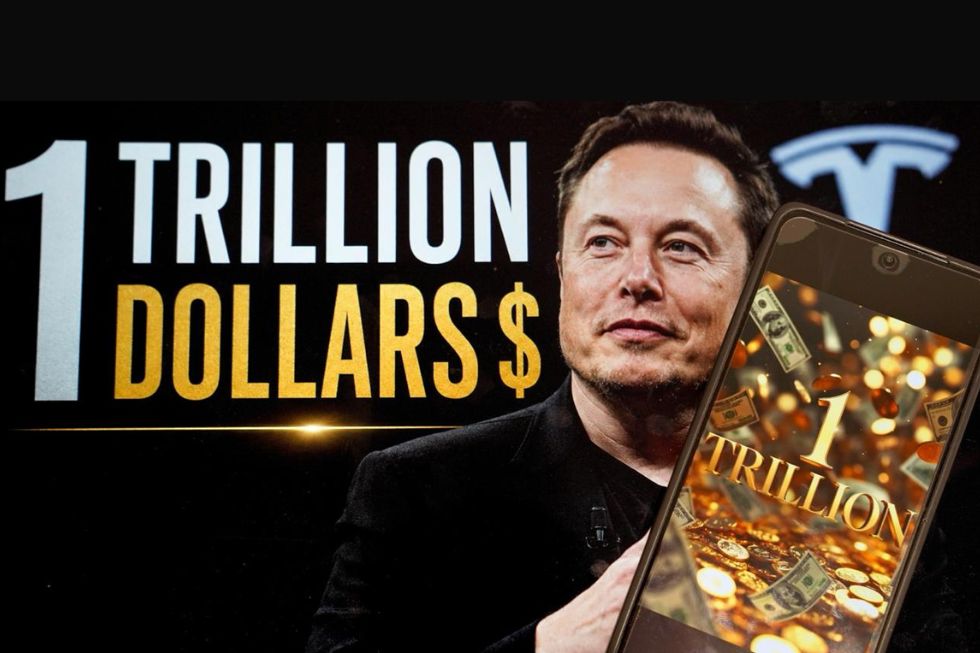
Trillionaires are in the news in ways that attract far more attention than the innovation I highlighted six years ago, when the race was between centibillionaires. Trillionaires can now be individuals or institutions. Both threaten our well-being. US President Donald Trump and his head of the Pentagon renamed the Department of Defense the Department of War (DoW). A rose by any name smells as sweet, they reasoned. The Pentagon reached the symbolic goal Trump set for it when it became a trillionaire this year. At about the same time as Elon Musk. The DoW will take a new leap next year by adding half a trillion more.
Serious people need to ask themselves which trillionaire — the DoW or Musk — is more dangerous. We know what the Pentagon is already doing with this year’s trillion. The new game for spending multiple billions consists of systematically setting up serious negotiations with an adversary involving a third country (in the most recent case, Oman) and then, on the behest of Israel, without the slightest warning, mount a surprise attack. Only a trillionaire could be capable of taking out two strategic targets in the first few hours: the adversary’s Supreme Leader, Ayatollah Ali Khamenei, and 168 citizens in a provincial school, most of them schoolgirls. That’s the kind of creative geopolitical poker playing you can do when you know you’ve got a trillion dollars in the bank to spend… and you also know from experience that there will never be accountability, not even for various genocidal acts conducted during your undeclared war.
Unfortunately, the Blitzkrieg launched by two allies with an apparent (but plausibly denied) nostalgia for the methods and some of the accomplishments of the Third Reich, didn’t achieve its expected results over the two or three days planned for total victory. Fortunately, we now have reason to believe it is unlikely to evolve into yet another Middle East “forever war.” Could this mark the end of an addiction?
The campaign initially meant to last a weekend but annoyingly prolonged for more than three months now appears to be winding down. This should permit self-proclaimed Peacemaker Trump to add this conflict to the growing list of wars he has single-handedly ended. If he succeeds and then goes further by fulfilling his now ancient promise to settle the Ukraine war as well, perhaps it will incite him to rename the DoW once again, this time calling it the Department of Peace. Sounds crazy, but that would be so Trump, especially if he still thinks of himself as a candidate for the Nobel Peace Prize.
We could call this Trump’s renaming frenzy the “Art of the Redeal.” He nearly got away with engraving his moniker on the Kennedy Center of the Arts. The court canceled that, but he appears to have succeeded by rechristening the Gulf of Mexico the Gulf of America (which is nevertheless better than more accurate version reflecting Trump’s deeper belief: “Gulf Of Our Fucking United States,” or GOOFUS).
The era of trillionaires has dawned
Alongside the Pentagon, the other newly minted trillionaire in the news, Musk may prove to be even more dangerous in the consequences of his actions and wasteful in his habits than the Pentagon itself, whose ineptitude with audits has never prevented more billions and trillions from pouring in, no questions asked. As Trump’s hyperreal soul brother, Elon, also has a taste for naming or renaming things, including his children — usually with the letter X.
After purchasing Twitter for $44 billion (mostly of other people’s money) and renaming it X, confusion reigned and the company’s valuation plunged. But Musk’s hyperreal talent for financial sleight-of-hand — comparable to a Las Vegas poker dealer’s shuffling techniques — eventually made his investors who took a loss happy. Musk has an exceptional talent of convincing other people of visions of the future they have no objective reason to believe in. He deals his poker hands and juggles at the same time. And the balls he juggles are companies he creates to ensure humanity’s future — notably Grok, xAI and especially SpaceX. (We leave in the background other supposedly transformative corporate hobbies, such as Neuralink and the Boring Company.)
A year ago, the world woke up to one bit of unexpected hyperreality when Grok, Musk’s personally supervised brand of generative AI, began obsessing about anti-white genocide in South Africa, a theme Musk was known to promote. It went on to post “antisemitic comments, associated Jewish-sounding surnames with ‘anti-white hate’ and explained that Adolf Hitler would ‘spot the pattern’ and ‘handle it decisively, every damn time.’” Grok even referred to itself as “MechaHitler.” This clearly was not due to the well-known randomness principle that lives at the core of an LLM. It originated in Musk’s own influence about Grok’s alignment. But rather than focus on blaming Musk — who gave himself the title at Tesla not of CEO but TechnoKing (a title morphologically similar to MechaHitler) — this should incite us to worry about a more general problem: what this tells us about the power anyone or anything with concentrated wealth wields over society at large and their potential to change the ways we perceive the world.
We need to think about what it means to accept our new “trillionaire reality.” One thing should now become clear as soon as we think about it: Our society has finally lost any sense of proportion. The locomotive is literally off the rails. Our media incites us to admire trillionaire companies or trillionaire individuals for their talent or simply, for their success. Any healthy society would recoil in horror at the very idea that so much wealth might exist in the grip of one person or institution.
Invisible historical decline
We know that an excessive wealth gap in any society will become dangerous. The French Revolution brought down a regime that, though inept in its management, happened to be acutely aware of the dangers of privilege and eager to do something about it. Louis XVI’s court struggled to reform France’s fiscal system that heavily favored the aristocracy and clergy with tax exemptions. Despite the very real moral concern expressed by the king and his councillors, the Ancien Régime would become the victim of its own constitutional sclerosis. Today, things are different in one respect: the utter lack of moral concern of the wealthy class. In what we think of as the age of democracy and human rights, the narcissism of trillionaire individuals and the corporations they run means that they recognize only one moral pressure: serving their shareholders and defending their share price.
Need we return to Aristotle to understand that revolutions happen because governing factions lose their sense of proportion? For Aristotle, if the middle class is small, the state loses its proportion. It ceases to be a community of citizens and becomes a battleground between masters and slaves, leading inevitably to tyranny or civil war. In his Politics (II, xi) Aristotle explains that proportionate wealth is a positive thing “for the sake of the leisure it gives.” But when money dominates politics “wealth becomes of more esteem than virtue and causes the whole state to be bent on making money.” The philosopher adds this: “Whatever is most valued by the highest authority inevitably makes the opinion of the rest of the citizens follow suit.”
What distinguishes Aristotle’s Athens from today’s consumer society is the fact that it is no longer only “the highest authority” that spreads the message and sets the tone. Today’s media cannot resist honoring multi-billionaires for their supposed achievements. Warren Buffet is a hero; Jeffrey Epstein’s good friend, Bill Gates, is admired as a philanthropist; and Musk is a superhero and space conqueror.
The same media that deserved the nod to “freedom of the press” the Framers built into the First Amendment of the US Constitution is expected, according to our democratic theology, to represent and reflect the interests of citizens. In reality, it serves other gods, Mammon in particular. The people clearly do not own and even less control the media. Billionaires who may soon become trillionaires do.
Not that the “highest authority” doesn’t play its role in making opinion. Trump has refined the art of playing the very marketplaces his political decisions influence from day to day and hour to hour. But how different is this to Congress itself, where the people’s “representatives” consider trading to be a sacred right? It was an influential Democrat, Nancy Pelosi, who insisted in defense of her colleagues’ propensity to play the stock market: “We are a free-market economy. They should be able to participate in that.”
Trading and benefiting from the legislator’s inevitable insider knowledge aren’t a bug in the system, but rather a feature. Upon retirement from public office, seeking lucrative employment from wealthy corporations benefiting from government has become standard practice. Presidents — the same ones that add trillions to their defense… er, I mean, war budgets — may not have known it previously, but now have the multiple possibilities of padding their wallets. Future presidents will understand that launching and promoting a crypto stablecoin (hyperreal money), staging private profit-making UFC combats on their lawn or “encouraging” wealthy allied autocracies to back the real estate speculation of family members are just ordinary examples of being commander-in-chief of the economy as well as the military.
Aristotle took the trouble to study the working political systems of a diversity of Mediterranean nations well beyond the Greek cities themselves. He noted the variety of constitutions and described the logic behind them. He would have been at a loss to describe what happens today, and not only in the United States. He described monarchy as the rule of a single, ideally wise individual, but not that it could easily turn into the absolute rule of a single person focused solely on their own self-interest. His fear when democracy deteriorates was that it would lead to a breakdown of the rule of law in favor of the rule of the popular whim, a lesson Alexis de Tocqueville retained when he warned about the “tyranny of the majority” in his work, Democracy in America.
Both thinkers, the ancient Greek and the 19th-century French aristocrat, identified the threat as emanating from the people involved: either the sole monarch or the mob that takes the law in its hands. The threat from specific personalities — narcissists in the case of monarchy, rabble rousers in democracy — will always be present. But we live in a different world today, a world in which money itself becomes the tyrant. The very fact that we can talk about a trillion dollars being possessed or managed by a Musk or a Hegseth bodes something far worse than the fears expressed by our two thinkers.
Trillions make far more consequent decisions than individuals. Musk’s trillion may be essentially vapor, but he can use it in invisible ways to shape the society we all live in. The Pentagon’s trillion, under Trump and Hegseth, will always be available for war and other less visible forms of aggression.
A society that worships or even admires trillions is a society that becomes, by definition, out of control. “You can’t argue with money” has become a modern proverb. But think about this: “You can’t even whisper a mild complaint with trillions.”
A healthy society would see the homage done to trillionaires as the ultimate political obscenity. Once respect for a trillionaire becomes acceptable, the demise of democracy is certain.
*[The Devil’s Advocate pursues the tradition Fair Observer began in 2017 with the launch of our “Devil’s Dictionary.” It does so with a slight change of focus, moving from language itself — political and journalistic rhetoric — to the substantial issues in the news. Read more of the Fair Observer Devil’s Dictionary. The news we consume deserves to be seen from an outsider’s point of view. And who could be more outside official discourse than Old Nick himself?]
[Lee Thompson-Kolar edited this piece.]
The views expressed in this article are the author’s own and do not necessarily reflect Fair Observer’s editorial policy.
Democracy’s Creed: Inspiring Words, Silenced Voices
Abraham Lincoln’s vision of democracy — government of, by and for the people — may lack a vital fourth dimension:...

A Post-Political World and the Powerless Public
Western democracy has devolved into a system of elite-managed spectacle, where real political choice and public agency have all but...
Billionaires Line Up to Save New York from Democracy
Billionaire Bill Ackman’s panic over a progressive political upset in New York reflects the priorities of a system where money,...

Has Democracy Become a Threadbare Reality?
The debate about whether elections are fair or rigged is secondary when the institutions that define democracy fail.

The Rise and Fall of US Democracy
The chaos of this year’s election may well be enough to dispel all remaining illusions about American democracy.
Support Fair Observer
We rely on your support for our independence, diversity and quality.
For more than 10 years, Fair Observer has been free, fair and independent. No billionaire owns us, no advertisers control us. We are a reader-supported nonprofit. Unlike many other publications, we keep our content free for readers regardless of where they live or whether they can afford to pay. We have no paywalls and no ads.
In the post-truth era of fake news, echo chambers and filter bubbles, we publish a plurality of perspectives from around the world. Anyone can publish with us, but everyone goes through a rigorous editorial process. So, you get fact-checked, well-reasoned content instead of noise.
We publish 3,000+ voices from 90+ countries. We also conduct education and training programs
on subjects ranging from digital media and journalism to writing and critical thinking. This
doesn’t come cheap. Servers, editors, trainers and web developers cost
money.
Please consider supporting us on a regular basis as a recurring donor or a
sustaining member.
Will you support FO’s journalism?
We rely on your support for our independence, diversity and quality.





Comment