






|
||
|
||
|
||
|
Dear FO° Reader,
Hello there. Some of you all may remember me from our Sunday newsletter, where we discuss the heavy topics of the week and try to provide much-needed context for current events. Today, I will be doing that for a lighter topic, but one near and dear to my heart as a lifelong reader: American comic books.
via shutterstock
From the 10 cent plague to $5: A bit of historical context
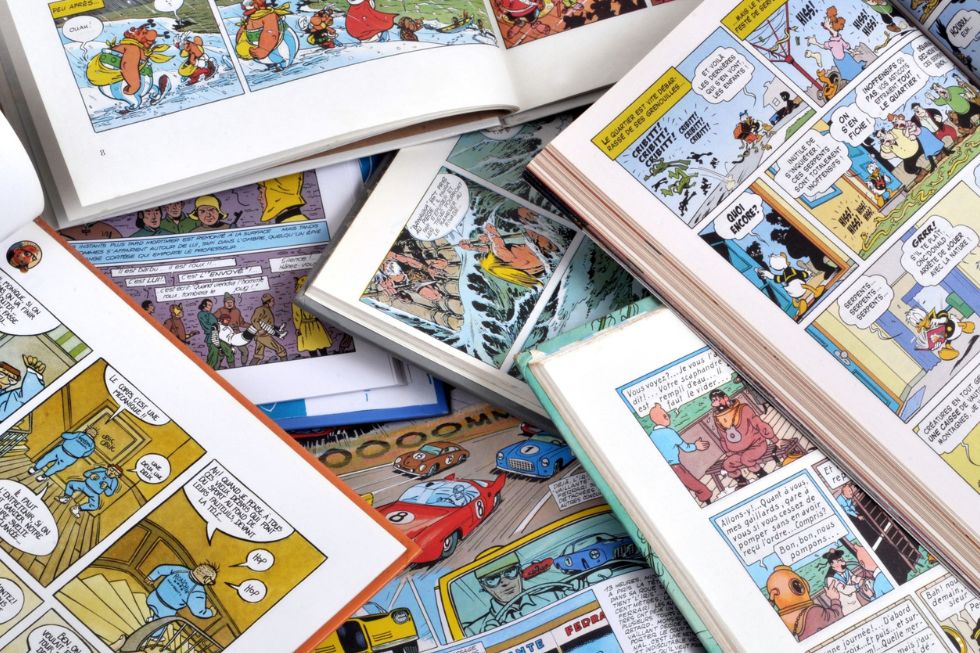
Prices, of course, have always been fluctuating in every market, comic books included. If you look in the corner of many early and famous covers for Superman or the Avengers, you can look back to the days when you could buy a comic for less than a quarter in the 60s and 70s, before gradually expanding as inflation naturally raised the price of everything. However, there was a series of extremely important events in the comic book industry that occurred in the 1990s. To put it succinctly, everything went right for an explosion within the comic book industry, before that same explosion fueled a massive implosion that got uncomfortably close to destroying the whole industry. To expand a bit but still abridge events heavily, when the word that books like Action Comics #1 — the debut of Superman — were being sold for hundreds of thousands of dollars started to spread in the early 90s, there was a speculator boom of people looking to invest in comics. Publishers, especially the newly formed Image Comics, moved to meet this demand with a deluge of new characters and new #1’s. Of course, what no one realized was that these collector item comics were valuable because they were rare due to their age, the fact that many were recycled in WWII paper drives, and, more importantly, these issues starred significant characters. With the market flooded, and with the industry leader Marvel being run by people whose only interest was seemingly quarter-over-quarter growth at any long-term cost, the uncertain ground gave way in 1996, in which thousands of comics shops closed down and Marvel filed for bankruptcy. Leaning on the fourth wall The industry ultimately survived and even came back to thrive, but the damage had been done. At the start of the decade, the median comic price was $1.75. At the end, the new median was at $2.95 as companies were desperate to stay afloat and had to rely on entrenched readers to make up for their mistakes. But this seemed to create something of a dependency. Comics had been leaning towards darker and more adult stories for some time now, but seemingly went all in during the 2000s, partially due to changes in management and artistic direction, but also likely to keep courting an aging audience. Variant covers started being produced as special incentives for retailers who ordered a certain number of books, or just along with normal books, so collectors would buy the same issue twice, or three times or four times. Nowadays, it is quite common for “big” issues or popular series to have 10+ variants. Marvel and DC, but especially Marvel, began to relaunch their long-running books as new #1s to try and recapture the speculator market. Most of all, movie rights and tie-ins became a big part of the industry thanks to the success of the Marvel Cinematic Universe. This fundamentally reshaped how the industry worked, from editorial directives and how creators got paid to decisions to work on/greenlight independent projects and how fans metaread the comics. This was especially the case when the fans saw or thought they saw executives telling writers to change things to have them align with the movies, no matter how hard a turn it is and how loudly fans complain. Holding out for a hero
This latest price hike is not especially egregious, as Marvel and DC have been slowly pushing the change over the course of two years. Image Comics, the third largest seller, is still holding most of its line at 3.99, but more and more titles are being marked up. But simply put, in a world where everything is becoming increasingly expensive, the comics industry is also following the trend. More importantly, comics have been here before, and while we are nowhere close to the excesses of the 90s, it is easy to draw parallels. While movies and multimedia ventures have brought in new readers, it is clear there haven’t been nearly as many as the companies and retailers would like, as you hear plenty of stories of shop owners living month to month. Furthermore, while current business tactics seem to be working for the companies, they can easily be pushed to a breaking point and alienate readers if not handled with care. The American comic book industry is growing — that is for certain — but if prices continue to rise dramatically, that can change. Right now, things are stable, but things also looked stable tin the 90s until they weren’t. And as a smaller cog in these corporate machines that have canned entire multi-million dollar movies for tax write-offs, one slip-up can lead to drastic consequences. Sources: North America Comic Book Market Size & Forecast to 2030 | Research and Markets U.S. Comic Books Market Size, Share | Grand View Research Median Comic Book Cover Prices by Year | Comichron Marvel Comics 1980–90s | Wikipedia The Speculator Bubble: How the 1990s Crashed the Comic Book Market | Comic Tornado Comic Shops: end of an era? The reality behind those dusty windows | Medium ‘Batgirl’ Film Axed by Warner Bros., Won’t Be Released on Any Platform| Variety To be continued in two weeks (well, probably not this topic), Casey HerrmannAssistant Editor |
||
|
We are an independent nonprofit organization. We do not have a paywall or ads. We believe news
must
be free for everyone from Detroit to Dakar. Yet servers, images, newsletters, web developers and
editors cost money.
So, please become a recurring donor to keep Fair Observer free, fair and independent. 
|
||
|
||
| About Publish with FO° FAQ Privacy Policy Terms of Use Contact |





Explore More FO° Reflections



Support Fair Observer
We rely on your support for our independence, diversity and quality.
For more than 10 years, Fair Observer has been free, fair and independent. No billionaire owns us, no advertisers control us. We are a reader-supported nonprofit. Unlike many other publications, we keep our content free for readers regardless of where they live or whether they can afford to pay. We have no paywalls and no ads.
In the post-truth era of fake news, echo chambers and filter bubbles, we publish a plurality of perspectives from around the world. Anyone can publish with us, but everyone goes through a rigorous editorial process. So, you get fact-checked, well-reasoned content instead of noise.
We publish 3,000+ voices from 90+ countries. We also conduct education and training programs
on subjects ranging from digital media and journalism to writing and critical thinking. This
doesn’t come cheap. Servers, editors, trainers and web developers cost
money.
Please consider supporting us on a regular basis as a recurring donor or a
sustaining member.
Will you support FO’s journalism?
We rely on your support for our independence, diversity and quality.





Comment