

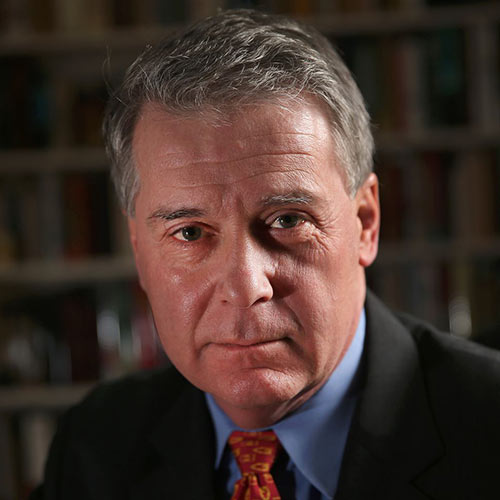
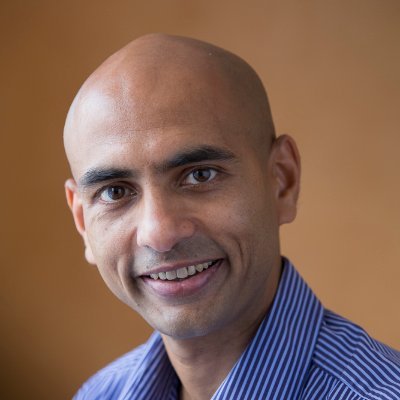


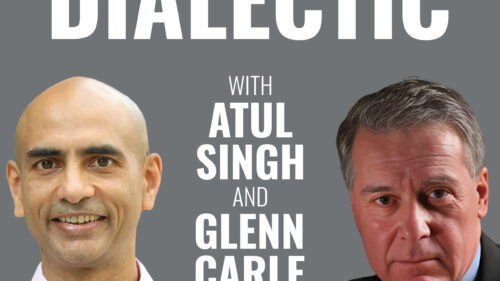
Editor-in-Chief Atul Singh and FOI Senior Partner Glenn Carle, a retired CIA officer who now advises companies, governments and organizations on geopolitical risk, turn their dialectic eastward to examine India’s political economy under Indian Prime Minister Narendra Modi. Atul uses a provocative metaphor — “Vegetarian Stalinism” — to describe the current governing model of India.
 Spotify
 Amazon Music
Glenn responds with humor and irony:
Looked at from outside, as a non-Indian India hand, India follower, the picture that has been painted, that one thinks one sees at least in part, is that Modi and his party have said they wanted to decentralize the economy, deregulate the economy and energize the private sector, that there has been a sea change in Indian culture at least among the ruling elites recognizing that colonial centralization, top-down government and socialist economies are less able to provide growth, wealth, health and so on than a well-regulated market economy and that huge changes are underway.
Glenn goes on to ask:
What exactly is happening then? What is Modi doing to the economy? Does he know — and I am not being facetious here — does he know what he is doing? Does he believe what he is doing is the opposite of what is happening? Many socialists I have known, quite sincerely, told me that all was going as well as possible in the best of all possible worlds, even as their economies and societies were imploding. So, tell me what is happening?
Atul clarifies his metaphor by pointing out that Modi is no Joseph Stalin. Unlike the Soviet strongman, Modi is not killing millions and sending hundreds of thousands to the gulag. No Lavrentiy Beria is raping and killing young daughters of Indian citizens. However, Modi is certainly centralizing power in the same way as Indira Gandhi did during the heyday of socialism in the 1970s.
The anatomy of Vegetarian Stalinism
Stalinism is a form of Marxist government in which all power is concentrated in the hands of a single ruler. In this deterministic political theology, capitalism is the final state of human development after which communism would emerge worldwide and the state itself would dissolve. Communism was the creation of an elite that saw the masses as needing help and itself as the vanguard of a political revolution. This elite seized power from the exploiters — the Tsarist elite — through a bloody revolution and placed all levers of production in the hands of the state. The new communist elite assumed all power, claimed the absolute right to the truth and the right to tell the people how to be free.
Joseph Stalin took over the reins of power of the Soviet state and was not just murderous but really genocidal. This Georgian (the country in the Caucasus) began by destroying his rivals and ended up killing millions. Stalin was training to be a priest. He walked out of his seminary. In came Karl Marx’s tomes and out went the Bible.
In Stalinist theology, the ruler claims complete authority over truth, economic life and social behavior. An elaborate state apparatus enforces the ruler’s authority. Stalinism was not just authoritarian but totalizing, eliminating rivals and suppressing feedback. Stalin did not spare his rival Leon Trotsky, even when he fled to faraway Mexico despite his mythic leadership in the 1917 Russian Revolution and in creating the Red Army.
Post-independence India was greatly inspired by the Stalin-led Soviet Union and adopted a socialist economy. The colonial bureaucracy came to occupy the commanding heights of the economy in addition to the state. The Indian Civil Service (ICS) of the British Raj became the Indian Administrative Service (IAS) and gained even greater powers post-independence. In 1976, Prime Minister Indira Gandhi amended the constitution to declare India to be a socialist country and created a license-permit-quota raj where the babu (bureaucrat) was king.
While Pakistan became, in the words of the scholar Ishtiaq Ahmed, a garrison state, India became a babu state. Under Modi, this babu state is back. It secures compliance of citizens by tormenting them through administrative red tape and interminable judicial proceedings. As Atul points out, “You’re not sent off to the gulag but the Enforcement Directorate or the Income Tax [Department] or the Central Bureau of Investigation shows up at your door.” They start proceedings in court, which often last a decade or more. People end up traveling to dusty offices or decrepit courts, waiting interminably and wasting time, money and energy for years. They might end up innocent in court, but might be bankrupt by the end of their judicial ordeal. The Indian system is not Kafkaesque; it is Kafka.
Three features define the political system under Modi. First, Modi has centralized power to an excessive degree. Like Stalin, he wants all power for himself. The Prime Minister’s Office (PMO) is all-powerful now, and elected leaders in the ruling Bharatiya Janata Party (BJP) count for less than nothing. Modi exercises power not through the BJP but through a colonial-era bureaucracy led by the IAS. A coalition of big business, the bureaucracy and the BJP runs the country with an iron fist. This has led to a top-down babu state that lacks feedback loops of freer economies. Unlike a fascist system, this babu state does not corporatize or industrialize. Instead, India’s babu state has paralyzed the economy through bureaucratic oppression of the citizenry.
The perception and the reality
Glenn points out that the standard external perception of India is rather positive. From the outside, Modi appears to have deregulated, energized the private sector and presided over major infrastructure expansion. Glenn notes that when he visited India, the infrastructure was improving. Construction was underway on roads, airports and other logistics projects.
Atul says that we have to give credit where credit is due. Modi has an outstanding minister named Nitin Gadkari, who is efficient and dynamic. Improving infrastructure, a historic weakness, counts as a genuine achievement for the Modi government. It has also ameliorated the lives of hundreds of millions through better micro welfare measures. Thanks to direct bank transfers, the spread of digital payments and identification based on India’s Aadhaar ID system, leakages in welfare delivery have decreased greatly. So, less government money is stolen or wasted in welfare programs. Indians are better fed, taller and live longer than before. This is indeed an impressive achievement.
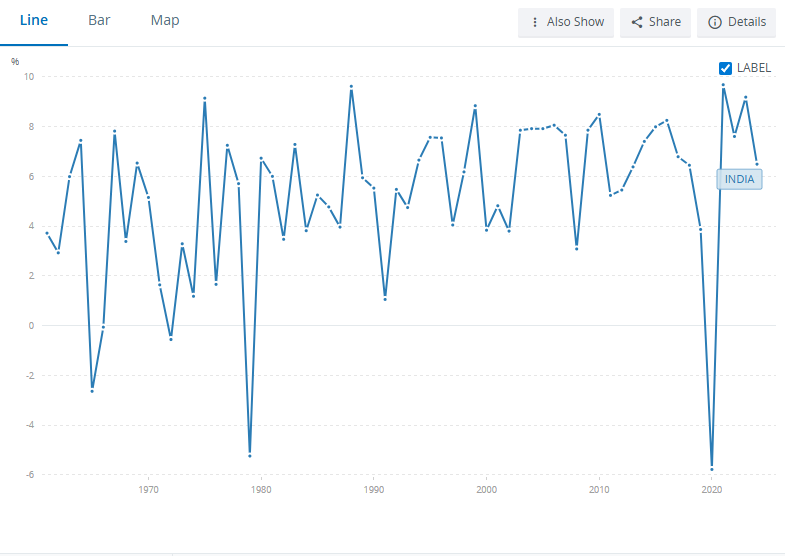
Economic growth rates have been volatile but remain relatively high. Note that achieving high growth rates is easier for developing countries than for advanced economies, though. Since India is operating from a low base, a higher growth rate is easily achievable. The World Bank tells us that India’s per capita income is only $2,694.7, which leaves a lot of headroom for growth.
Also, India’s economic numbers are no longer reliable. The International Monetary Fund (IMF) has given India a “C” grade (the second lowest) for its national accounts data. India failed to get the A (adequate) and B (broadly adequate) ratings. A C rating means economists, investors, and policymakers fail to get a completely accurate and timely picture of the Indian economy. Atul’s sources in the IMF, the World Bank and the Indian establishment reveal that the Modi government has cooked up its books, fiddled with the numbers and gamed World Bank indices. For example, the government has made it super easy for anyone to get electricity in Delhi and Jaipur, which are the two cities World Bank measures. They reveal that the improvement in ease of doing business in India is largely a myth and the World Bank’s indices for India are misleading.
India’s inflation figures are now highly misleading. Per government figures, inflation was 0.71% in November and 1.33% in December. Many fear that the government is fiddling the numbers. Atul’s mother Sudha believes that either Nirmalanomics is right or Sudhanomics is right. Finance Minister Nirmala Sitharaman must be either unaware of the cost of groceries or is lying about inflation figures.
Yet it is true that inflation under Modi on average has been 5.1% per year, lower than 8.1% under his predecessor Manmohan Singh. However, growth has been lower too: 6.8%per year under Modi in contrast to 7.7% under Singh. The rupee has fallen under Modi too. It was less than ₹60 per USD when Modi was elected and is now more than ₹90 per USD.
Atul makes the point that Modi is super sharp. He is cunning and charismatic. The prime minister is a decent orator who wins election after election. Yet Modi is not terribly well educated and began life as a teaseller. The prime minister has the instincts of a control freak who believes he will wave the wand and the elephant will dance. Fundamentally, Modi does not understand economics and policymaking.
The toxic legacy of the past
India became independent on August 15, 1947, two years after the end of World War II. Independent India chose socialism because it had been traumatized by British rule. The British had stripped India bare, engaged in an exploitative transfer of wealth and life expectancy was just 32. Remember the East India Company conquered India, not the British state.
At that time, the Soviets, communism and socialism seduced many Indian leaders. Vladimir Lenin’s Imperialism, the Highest Stage of Capitalism was deeply influential. Many subjects of imperial powers who were Western and capitalist were looking for alternatives. Other than nationalists around the world, the only party supporting independence movements was the Soviet Union. The US only paid lip service to these struggles. It was a capitalist power that was the inheritor of the British Raj.
Mahatma Gandhi chose Jawaharlal Nehru as his successor. Gandhi was from the trading caste, believed in small business and freer markets. Nehru was a Brahmin who had gone to Cambridge and was deeply influenced by socialism. He was very impressed by the Soviet Union where he went to fake factories where actors pretended to be workers and managers, and ate together.
Nehru inherited an imperial state, a shadow empire with widely disparate parts that he tried to yoke together with the slogan “unity in diversity,” Gandhi’s center-right followers, including his relatives, were marginalized. Nehru was an idealist who brought in Soviet-inspired five-year plans, started the Indian Institutes of Technology, tried to create a public sector and built large dams to increase agricultural production. By the time Nehru died, India had become an elected monarchy.
Yet, at the end of the day, Nehru was using a colonial state to impose socialism. Harshan Kumarasingham, an outstanding scholar, has come up with the idea of the Eastminster model to describe former colonies. The British Viceroy in these colonies left for the UK and so did many of his officials. The brown sahibs moved into their bungalows and became even more power drunk because they acquired overweening powers under socialism. There was none of the Anglo-Saxon philosophy or parliamentary tradition of the UK to keep the brown babus in check.
Under Indira Gandhi, Nehru’s daughter, India lurched left and embraced hardcore socialism. She nationalized banks, promoted her sons and destroyed inner-party democracy in the Congress. Indira was charismatic, decisive and capable in many ways but also paranoid, a control freak and very dynastic. She destroyed all rivals in the party and ruled the country through the IAS who came to be more powerful than erstwhile feudal lords. Its predecessor, the British-era ICS, was the steel frame of the empire. British collectors ruled districts as representatives of the Viceroy. Their job was to collect revenue from these districts and send them on to London. Today, IAS officers, often in their early 30s, are district collectors who wield all power. Elected mayors or officials are toothless tigers with no power.
Today, the IAS has greater power than the ICS. During British days, the Surveyor General of India was a military man and an archeologist headed the Archeological Survey of India. Today, IAS officers head both these organizations. In the US, the UK, Japan and elsewhere, an economist heads the central bank. An IAS officer heads the Reserve Bank of India (RBI) despite never having studied any economics. In India, the IAS occupies the commanding heights of not only the state but also the economy.
Montesquieu’s philosophy of separation of powers that involves checks and balances does not exist in India. In addition to the sclerosis of the system, there is a moral aspect: Power corrupts and absolute power corrupts absolutely.
After independence, India came to have political freedom but not economic freedom. Today, it is a land of elected monarchies. The prime minister of the country and the chief minister of India’s 28 states rule like kings and queens with a handful of IAS officers. Members of the IAS have no domain specialization. One day, they run agriculture, another culture and a third day finance. They are the winners of the annual civil services examinations that tests for all services from diplomats to auditors. The reservation system means that 50% of the seats are for those of lower castes. So, anyone who misses the IAS lives a life of simmering regret.
The annual civil service examination does not test for aptitude. Most people coming into the elite bureaucracy come for a fat dowry and a fatter marriage. More people of humble backgrounds are getting into the IAS and other civil services but they are far more corrupt than their more affluent predecessors who served the Indian state in the past. Since the judicial process in India does not work, there is no accountability for the IAS officers. They do as they please and are answerable to no one. There are indeed heroic IAS officers who proverbially work 25 hours a day but India remains a flailing state because the colonial system no longer works.
The dangers of competitive populism
In 1991, India liberalized its economy. The IAS and other babus lost power. Indian growth rates went up but the state shrunk and politicians lost some of their power. When Modi came to power, the IAS sold him the story that they were the best and brightest of India because they had cleared the world’s toughest examination. As a control freak, Modi bought into the idea and the IAS came back.
Modi inaugurated the era of what noted analyst Manu Sharma and Atul have called Sanatan Socialism or what noted economist Arvind Subramanian has called “New Welfarism” has led to a number of populist welfare schemes that have indeed benefited millions. No less than 810 million get five kilograms of free food every month.
The BJP is not an exception. Every party is promising freebies. The Congress is the grand old party of India led by an energetic chap. Rahul Gandhi, the great grandson of Jawaharlal Nehru and the grandson of Indira Gandhi, has walked all the way from the south to the north of the country. This blue-blooded heir of the Nehru dynasty does not see a rollback of the state. The Samajwadi Party of Uttar Pradesh, Atul’s ancestral state with 240 million people, is socialist too. Samajwad literally means socialism and its name translates as the Socialist Party.
The new Aam Aadmi Party (AAP) is promising free water and electricity. In West Bengal, the Trinamool Congress (TMC) is run by a former Congress leader and was ruled by communists for decades. West Bengal is a basket case with hardly any business left in the state. Kolkata, the former imperial capital of India and the capital of West Bengal, is a shell of its former self. Tamil Nadu, a relatively better-run state with industry, is ruled by a politician called Muthuvel Karunanidhi Stalin known as M.K. Stalin or just Stalin of the Dravida Munnetra Kazhagam (DMK). You have guessed right — he was indeed named after Stalin.
The Swatantra (Freedom) Party and the Bharatiya Janata Party (BJP) were the more free market parties in the past. The former died decades ago and Modi has taken the BJP in a statist direction. Now the three Bs — the BJP, big business and babus — have created a nexus that promotes oligopolies and monopolies. India now has the Adani-Ambani problem. The two big business houses control almost everything. Modi’s compliance raj has replaced the license-permit-quota raj.
Modi’s catastrophic policies
Two catastrophic policies have done incalculable damage. Demonetization in 2016 destroyed small and medium businesses. Modi arbitrarily withdrew high-denomination notes, causing massive economic dislocation in the country. In 2017, he rolled out the goods and sales tax (GST), a good idea in principle, in the middle of the financial year to disastrous results. The black economy, which was an estimated 60% of the Indian GDP, crashed.
There is a real argument to be made that India’s real GDP has actually shrunk under Modi. The cataclysmic demonetization and horrendous implementation of GST was a double whammy that killed off millions of small and medium sized businesses, many of which were a part of the black economy. Even assuming high growth, the real economy might have gone down from 160 to 100 by the end of 2017 and is yet to rebound to its pre-2016 level.
Today, the most important thing affecting taxpayers is tax terrorism. The tax babus under Modi have become increasingly arbitrary, extortionate and draconian. An American company was charged by the customs department for underinvoicing and by the income tax department for overinvoicing. Clearly, both of them could not simultaneously be right. Both departments were sending out inflated tax notices to meet top-down targets. People and businesses have to deposit 10% of the claimed amount and then fight it out in court. Millions of cases are stuck in Indian courts for an indeterminate period. The Indian system is not Kafkaesque but Kafka.
Given such catastrophic policies, businesses have collapsed. There are no jobs. Wage suppression and financial repression are destroying the middle class. Animal spirits are really low, a culture of fear prevails and demand has cratered. India is experiencing deindustrialization: Manufacturing has gone down from 17% to 13%, a similar level to 1965.
Protectionism through the back door means that tariffs and non-tariff barriers make goods expensive for the middle class. Thousands of quality control orders make it difficult for smaller American or European businesses to export to India. The same car costs more in India than in the US. Petrol costs much more in India than in the US thanks to taxes. Direct and indirect taxes are now extortionate. Atul’s business executive friend speaks about a rupeeization of incomes and dollarization of expenses. The middle class is feeling the squeeze.
Foreign direct investment (FDI) has evaporated over the last two years: 2024 and 2025. Foreign institutional investors (FII) have been pulling significant money out of Indian equities since 2024, marking their biggest exit year in 2025. Capital and talent are fleeing India. Earlier 100,000 Indians left India every year. Since 2022, 200,000 Indians have been voting with their feet and leaving the country.
Modi promised “minimum government, maximum governance” but has delivered “minimum governance, maximum government.” Doing business in India today is like pulling teeth, your own teeth, and is incredibly painful.
US President Donald Trump’s tariffs are hurt dollar earnings and India needs dollars for imports
If the US acts against Iran and oil prices hike, India faces a 1991-style balance of payments crisis. Two other crises that are hurting the economy: rising pollution and decreasing water. The air pollution in Delhi is hazardous. Ground water is falling, glaciers are melting and river flows are declining.
The Modi government has some real achievements but has made one historic blunder. He has recentralized like Indira Gandhi and brought back a new form of Emergency. Modi has filled his cabinet with sycophants with no competence who focus on slogans, not substance. They are lightweights with no competence. The Modi government makes lots of announcements but with little implementation. An economist comments that the government has a half-assed everything must happen now approach which gets nothing done.
The Modi government has an obsession with perception management. Cabinet members are fixated with Twitter (now X) and Instagram. Atul’s classmate Ashwini Vaishnaw is called Reel Mantri (Minister) because is always posting Instagram Reels. He holds three ministries. Vaishnaw is the 39th Minister of Railways, the 35th Minister of Information and Broadcasting and the second Minister of Electronics and Information Technology since 2024. Finance Minister Nirmala Sitharaman is ignorant and arrogant. Neither Vaishnaw nor Sitharaman have been elected or are electable.
An example of the orgy of incompetence is IAS Officer Shaktikanta Das. As head of RBI, India’s central bank, he blew $70–$100 billion of foreign reserves in a misguided effort to maintain the price of the rupee. He also launched a disastrous tax-free gold scheme that cost the government many tens of millions. Instead of being punished, Das has been rewarded for his catastrophic reign by being made No. 2 in the Prime Minister’s Office. An English partner when Atul was a lawyer once quipped, “Only two things float to the top: shit and cream.” Atul leaves the listener to conclude what is floating at the top of the Indian system.
Futures, not certainties
Glenn asks whether India is facing an existential crisis. Atul agrees and offers three future scenarios. First, India can return to the Hindu rate of growth without demand, manufacturing, technology or private investment. India can feed its huge population and may muddle along. Second, India might face a 1991-style balance-of-payments crisis because of a lack of foreign exchange reserves. This would force India to reform and a freer market would unleash higher growth. A culture of fear would go, animal spirits would rise and business activity would increase. Third, India could face institutional and environmental crises. South India might resent subsidizing North India or funding Kashmir and the Northeast. The words of William Butler Yeats — Things fall apart; the centre cannot hold — might come true. The age-old fears of Balkanization might actually transpire.
The best case scenario is reform and the worst case scenario is disintegration. The future is contingent on choices that Indians make. The outcome is not predetermined. India still has entrepreneurs, human capital and a global diaspora. Reform would require rolling back the compliance raj, restoring professional competence in economic institutions and rebuilding trust. If India can rationalize, there is a lot of potential. Glenn says there is hope for India yet. Atul concludes, “We are not doing a podcast for the opposition at all. We are saying, for heaven’s sake, get a grip. All political parties have inner party democracy — get rid of competitive populism and reform, reform, reform.”
[Lee Thompson-Kolar edited this piece.]
The views expressed in this article/podcast are the author’s own and do not necessarily reflect Fair Observer’s editorial policy.
The Dialectic: France: The Eternal Crisis Strikes Again. What Now?
In this episode of The Dialectic, Atul Singh and Glenn Carle examine France’s deepening polycrisis. Rising debt, political paralysis and...
The Dialectic: Can Germany Outgrow Its Postwar American Model?
In this episode of The Dialectic, Atul Singh and Glenn Carle explore how Germany faces acute economic, political and social...
The Dialectic: Can Germany and France Make Europe Great Again?
In this episode of The Dialectic, Atul Singh and Glenn Carle examine Europe’s rise from Renaissance brilliance to post-World War...
China–Taiwan Tensions — Civil War Legacies and Geopolitical Chess
Since President Xi Jinping came to power in 2012, China has been acting more aggressively towards Taiwan. Tensions go back...

FO° Podcasts: Maduro, the War on Drugs and Trump’s Revival of the Monroe Doctrine
In this episode of FO° Podcasts, Atul Singh and Benjamin Delille examine US President Donald Trump’s confrontation with Venezuela, questioning...

FO° Podcasts: Myanmar Votes During a Civil War: Why This Election Could Tear the Country Apart
In this episode of FO° Podcasts, Rohan Khattar Singh and Asanga Abeyagoonasekera examine Myanmar’s December 28 elections against the backdrop...

FO° Podcasts: The Forbidden C-word, Class in America
In this episode of FO° Podcasts, Atul Singh and Kent Jenkins Jr. discuss how class shapes US identity and political...

The Dialectic: France: The Eternal Crisis Strikes Again. What Now?
In this episode of The Dialectic, Atul Singh and Glenn Carle examine France’s deepening polycrisis. Rising debt, political paralysis and...

The Dialectic: Can Germany Outgrow Its Postwar American Model?
In this episode of The Dialectic, Atul Singh and Glenn Carle explore how Germany faces acute economic, political and social...

FO° Podcasts: The Right to Play: How Women Fought and Won the Battle for Equality in Sports
In this episode of FO° Podcasts, Atul Singh and Lauren Greenberg explore how Title IX reshaped women’s sports and personal...

FO° Podcasts: Enemy of the Sun — How Palestinian Poetry Became a Weapon of Resistance
In this episode of FO° Podcasts, Atul Singh and Edmund Ghareeb trace the unlikely journey of the Palestinian poetry anthology...

FO° Podcasts: Why is the US Deporting Illegal Migrants to a Tiny African Nation Called Eswatini?
In this episode of FO° Podcasts, Rohan Khattar Singh and Zweli Martin Dlamini examine the secret deportation deal between the...

The Dialectic: Can Germany and France Make Europe Great Again?
In this episode of The Dialectic, Atul Singh and Glenn Carle examine Europe’s rise from Renaissance brilliance to post-World War...
Project 2025 and Donald Trump’s Dangerous Dismantling of the US Federal Government
In this episode of The Dialectic, Atul Singh and Glenn Carle dissect US President Donald Trump’s destruction of federal institutions....
FO° Podcasts: Why Has Trump Deployed Thousands of National Guard Troops in Washington, DC?
In this episode of FO° Podcasts, Atul Singh and Ankit Jain examine US President Donald Trump’s interventions in Washington, DC....





Comment
This author is in obviously anti- India and is in a la-la land and cuckoo! Doesn’t he know India is now going to be the third biggest economy in the World and challenging China in power and economy.
Most useless and , fake and stupid article I have ever seen