





Fair Observer’s Editor-in-Chief, Atul Singh, and Kent Jenkins Jr., a former political reporter from The Washington Post turned communications consultant, examine the Democratic sweep in the 2026 US midterm elections. Speaking on November 8, they trace how anger over the cost of living and dissatisfaction with US President Donald Trump helped Democrats win back both chambers of Congress and make inroads in Republican strongholds. They also ask what Democrats can deliver for working-class voters while Trump remains in the White House and what the results might mean for the 2028 presidential race.
A wave reaches Republican strongholds
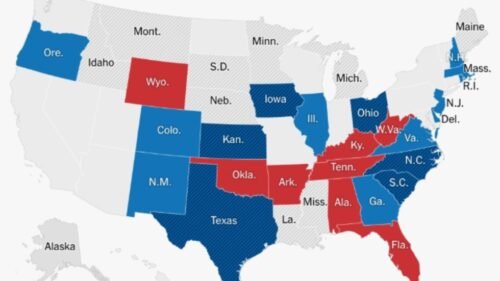
Jenkins calls the midterms a “generational political event.” He cites an estimate of 120 million votes cast, second only to 2018 among midterms in more than a century. Democrats won Senate races in Texas and South Carolina, while Adam Hamilton became the first Democrat in 94 years to win a US Senate seat in Kansas. In Mississippi, Jenkins says the Democratic challenger appears poised to unseat a Republican incumbent. (Since this conversation, Democrat Scott Colom has won in Mississippi.)
North Carolina shows how far the wave reaches. Jenkins points to former Governor Roy Cooper’s 20-point Senate victory and a reversal in the state’s US House delegation, from ten Republicans and four Democrats to ten Democrats and four Republicans. The result recalls the 1994 midterms, when Republicans led by Newt Gingrich captured Congress during US President Bill Clinton’s administration. Singh wonders whether 2026 closes the political era that began then. Jenkins sees a dramatic shift and argues that its durability will only become clear in hindsight.
How Democrats reconnected with voters
Jenkins attributes much of the turnout to frustration with Trump. He links rising prices to tariffs and the war with Iran. Many Americans already struggling to pay their bills grew angrier as they came to believe Trump was using the presidency to enrich himself. Yet Democrats entered the election with poor favorability ratings of their own. Jenkins credits them with recruiting candidates who had ties to communities the party had struggled to reach, including a Maine logger, a North Carolina farmer and South Texas Tejano singer Bobby Pulido.
Pulido’s Republican opponent suggested that the race should have little to do with whom voters wanted to sing at a niece’s quinceañera. Pulido responded by performing at the celebrations. In Texas and Kansas, respectively, Senate candidates James Talarico, a Presbyterian seminary graduate, and Hamilton, a Methodist pastor, drew on scripture and invoked the Good Samaritan. Singh contends that Democrats also regained ground by talking about the costs of childcare, healthcare and housing, issues he says the party had allowed cultural disputes to crowd out.
The working-class anger behind the vote is personal for Jenkins. As a teenager in western North Carolina, he worked in a cotton mill and loaded trailers for a trucking company. Both employers are gone. Singh connects those losses to the promises of the globalization era, when workers were told that displaced industries would give way to better jobs. Trump found an audience among people who felt those promises had failed them. Jenkins believes that Trump’s brand of politics lost much of its appeal in the midterms. Whether Democrats can hold those voters depends on what they do with the opportunity.
A divided government faces its first tests
Jenkins reads Trump’s choice of Stephen Miller as White House chief of staff as a sign that the administration will take a hard line with the incoming Congress. Singh points to House Democratic leader Hakeem Jeffries’s support for impeaching Defense Secretary Pete Hegseth as an early indication of how quickly the two sides could clash. He expects fights over government funding and judicial confirmations, alongside congressional investigations into the administration.
Both parties also face internal disputes. Republicans must decide how much of Trump’s political approach to carry into 2028. Democrats must reconcile the priorities of candidates like Talarico with those of the party’s democratic socialist wing. Those differences will matter when congressional leaders have to decide which campaign promises to turn into legislation and where to seek agreement with the White House.
The stakes beyond Washington
Singh argues that the economic pressures behind the vote extend well beyond Congress. Disruption in the Strait of Hormuz has made US households feel the cost of a war overseas. He also questions whether investment in artificial intelligence can sustain its current pace and warns that a downturn could hit white-collar employment. Jenkins observes that problems of that scale are beyond the reach of any single bill or executive order.
Jenkins calls the midterms “the opening act.” The victories give Democrats a wider electoral map heading into 2028 and the power to set Congress’s agenda in January. Over the next two years, voters will see what that power can achieve under divided government. For the communities that gave Democrats another chance, the test will be whether their support brings changes they can feel in their daily lives.
[Lee Thompson-Kolar edited this piece.]
The views expressed in this article/video are the author’s own and do not necessarily reflect Fair Observer’s editorial policy.




































Comment