


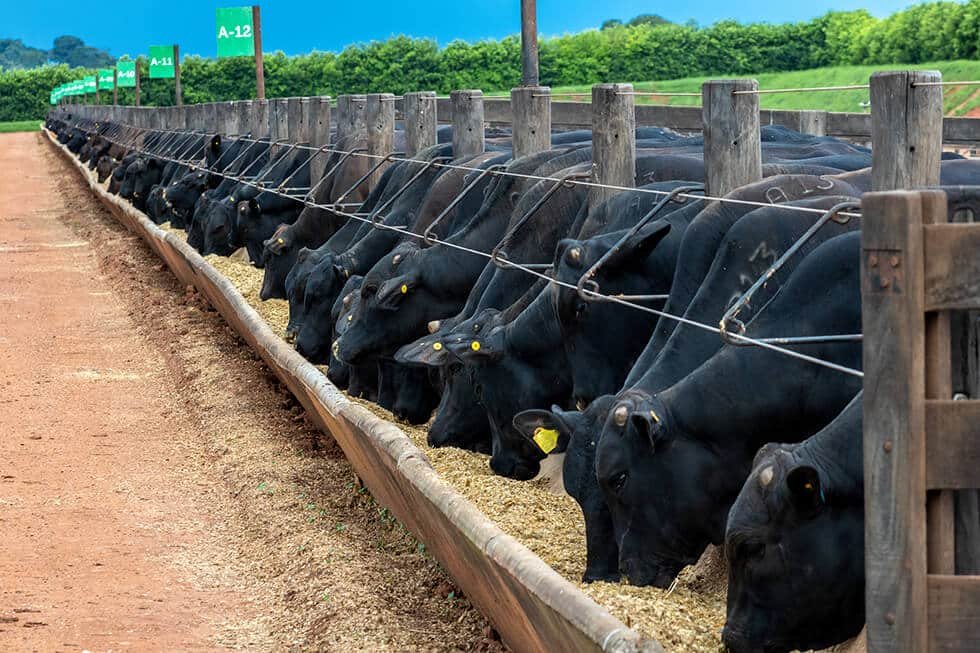



An American hamburger can begin its journey in a Brazilian pasture, pass through a meatpacking plant controlled by a Brazilian multinational, cross the continent and end up on a grill in the United States. Along this path, it crosses borders, tariffs, corporate interests and a curious political contradiction: The president who promised to protect American producers discovered that, to lower the price of meat consumed by his voters, he needs to make room for foreign competition.
On August 21, US President Donald Trump announced a temporary suspension of tariffs on a portion of beef imports. The 90-day measure expanded the quota of meat that could enter the US without the additional tariff normally applied to volumes exceeding authorized limits by 300,000 tons. Meatpackers intend the meat mainly for hamburgers, mixed with fattier domestic production. The initiative, presented as a response to escalating supermarket prices, went into effect on September 1.
Brazil has much to gain from this opening. In September, Americans imported 44,440 tons of fresh Brazilian beef, a monthly record representing a 41.8% growth compared to August. Adding processed products, the volume reached 48,300 tons. Conveniently, the movement came at a time when Beijing had imposed restrictions on Brazilian sales to China, Brazil’s main buyer.
The American cost of cheaper beef
Trump’s decision has a simple economic logic. American meat is expensive, the herd has shrunken and replacing the animals takes time. Importing cheaper meat increases the available supply and can alleviate the prices paid by consumers. But across the counter, the American rancher who invested years in raising the herd sees their product competing for space with a foreign commodity favored by the temporary reduction of trade barriers.
Protectionism, after all, comes at a cost. While imported meat pays high tariffs, the domestic producer enjoys additional protection against international competition. When this barrier lowers, the price of imported meat becomes more competitive and the buyer gains alternatives. The consumer might benefit, but the American cattle rancher faces greater pressure on the prices received for their cattle.
That is exactly what happened in the futures markets and livestock auctions following the announcement. The ranchers’ reaction was immediate, with a drop in prices and concerns about the profitability of their business. Organizations such as the National Cattlemen’s Beef Association, which represents beef producers, criticized the measure. Facilitating imports could weaken the incentive to rebuild the American herd, which is close to its smallest size since 1951.
American cattle ranching faces a combination of drought, high costs and a shrinking number of animals. Expanding the herd requires time, pasture, feed, capital and a willingness to take risks. By facilitating the entry of foreign meat, Trump seeks to address an immediate price issue, but he may make the investment needed to expand future domestic supply less attractive. The measure’s effect on shelf prices, however, remains uncertain. The quota represents a limited portion of American consumption and does not, by itself, solve the structural shortage of cattle.
Brazil’s meat machine
Brazil, meanwhile, produces beef for a massive domestic market while maintaining an export structure capable of supplying buyers in dozens of countries. According to the Beef Report 2026, from the Brazilian Association of Meat Exporting Industries (ABIEC), Brazil exported 3.5 million tons in 2025, with revenues of $18 billion, consolidating its position as the world’s largest exporter. China and the US are among the most important markets for this production.
The supply chain begins with raising the animals, passes through transporters, meatpacking plants, sanitary certifications and logistics operators, and ends in distribution networks that must meet the requirements of each market. Exporting beef does not simply mean slaughtering a steer and putting it on a ship. Each country establishes sanitary criteria, residue limits, traceability requirements, industrial plant licensing and trade rules. Meatpackers that manage to comply with these requirements accumulate a competitive advantage that is hard to replicate.
The sector has also transformed through corporate concentration. JBS, Marfrig (now part of MBRF Global Foods) and Minerva hold central positions in Brazilian exports. A Trase survey on the beef supply chain identified that the three companies together accounted for 67% of Brazilian exports in 2023. This concentration gives these groups the ability to negotiate large contracts, distribute risks across different markets and redirect exports as trade conditions change.
Meatpackers have the resources to maintain specialized teams for foreign trade, institutional relations, regulatory affairs and government negotiations. A market opening can represent billions in potential revenue; a border closing or a tariff taking effect can jeopardize contracts and require production be reorganized. That is why trade policy is as much a part of the business as slaughtering, refrigeration and transportation.
ABIEC itself lists among its objectives the defense of exporters’ interests, the reduction of tariff and non-tariff barriers, and influencing decisions and regulations that affect international trade. The association participates in trade fairs, organizes meetings with authorities and works to open markets. This is corporate lobbying in its most direct sense: representing a sector before those who make decisions capable of altering its bottom line.
Agribusiness politics
In Brazil, this influence finds a particularly favorable political environment. The so-called BBB caucus, an acronym for Boi, Bala e Bíblia (Beef, Bullets and Bible), broadly brings together lawmakers linked to agribusiness, public security and conservative religious agendas. It is not a formal party nor an entirely homogeneous bloc. Its members belong to different political parties and may disagree on specific issues, but they form important alliances when their interests converge.
The Beef caucus represents agribusiness interests, including the defense of rural property, the expansion of logistics infrastructure, the deregulation of certain environmental rules and the opening of markets. The Bullets caucus gathers lawmakers identified with tougher criminal penalties and expanding the role of security forces. The Bible caucus articulates conservative religious sectors around themes such as education, morals and civil rights. The strength of the expression lies in its ability to show how economic interests, security agendas and moral causes can reinforce one another within Congress.
This coalition does not mean that every lawmaker tied to the Beef caucus directly represents a meatpacker, nor that all agribusiness interests are identical. Livestock farming consists of large industrial groups, independent producers, small ranchers, cooperatives and suppliers who do not always benefit from the same decisions. A large exporter may gain from the international appreciation of meat, while a smaller producer faces rising costs to feed the herd or transport the animals to the slaughterhouse.
The distinction matters because the image of a united agribusiness hides a supply chain where economic power is distributed quite unequally. Large meatpackers control industrial facilities, export contracts and access channels to international markets. Ranchers, in turn, must sell animals under the conditions offered by the available buyers in their regions. The existence of an influential rural caucus does not eliminate these differences; under certain circumstances, it may even help present specific corporate interests as if they were the interests of all rural production.
The American case offers a clear example of large meat companies’ political influence. Joesley Batista, one of the controlling shareholders of JBS, reportedly met with Trump in the Oval Office on August 20, a day before the measure was announced. According to people familiar with the meeting, Batista proposed expanding Brazilian meat supplies as a way to contain US prices if the government lowered the import tariff.
(The temporal proximity between the meeting and announcement shows how a decision publicly presented as an anti-inflation policy also aligned with a commercial opportunity for one of the sector’s largest groups. As the account cannot be independently verified, the meeting and its content should not be taken as proof that the businessman dictated the presidential decision.)
The episode exposes an important feature of contemporary capitalism: Global companies do not rely exclusively on productive advantages to conquer markets. They also need to participate in the negotiations that define the conditions of access to these markets. When a businessman has the opportunity to directly present a president with a solution to an economic problem, the boundary between trade policy and private interest becomes a legitimate subject of public scrutiny.
Ranchers vs. consumers vs. importers
JBS stands not just as a Brazilian exporter selling meat to Americans. It is a multinational corporation with substantial processing operations in the US. The company can, therefore, benefit from an expansion of Brazilian meat imports while simultaneously operating in the American processing and distribution market. The corporate interest does not necessarily coincide with the interest of the American rancher who sells their animals to local meatpackers.
Large meat processors need raw materials in sufficient volume and at competitive prices. When domestic supply drops and prices rise, importing can be an attractive commercial solution. On the other hand, the rancher who invests in raising the animals needs prices that support maintaining and expanding their herd. What reduces costs for one part of the chain may reduce the remuneration of another.
Consumer interests also enter this equation. Cheaper meat can ease the budget of American families, especially in a country where the price of food carries considerable political weight. Trump faces a choice between protecting the income of rural producers and responding to the consumer who finds increasingly expensive meat at the supermarket. The temporary opening of the quota suggests that, faced with inflationary pressure, he decided to prioritize the latter group, even if it meant opposing ranching entities in his support base.
The dispute is not, therefore, just Brazil versus the US. On one side are the American ranchers, who want sufficient prices to sustain their businesses; on the other, consumers, interested in lowering their grocery bills; in the middle, the meatpackers and importers, who need competitive raw materials and seek to widen their profit margins. The government tries to manage interests that cannot all be fully satisfied at the same time.
Brazil may not replace American supply indefinitely, and the suspension may not significantly lower consumer prices. The authorized additional volume is a small fraction of annual US consumption, and the effects depend on factors such as logistics, availability of licensed meat, purchase contracts and whether retailers pass on savings. The requirement that importers offer the product at a discount also introduces doubts about how to calculate and monitor the final price.
The environment suffers as the beef industry grows
There is also an environmental cost when the debate focuses on tariffs. The expansion of Brazilian cattle ranching has been linked to deforestation, especially when the opening of new pastures involves the conversion of native vegetation. The Trase analysis shows that the three largest exporting groups’ supply chains are exposed to this problem. The companies have adopted monitoring systems and traceability commitments, but the coverage and effectiveness of these mechanisms evaluate the production’s impact.
The pressure for cheap meat can trigger a race for volume if it is not accompanied by environmental and traceability criteria capable of distinguishing regular production from that associated with the destruction of ecosystems. We should not measure Brazilian competitiveness only by the cost per exported kilo, but also by the ability to demonstrate the origin of the animals and prevent commercial expansion from rewarding suppliers involved in illegal deforestation.
Trump’s suspension has a set deadline, but the contradictions it reveals are permanent. The US government uses tariffs to protect domestic production and, when prices rise, makes an exception to import what the country itself cannot supply in sufficient quantities. Brazil seizes the opportunity because it built an industry capable of responding quickly to international demand. The major meatpackers seek to expand their sales, while American ranchers fear that the competition will harm the herd’s recovery.
In the Brazilian Congress, the strength of the Beef caucus helps sustain the political conditions for the sector’s expansion. In the US, the rancher organizations’ reaction shows that the influence of agribusiness also meets its limits when its interests clash with those of other economic groups and the government’s electoral priorities.
In the end, a hamburger’s journey helps illuminate something that speeches about economic sovereignty often hide: Meat is an agricultural product, but it is also an industrial commodity, a tool of trade policy and a global business. The steer is born in a pasture, but the price shaping its rancher’s livelihood can be decided in a meeting at the White House, in a negotiation between meatpackers or in a clash of interests in Congress.
Trump wanted to protect Americans and lower the price of meat simultaneously. For 90 days, he decided that importing more was the best way to try to do both. The ranchers’ reaction demonstrates the cost of that choice; the advance of Brazilian exports shows who can benefit from it. And the actions of large corporate groups remind us that, in a globalized economy, tariffs may be announced in the name of the national interest, but their effects depend on who has scale, market access and the ability to get to the table where decisions are made first.
[Lee Thompson-Kolar edited this piece.]
The views expressed in this article are the author’s own and do not necessarily reflect Fair Observer’s editorial policy.
Canada at War: Trade and Trump’s Tariffs
Canada faces a stark dilemma as the US, under President Donald Trump’s volatile leadership, imposes tariffs and demands concessions that...
FO Exclusive: A Hot Mess After the Supreme Court Strikes Down Trump Tariffs
In this section of the February 2026 episode of FO Exclusive, Atul Singh and Glenn Carle analyze the US Supreme...

Tariffs, Treasuries and the Quiet Risk to America’s Financial Power
Trade has not collapsed under tariffs; it has rerouted, as firms and countries adapt supply chains and sourcing strategies. But...

Tariffs, Strategy and the Cost of Misplaced Power
US tariffs aimed at constraining China have spurred Beijing to strengthen its strategic position. It’s embedded its manufacturing and innovation...
Trump’s Gordian Knot: Brazil is Under Threat Thanks to Bolsonaro and Big Tech Lobbying
US President Donald Trump has threatened to impose a 50% tariff on Brazilian exports unless Brazil grants amnesty to former...
Support Fair Observer
We rely on your support for our independence, diversity and quality.
For more than 10 years, Fair Observer has been free, fair and independent. No billionaire owns us, no advertisers control us. We are a reader-supported nonprofit. Unlike many other publications, we keep our content free for readers regardless of where they live or whether they can afford to pay. We have no paywalls and no ads.
In the post-truth era of fake news, echo chambers and filter bubbles, we publish a plurality of perspectives from around the world. Anyone can publish with us, but everyone goes through a rigorous editorial process. So, you get fact-checked, well-reasoned content instead of noise.
We publish 3,000+ voices from 90+ countries. We also conduct education and training programs
on subjects ranging from digital media and journalism to writing and critical thinking. This
doesn’t come cheap. Servers, editors, trainers and web developers cost
money.
Please consider supporting us on a regular basis as a recurring donor or a
sustaining member.
Will you support FO’s journalism?
We rely on your support for our independence, diversity and quality.




Comment