




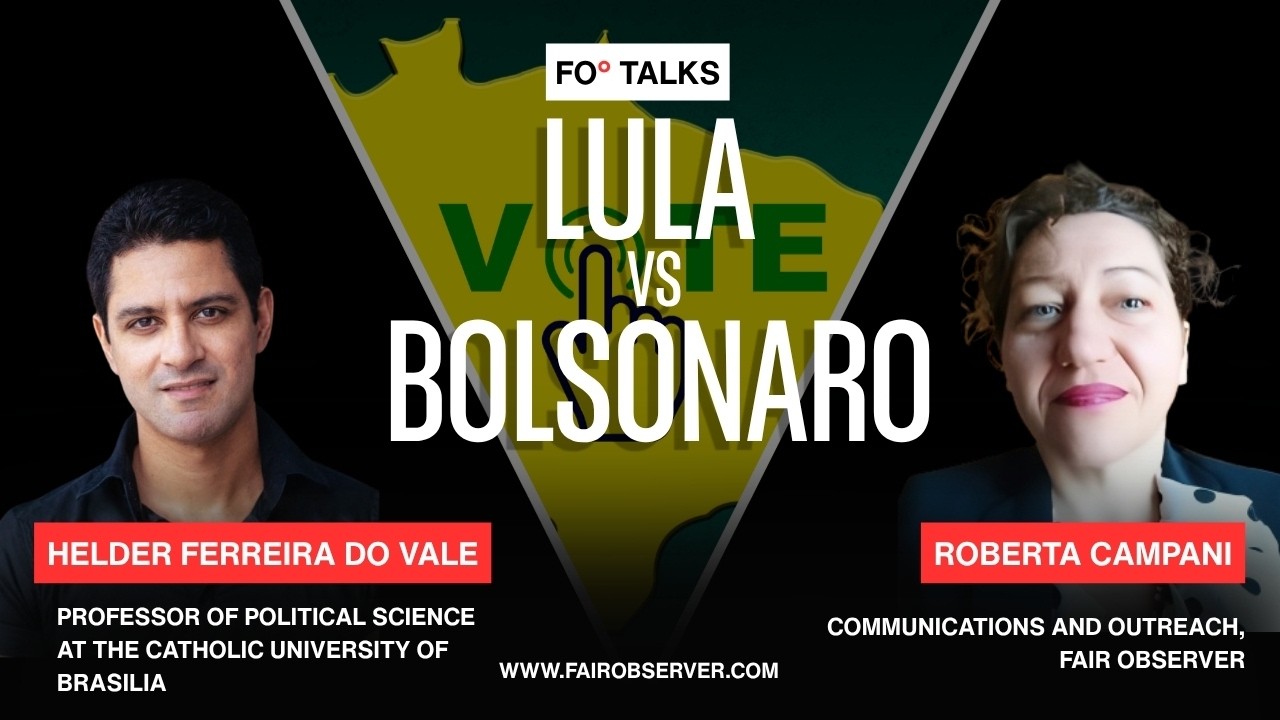
Fair Observer’s Communications and Outreach officer, Roberta Campani, speaks with Helder Ferreira do Vale, a professor of Political Science at the Catholic University of Brasília, about Brazil’s closely contested 2026 presidential election. Incumbent President Luiz Inácio Lula da Silva leads Senator Flávio Bolsonaro in first-round polling, but a runoff could produce a technical tie. Ferreira do Vale explains how polarization, congressional fragmentation, US involvement and Brazil’s resilient institutions will shape the contest.
Brazil returns to a polarized contest
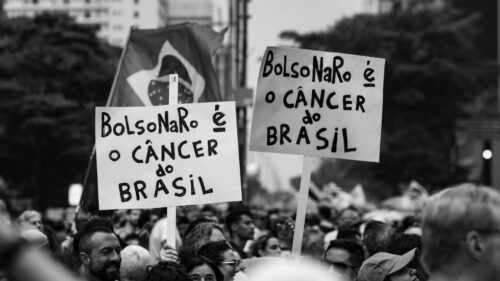
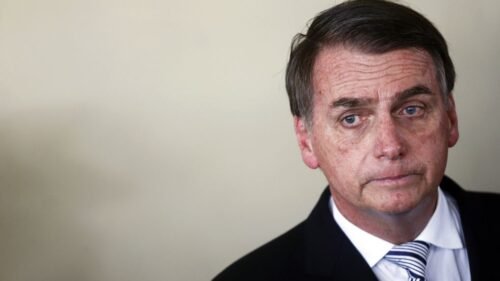
Ferreira do Vale says that intense political polarization has defined Brazil since 2018. The coming election resembles the 2022 contest, when Lula narrowly defeated former Brazilian President Jair Bolsonaro, who subsequently challenged the electoral system and was prosecuted following an attempted coup.
Lula is seeking a second consecutive term and his fourth overall. Brazilian law permits presidents to serve two consecutive terms. Lula governed from 2003 to 2010, remained out of office for three presidential terms and returned to power in 2022. His candidacy is therefore legal.
Flávio Bolsonaro has emerged as the principal heir to his father’s conservative movement. A former senator and Jair Bolsonaro’s eldest son, he belongs to a family whose members have helped sustain the former president’s rhetoric and political organization. Ferreira do Vale believes former First Lady of Brazil Michelle Bolsonaro might have made a stronger candidate because of her charisma and potential appeal among women. A public family dispute, however, pushed her aside.
A runoff could erase Lula’s lead
Brazilian presidential candidates must receive more than 50% of valid votes to win in the first round. Polls give Lula an advantage of roughly four to six percentage points over Flávio. Lula benefits from being the left’s only major candidate, while several conservative candidates divide the right-wing vote.
Yet Lula’s rejection rate ranges from 45% to 48%, limiting his ability to attract additional support. The race consequently becomes much closer in projected second-round matchups. Polls place Lula between 40% and 45%, compared with approximately 44% for Flávio.
Several minor conservative candidates currently command between 2% and 4% each. Their voters are likely to move toward Flávio in a runoff. Ferreira do Vale therefore expects a contest resembling 2022: a relatively comfortable first-round performance for Lula followed by a far tighter second round.
The electorate may nevertheless be less rigid than it was four years ago. Approximately 51% of voters, in a spontaneous poll, now say they could change their minds before the election, compared with 32% during the 2022 campaign.
Lula dominates the left as Congress constrains presidents
Lula has remained Brazil’s central left-wing figure since its transition to democracy. Ferreira do Vale says Lula has systematically sidelined potential rivals, leaving the left without an obvious successor despite the president’s age.
The Workers’ Party has survived by adapting its coalition and geographic base. It began as a labor movement supported by parts of São Paulo’s middle class, but its strongest support now comes from the poorer Northeast. Ferreira do Vale calls it “a very adaptable, chameleonic party” capable of competing locally and nationally.
Brazil’s right is more fragmented. Many conservative parties have strong local organizations but limited ideological or programmatic commitments. They dominate Congress, which has accumulated substantial control over public spending and can pressure presidents through the budget.
This structure produces unexpected alliances. The right-wing president of the lower house has endorsed Lula instead of Flávio, demonstrating that congressional leaders may prioritize access to power over ideological loyalty. Whoever wins the presidency will therefore have to negotiate with a conservative legislature.
Trump becomes an issue in Brazil’s election
Foreign policy plays an unusually prominent role. Flávio’s allies suggest that his victory would secure support from US President Donald Trump, whose administration has cultivated close relationships with conservative Latin American governments.
Relations between Brasília and Washington have deteriorated. In July, the United States imposed a 25% tariff increase on Brazilian goods, citing unfair trade. Brazil has indicated that it will not grant a visa to a US senator nominated as ambassador before the election. Washington responded by canceling Brazilian ambassador Maria Luiza Ribeiro Viotti’s visa.
Lula’s government fears that a Trump-aligned US ambassador could question the election’s legitimacy. Jair Bolsonaro previously attacked Brazil’s electronic voting system and cast doubt on electoral results.
Ferreira do Vale rejects claims that the system itself is unreliable, describing it as “quite efficient, transparent.” Electoral authorities and the Supreme Court are nevertheless engaging international observers and civil society to explain the process and protect public confidence.
Brazil’s institutions favor continuity
The candidates differ in rhetoric, particularly on environmental protection and social policy, but both will face powerful institutional constraints. Brazil’s agricultural caucus exercises significant influence in Congress, while the country’s biofuel, food and agricultural industries limit how sharply either administration could change policy.
Major social institutions have also survived political transitions. Bolsa Família, the cash-transfer program introduced under Lula, remained in place under Jair Bolsonaro. Brazil’s decentralized public health system, established during the transition to democracy, has endured changes at every level of government and operates one of the world’s largest free HIV/AIDS treatment programs.
Ferreira do Vale expects similar continuity after the election. Brazil’s large bureaucracy, federal structure and numerous veto institutions make radical changes difficult. Those safeguards helped the country withstand the events of January 8, 2023.
Voters still confront serious problems. Household debt has reduced disposable income, while 33% identify public violence as their greatest concern. Despite average economic growth of approximately 3% over the past four years, many Brazilians continue to experience financial hardship.
Neither Lula nor the Flávio movement has resolved these structural challenges. The election may therefore be extremely close, but Ferreira do Vale expects Brazil’s institutions and established social programs to remain largely intact regardless of the winner.
[Lee Thompson-Kolar edited this piece.]
The views expressed in this article/video are the author’s own and do not necessarily reflect Fair Observer’s editorial policy.




























Comment