


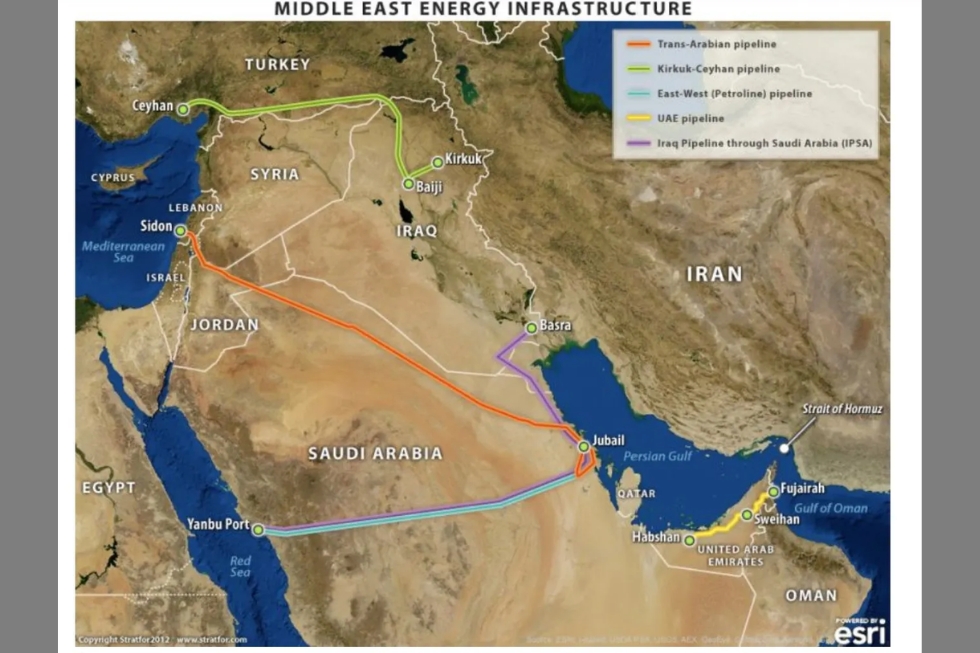


Middle Eastern pipelines would make for an exciting 21st-century updated game of Monopoly or Risk. Pipelines are the currency of the region’s latest efforts to rethink energy security and reduce Gulf state and Iraqi dependence on the embattled Strait of Hormuz.
Increasing the capacity of existing pipelines and building new ones is no panacea for the immediate crisis, from which Iran will likely emerge as a — if not the key — player in the waterway through which 20% of the world’s energy trade flows. Future pipelines are a mid-term goal; they have little impact on current efforts to ensure freedom of navigation in the Strait of Hormuz.
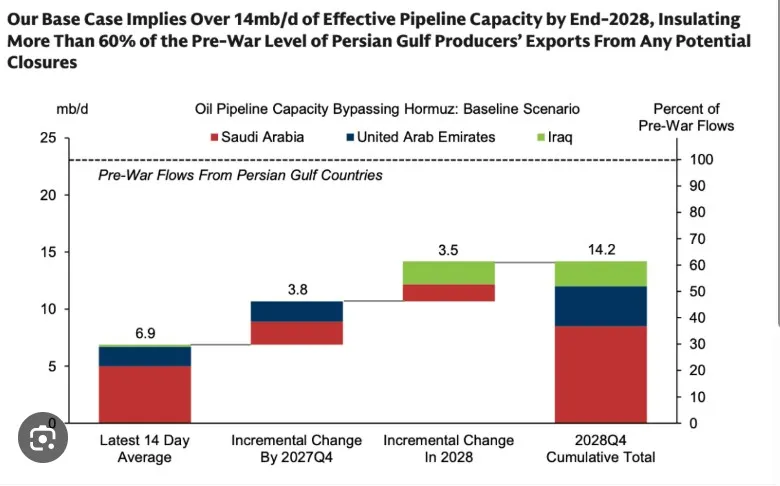
Moreover, the prospect of diverting up to 60% of oil and gas flows away from the Strait of Hormuz could stiffen Iran’s position in current negotiations, given that any future alternative infrastructure would reduce rather than eliminate its leverage. Add to that the fact that pipelines and other alternative infrastructure do not eradicate risk; they diversify it for some Gulf energy exporters.
Qatar has no easy alternatives to the Strait of Hormuz
For Qatar, one of the world’s top liquefied natural gas (LNG) producers, which sees no realistic alternative to shipping its exports through the Strait of Hormuz, pipelines, railways, roads and ports beyond the Strait are no panacea.
Last week, QatarEnergy notified Edison — one of its biggest European customers — that it will be unable to deliver three LNG cargoes, extending “force majeure” until the end of September. The notice increases the number of Qatari LNG cargoes subject to force majeure to 24, representing a total volume of approximately three billion cubic meters of natural gas. QatarEnergy operates one of the world’s largest fleets of LNG carriers.
Saudi Arabia’s perilous balancing act
Furthermore, most of the existing pipelines and ports beyond the Strait as well as those under construction, planned or considered remain within the range of Iranian and Iranian-backed Yemeni Houthi rebel and Iraqi-militia missiles and drones. For Saudi Arabia, this means that circumventing the Strait has an element of jumping from the fire into the frying pan.
With the Strait effectively controlled by Iran, Saudi Arabia is dependent on its Red Sea port of Yanbu and the Bab al-Mandab waterway that the Houthis have declared closed for Saudi-related shipping. Amid heightened Saudi-Houthi tensions, Yanbu is within the rebels’ missile and drone range.
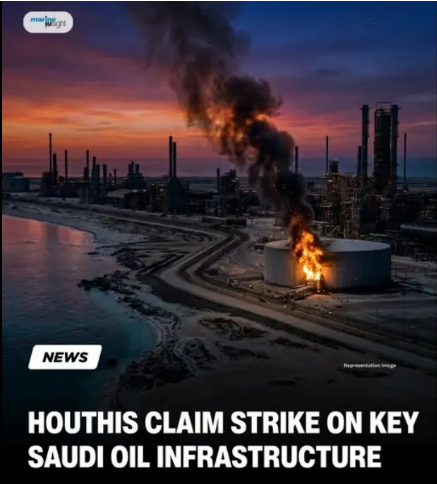
The Houthis said last week that they had targeted crude oil supply and transport sites linking oil-rich eastern Saudi Arabia to the Yanbu oil export hub, a reference to the kingdom’s east-west Petroline pipeline that allows it to circumvent the Strait of Hormuz. Meanwhile, Saudi Arabia said it had repeatedly intercepted a “number of drones” launched at the kingdom’s oil facilities by militias in Iraq.
In response, the United States and Saudi Arabia launched strikes on the militias’ drone facilities and headquarters to stymie what was likely an Iranian-backed effort to interrupt the kingdom’s oil exports through the Red Sea. Earlier, Iran had warned that if the US naval blockade of Iranian ports continued to prevent it from exporting oil, no one in the Gulf would be allowed to export.
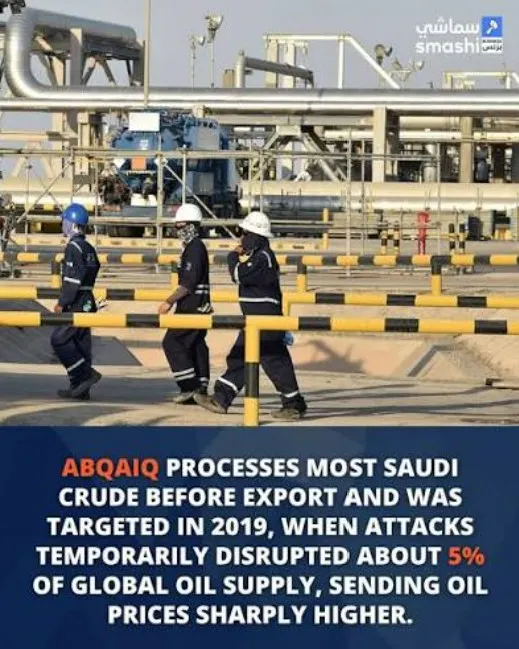
Saudi Arabia built the Petroline pipeline in the 1980s when Iran threatened shipping in the Strait of Hormuz during the Iran-Iraq War. In 2019, Houthi drones attacked Petroline’s starting point, Abqaiq, temporarily knocking out half of Saudi Arabia’s oil production or 5% of global production. The kingdom is reportedly considering expanding Petroline’s capacity to increase the flow of Saudi oil to Yanbu and accommodate oil from Bahrain and Kuwait that lack alternatives to the Strait of Hormuz.
Anticipating renewed attacks by the Houthis and Iraqi militias, Saudi Arabia has begun shipping oil northwards in recent months through the Suez Canal to Egyptian ports on the Mediterranean via the Suez-Mediterranean Pipeline (Sumed), which runs parallel to the Canal. The Houthis have attacked Saudi vessels in the Red Sea in recent days, demonstrating that the Egyptian route was no less vulnerable. The same is true for various other projects designed to circumvent the Strait of Hormuz and reduce the risk of attacks by Iran and its non-state allies.
The United Arab Emirates’ dual strategy
The United Arab Emirates (UAE) is halfway through construction of a $3 billion, 300-kilometer pipeline that would next year double the Gulf state’s ability to pump oil to the Gulf of Oman port of Fujairah. The UAE is further looking at building a pipeline from Sharjah’s Al Hamriyah port to Fujairah. To reduce the risk of attacks, the UAE is considering burying its pipelines underground and enhancing pipeline security with air defense systems. Iran has attacked Fujairah’s energy infrastructure twice since the United States and Israel attacked Iran on February 28.
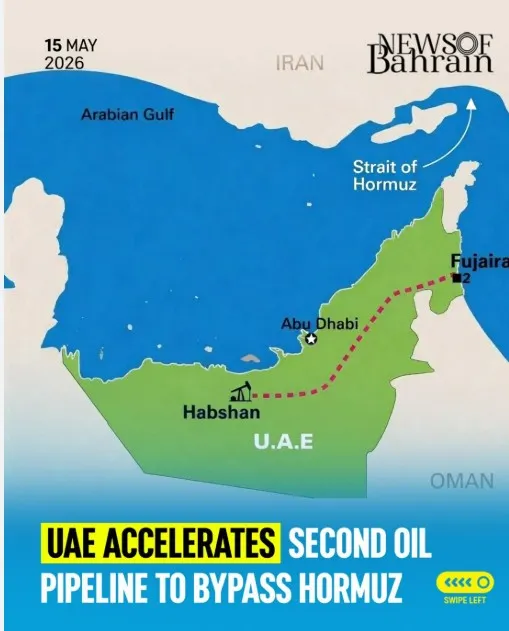
In response and recognition that Iran is not a threat that will go away, the UAE has sought to minimize the risk of attacks on its energy infrastructure by re-opening economic relations with Iran, while deepening military cooperation with the United States and Israel. The UAE has lifted a ban on exports to Iran, restored Iranian air carriers’ landing rights at Dubai airport and allowed some 20,000 Iranian residents who were abroad when the war erupted to return to the UAE. The UAE is further eager to benefit from Iran’s reconstruction by investing in energy, ports and logistics once the war ends and the US lifts its sanctions.
Iran exempted the UAE from its latest almost two weeks of retaliatory strikes against Gulf states and Jordan but earlier this month targeted two UAE tankers in the Strait of Hormuz after declaring it was re-closing the chokepoint.
Iraq’s pipeline plans
Like Emirati and Saudi infrastructure, Iraqi pipeline plans, including a domestic line from Basra to Haditha that would be extended with branches to Syria’s Baniyas, Turkey’s Ceyhan and Jordan’s Aqaba, and another line to Ceyhan that would bypass Iraqi Kurdistan, remain easy targets for Iran and Iraqi militias.
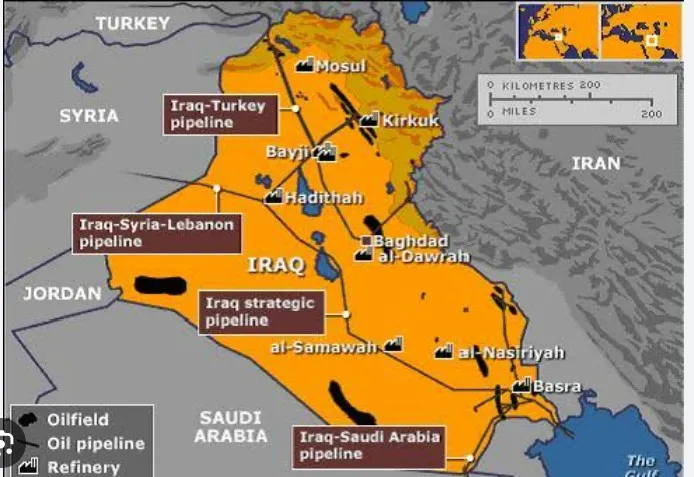
Iraq is also discussing the revival of a defunct, dilapidated pipeline connecting it to Yanbu, a Saudi Red Sea port. The pipeline was mothballed in 1991 in the wake of the Iraqi invasion of Kuwait. The discussions are unlikely to resume any time soon, with Iraqi militias attacking the kingdom’s oil facilities and the coordinated US–Saudi strikes against Iraq.
Yet even as Gulf states explore every possible alternative, in this high-stakes energy game of Risk or Monopoly, the Strait of Hormuz remains the ultimate wildcard — where every move to diversify risk only reshuffles the geopolitical deck.
[The Turbulent World first published this piece.]
[Kaitlyn Diana edited this piece.]
The views expressed in this article are the author’s own and do not necessarily reflect Fair Observer’s editorial policy.
The Iran War Is a Reminder: Decarbonize Fast, But Do Not Gamble with Energy Security
The Iran war has disrupted global energy markets by targeting key infrastructure and closing the Strait of Hormuz, a vital...
The Strait of Hormuz and the Significance of Maritime Routes
Recent conflict in the Strait of Hormuz underscores the vulnerability of critical maritime chokepoints that carry much of the world’s...
The Middle East War Could Finally Push Indonesia Toward Renewable Energy
The conflict between the US, Israel and Iran is disrupting global oil markets, driving prices higher and threatening Indonesia’s energy...
Support Fair Observer
We rely on your support for our independence, diversity and quality.
For more than 10 years, Fair Observer has been free, fair and independent. No billionaire owns us, no advertisers control us. We are a reader-supported nonprofit. Unlike many other publications, we keep our content free for readers regardless of where they live or whether they can afford to pay. We have no paywalls and no ads.
In the post-truth era of fake news, echo chambers and filter bubbles, we publish a plurality of perspectives from around the world. Anyone can publish with us, but everyone goes through a rigorous editorial process. So, you get fact-checked, well-reasoned content instead of noise.
We publish 3,000+ voices from 90+ countries. We also conduct education and training programs
on subjects ranging from digital media and journalism to writing and critical thinking. This
doesn’t come cheap. Servers, editors, trainers and web developers cost
money.
Please consider supporting us on a regular basis as a recurring donor or a
sustaining member.
Will you support FO’s journalism?
We rely on your support for our independence, diversity and quality.





Comment