



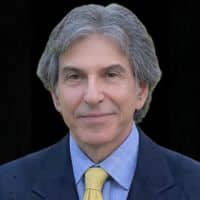

Kent Jenkins Jr., a former political reporter from The Washington Post turned communications consultant, speaks with author Paul Eckert about the widening fracture inside the American middle class and what it means for the future of democracy. Drawing on his 2026 book, Healing Middle-Class Democracy: Respecting Each Other, Cooperating Fairly, and Sharing Opportunity, Eckert argues that the postwar middle class has split into a prosperous upper tier and a struggling lower tier with increasingly different economic possibilities. Rising housing, healthcare, childcare and education costs have weakened the sense of shared opportunity that once anchored American society. Eckert proposes a broader democratic project built on mutual respect, fairness and investment in opportunity.
A middle class divided
Eckert begins by redefining the middle class through economic dependence on work. Unlike the wealthy, middle-class Americans cannot stop working without risking a major decline in their standard of living. Yet he argues that this broad category no longer shares common economic interests.
He distinguishes between an upper middle class, roughly the top 20% of working-age Americans, and a lower middle class that makes up the next 60%. Since the late 1970s, the upper tier has accumulated far more wealth while the lower tier has struggled with affordability and economic insecurity. “The middle class depends on democracy and democracy depends on the middle class,” Eckert says. Democratic stability weakens when most citizens no longer feel institutions work for them.
The divide becomes visible in daily life. First-time homebuyers increasingly find themselves priced out of the market. Childcare costs force many families into impossible tradeoffs between parenting and employment. Healthcare expenses remain financially disruptive even for insured households, while rising student debt undermines education as a path to mobility. Jenkins notes that Americans who once occupied a relatively unified middle-class world now experience sharply different realities.
Democracy and mutual respect
For Eckert, the economic split carries political consequences because democracy relies on compromise between groups with competing interests. If most Americans lose faith in democratic institutions, those institutions become fragile.
His first proposed remedy is respect. Eckert says that the upper and lower middle classes increasingly live apart socially and geographically, which fuels resentment and misunderstanding. Those at the top may view struggling Americans as irresponsible or lazy, while those below see arrogance and unfair privilege.
He insists both perspectives miss the structural realities shaping opportunity. “Everybody’s working hard, everybody’s ambitious, everybody wants to do the best they can,” he says, even if circumstances produce vastly different outcomes.
Rather than condemning success, Eckert argues that prosperous Americans should retain incentives to innovate and achieve. Simultaneously, society should recognize the unrealized potential inside the lower middle class. Respect, in his framework, means acknowledging the equal dignity of all forms of work and rejecting the assumption that economic outcomes perfectly reflect personal worth.
Fairness, cooperation and opportunity
Eckert’s second pillar, cooperating fairly, draws heavily from political philosopher John Rawls. He revisits Rawls’s “veil of ignorance” thought experiment, which asks people to imagine designing society without knowing where they or their children would end up within it.
The exercise, Eckert argues, reveals why democratic societies must balance individual freedom with collective responsibility. Inequality will always exist because talent, health, upbringing and opportunity differ. Yet fairness requires ensuring that those born into difficult circumstances still have meaningful chances to improve their lives.
That principle leads directly to Eckert’s third pillar: sharing opportunity. He carefully distinguishes this from simple redistribution. While some redistribution may be necessary, he argues that long-term democratic stability depends more on expanding people’s ability to generate prosperity themselves.
Education sits at the center of this strategy. Eckert advocates a continuous pipeline beginning with preschool and extending through vocational training, community colleges and universities. He emphasizes that four-year college degrees should not remain the only respected path to advancement. Vocational education, entrepreneurship and technical skills can also create mobility and economic security.
Artificial intelligence intensifies the urgency of these reforms. AI-driven disruption may soon affect upper-middle-class professionals as much as manufacturing workers. Instead of slowing innovation, Eckert argues that education systems should help workers adapt to emerging industries and technologies.
Philosophy, experience and democratic hope
Jenkins notes that Eckert’s argument stands apart from the anger and polarization dominating contemporary politics. Eckert explains that his approach emerges partly from personal experience. Raised in lower-middle-class Indiana, he later entered elite academic and political institutions, giving him firsthand exposure to both sides of America’s class divide.
His thinking also draws from philosophers including Rawls, John Dewey and Jürgen Habermas. Dewey emphasized mutual respect and challenged the historic bias against manual labor. Habermas focused on honest communication and democratic negotiation in the aftermath of Nazi Germany. Rawls provided the framework for fairness and social cooperation.
Eckert acknowledges that his vision may appear idealistic in a deeply polarized political climate. Yet he argues that democratic societies need ideals precisely because daily politics so often falls short. “The American dream can be just a hopeless fantasy or an empty aspiration,” he says. “It can also be a reality.”
The discussion closes on a cautiously optimistic note. Eckert believes that investing in the unrealized potential of the lower middle class could increase national productivity while preserving prosperity for those already succeeding. Democracy, in his view, remains the only system capable of balancing both goals at once.
[Lee Thompson-Kolar edited this piece.]
The views expressed in this article/video are the author’s own and do not necessarily reflect Fair Observer’s editorial policy.






























Comment