




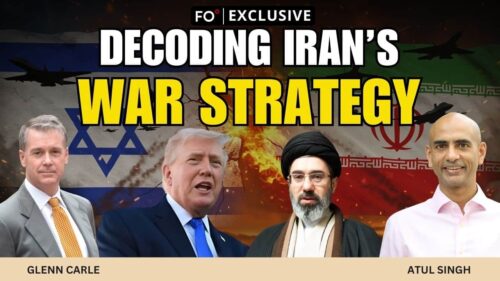
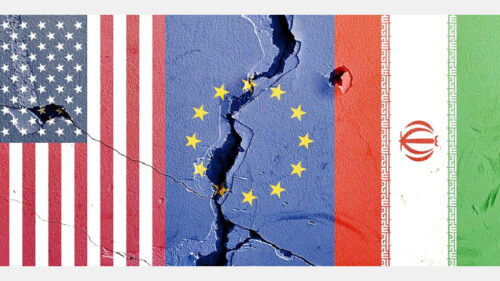
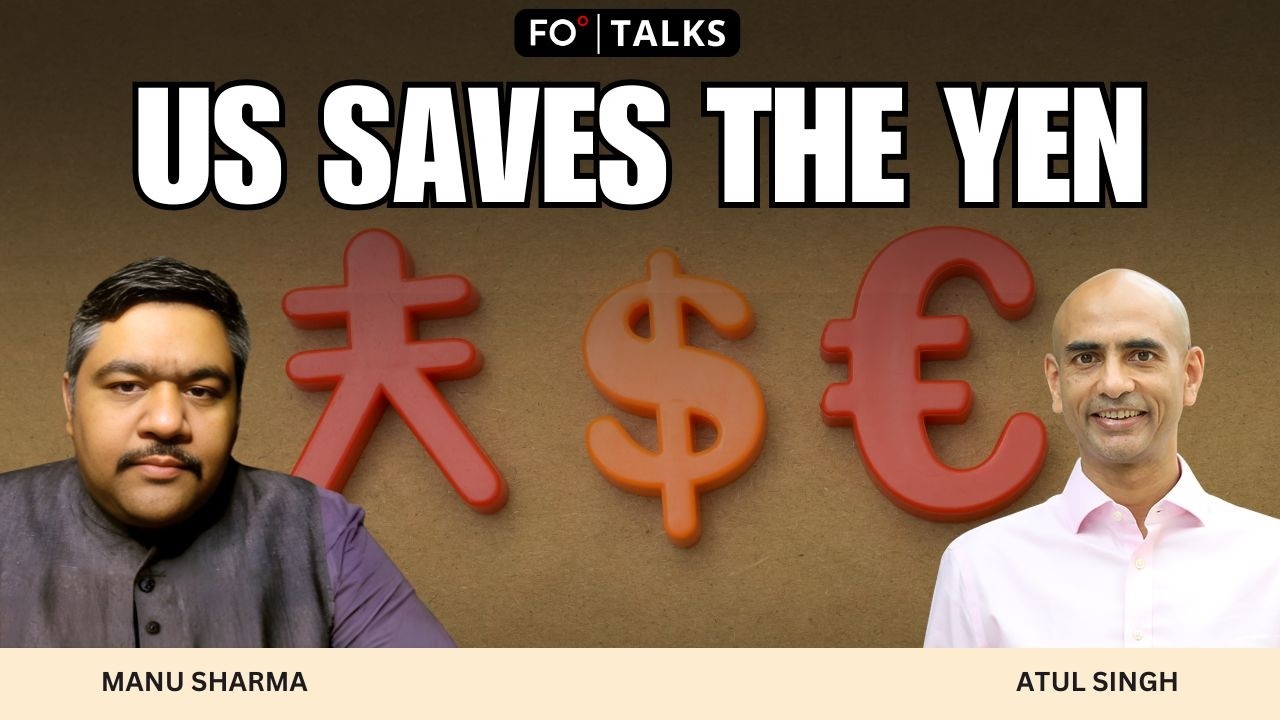
Editor-in-Chief Atul Singh speaks with FOI Partner and geopolitical analyst Manu Sharma about how the Iran war is evolving beyond a military confrontation into a systemic economic crisis. What began as a conflict shaped by assumptions about regime weakness and rapid victory now reveals a far more complex situation. As the war drags on, its most consequential effects are spreading through global energy markets, financial systems and industrial supply chains.
A war built on flawed assumptions
Atul opens by asking Manu to frame the conflict. Manu describes it starkly as “a royal fight between… two thoroughly different military ideologies,” highlighting the clash between Western shock-and-awe doctrine and Iran’s long-prepared defensive model. The United States and Israel entered the war believing Iran was weakened by sanctions, internal unrest and economic decline. That assessment shaped a strategy centered on rapid decapitation strikes designed to collapse the regime within days.
Preventing Iran from acquiring nuclear weapons or projecting power through regional proxies was a central objective. If left unchecked, Iran could potentially dominate Gulf energy flows, reshaping the balance of power in one of the world’s most critical regions.
Yet the early premise — that Iran would quickly crumble — has not held. Despite economic strain and political tensions, the regime has endured. Atul and Manu suggest that Israeli and American planners underestimated the depth of Iran’s institutional and ideological structures, as well as its ability to absorb and respond to sustained military pressure.
Iran’s resilience and asymmetric strategy
Iran’s response rests on preparation rather than improvisation. Instead of relying on centralized command structures vulnerable to decapitation, it has implemented what a decentralized “mosaic defense.” This system distributes authority across 31 independent military commands, making it difficult to disable the state through targeted strikes.
The same logic extends to governance. Iran’s layered redundancy ensures continuity even under extreme conditions. Leadership positions are backed by multiple successors, while the broader theocratic system provides an additional reservoir of authority. As Atul notes, this creates a depth that is not easily dismantled through conventional military means.
Manu explains that Iran has effectively built a different “operating system” for political survival. This system combines ideological commitment with military capability, allowing the state to withstand pressure that might destabilize more centralized regimes. The result is a conflict that has settled into a form of strategic stalemate, where none of the principal actors have achieved decisive political collapse.
Diverging political realities
While the battlefield remains contested, political responses differ sharply across countries. Atul says the war is highly popular in Israel, where even critics of Israeli Prime Minister Benjamin Netanyahu broadly support the campaign. In contrast, public opinion in the US is far more divided, creating what Atul calls a “tale of two countries.”
Iran, meanwhile, has focused on building support beyond its borders. Its diplomatic outreach across Asia, particularly among Shia Muslim communities, has generated both political sympathy and material support. There are visible signs of this mobilization, including donations and grassroots support, suggesting that Iran’s messaging resonates in parts of the Global South. Women are even donating gold, considered family treasure in Asia, to the Iranian war effort.
These dynamics reinforce a key point: The war is not producing uniform political outcomes. Rather, it is deepening fragmentation, both within societies and across the international system.
Economic warfare and Gulf vulnerability
Unable to match Israeli or American firepower, Iran has resorted to economic warfare. Iranian forces have targeted the Arab states of the Persian Gulf and shaken their economic foundations. Iran has also blocked the Strait of Hormuz and reduced the ships going through this chokepoint to a trickle. This strategy exploits structural vulnerabilities in a region that, despite decades of diversification, remains heavily dependent on energy exports and food imports as well as consumer goods and machines for critical infrastructure such as desalination plants.
By threatening shipping routes and energy facilities, Iran is effectively weaponizing geography. By blocking the Strait of Hormuz, Iran is driving up oil and gas prices, while attacks on infrastructure in the Gulf states create long-term supply constraints. In our globalized world, Arab states generating wealth through energy exports are diversifying their economies by pumping money into frontier economic activities. Iran has interrupted this flow of capital, which will have cascading effects far beyond the region.
The Gulf’s role as a hub for trade, finance and transportation amplifies these risks. Cities like Dubai in the United Arab Emirates and Doha in Qatar, built as global hubs with international airports, high-end shopping and luxury tourism, now face the possibility that their greatest strengths — connectivity and openness — could become liabilities in a prolonged conflict.
Global spillovers and systemic risk
The economic consequences extend well beyond energy markets. Gulf capital has played a crucial role in funding innovation and investment across Western economies, from real estate to cutting-edge technologies. If the war constrains the flow of this capital, the effects will ripple through sectors such as venture capital, artificial intelligence and infrastructure development.
Simultaneously, physical disruptions to energy production threaten the supply of critical industrial inputs. Helium shortages could affect semiconductor manufacturing, sulfur constraints could disrupt metal refining and reduced fertilizer production could reduce global agricultural output. These are not isolated shocks but interconnected pressures that strain the foundations of the global economy.
Manu captures the scale of the challenge with a warning: “This is a world that nobody is prepared for.” The conflict is no longer simply about territory or regime change. It is about the stability of systems that underpin modern economic life.
As Atul concludes, the war has entered a new phase. Iran has survived the initial assault, the US and Israel remain engaged, but the Gulf economies — central to global energy and finance — are under growing strain. The longer the conflict continues, the more likely it is to trigger cascading crises that reach far beyond the Middle East.
[Lee Thompson-Kolar edited this piece.]
The views expressed in this article/video are the author’s own and do not necessarily reflect Fair Observer’s editorial policy.































Comment