




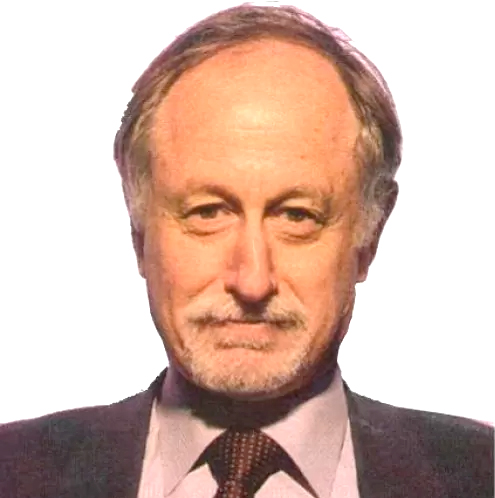
Fair Observer’s Chief Strategy Officer Peter Isackson and Mikael Pir-Budagyan, an international consultant specializing in European political dynamics, discuss how Russia’s war in Ukraine and migration pressures are feeding right-wing politics across Europe. The focus is Central and Eastern Europe, especially the Visegrád region, comprising the Czech Republic, Hungary, Poland and Slovakia. However, the conversation addresses a bigger worry: whether Europe can sustain unity and security as war, refugees and a more transactional United States test its institutions.
Populism and migration in the Czech Republic
Pir-Budagyan starts with the Czech elections that has likely propelled former Czech Prime Minister Andrej Babiš back to the center of power. He sees the result as democracy in action, not decay, pointing to high turnout. He argues that “the recent elections… are anything but a surprise.” The new coalition, led by Babiš’s ANO party with right-wing partners including the Motorists and the far-right Social Democratic Party (SPD), holds a parliamentary majority. Its long-term stability, however, remains uncertain.
Babiš’s agenda is rooted in domestic sentiment: resentment over benefits perceived to go to outsiders, suspicion of intrusion by the European Union and a tougher stance on migration. The Czech Republic is pressing for exemptions from EU migration rules and has taken in a large refugee population, mostly Ukrainians.
That influx has turned into a political fault line. Ukrainians were welcomed in 2022 with sympathy that contrasted with the region’s hostility toward Middle Eastern and North African refugees in 2015. But Pir-Budagyan argues that the mood shifted as pressures on housing and public spending mounted. Even if the economic impact is mixed, politics follows perception: “What matters is optics.” Populists exploit the belief that refugees are prioritized over citizens, keeping migration central to Czech debates even as the rate of arrival has slowed.
Visegrád politics and the war in Ukraine
Isackson and Pir-Budagyan turn to the Visegrád Four. Once a coherent bloc, it has largely stalled because Hungary and Slovakia have diverged from Poland and the Czech Republic on Ukraine. With Babiš back, Pir-Budagyan expects tougher EU bargaining: Unanimity rules allow another government to threaten vetoes. Still, he cautions against treating Babiš as a political clone of Hungarian Prime Minister Viktor Orbán; their domestic incentives differ.
On the battlefield, Pir-Budagyan sees grim continuity. Russia is grinding forward in a war of attrition, aiming to drain Ukraine’s manpower and resources. While Russia’s daily battlefield progress may appear small, the trajectory of the conflict is not linear, and operational successes have often been achieved through sustained pressure on Ukraine’s defenses. The conflict has also exposed uneven European commitment. Eastern-flank states have delivered more aid relative to their size, while many Western and Southern governments have paired lofty rhetoric with limited material follow-through. EU tools help, but were improvised for a shock the Union wasn’t built to manage.
Isackson wonders if Poland’s support is slipping. Pir-Budagyan disagrees: Poland still casts itself as Ukraine’s principal advocate inside Europe. Agricultural disputes with the Ukrainian capital of Kyiv matter, but he frames them as negotiation leverage with the Belgian capital of Brussels, not as a strategic retreat.
EU resilience, NATO and Europe’s identity crisis
Pressed on whether the EU might implode, Pir-Budagyan argues that membership’s economic and social benefits make the Union more durable than pessimists claim. Yet durability doesn’t equal coherence. Unanimity and national splits still blunt Europe’s ability to act as a unified geopolitical player, and unresolved eurozone questions — especially debt burden-sharing — are harder under wartime spending.
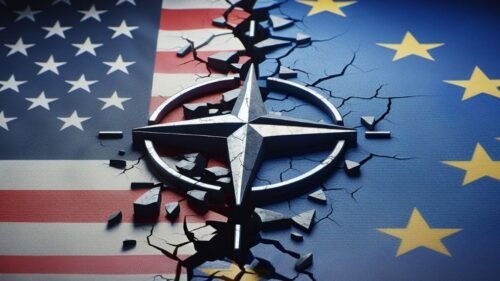
The administration of US President Donald Trump adds another strain. Isackson argues that Washington is shifting more of the Ukraine burden onto Europe and treating NATO transactionally. Pir-Budagyan replies that US pressure for higher European defense spending is bipartisan and long-standing, even if Trump enforces it more bluntly. His guide to decoding Trump is to “take Trump seriously but not literally.” Public threats, he notes, often soften through bureaucratic process and private deal-making.
Europe’s response has been a transatlantic dance: bigger defense pledges and expanded purchases of US arms to stay relevant to Washington. Pir-Budagyan notes the contradiction between talk of European strategic autonomy and rising dependence on US weapons and energy. For Isackson, this feeds a sovereignty and identity crisis — Europeans feel subordinate to Washington, while many Central Europeans feel constrained by Brussels. These perceptions may be old, but they have been sharpened by war and migration.
Nuclear deterrence, dialogue and diplomacy
Finally, Pir-Budagyan turns to nuclear risk. He argues that Russia's deterrence efforts and nuclear reminders have worked, sometimes by freezing Western choices. Russian nuclear signaling in 2022 slowed US and European decisions about arms transfers. But constant threats may have a deprecating effect and erode credibility, leaving the public anxious without clear red lines.
Strategic stability is weakening as the US, Russia and China modernize their arsenals. The New Strategic Arms Reduction Treaty between the US and Russia is close to expiring with little prospect of a robust successor. US President Donald Trump announced a Strategic Defense Initiative-like Golden Dome and hinted at resuming nuclear testing. Further, Russia has raised ambiguity by broadening its declared grounds for nuclear use.
Isackson asks whether diplomacy’s decline makes catastrophe more likely. Pir-Budagyan agrees: Dialogue is too often dismissed as appeasement, even though Cold War rivals still negotiated arms-control regimes amid existential hostility. Today, trust is thinner, channels are fewer and the expert communities that once maintained backroom talks are fading. Rebuilding stability will require sustained political will and real resources — and Europe is already late to that task. As the challenges to nuclear security mount, it is especially important to continue the efforts to support risk reduction measures.
[Lee Thompson-Kolar edited this piece.]
The views expressed in this article/video are the author’s own and do not necessarily reflect Fair Observer’s editorial policy.































Comment