





Fair Observer’s Communications and Outreach officer, Roberta Campani, speaks with Rob Avis, Chief Engineering Officer at 5th World, about what it means to think regeneratively. Their exchange moves from theory to practice — from how humans view their place in nature to how cities, farms and even small gardens can repair ecological cycles.
What is regeneration?
Avis contrasts regeneration with conventional and sustainable systems, arguing that the former is not about minimizing damage but about creating conditions for more life to flourish. He frames regeneration as both a mindset and a movement toward active partnership with the Earth.
He outlines three paradigms shaping humanity’s relationship with the planet. The conventional system prioritizes economic growth while externalizing environmental costs and depleting resources. The sustainable system aims for “net zero,” yet he finds this logic self-defeating since it implies humanity’s best outcome is to vanish.
The regenerative paradigm begins with the premise that humans are part of nature, not separate from it. Every action we take affects something — the question is whether it produces more life or less. Regeneration accepts that humans cannot be neutral; they can only be creative or destructive participants. The goal is to design systems that convert human energy into abundance and ensure that every footprint becomes a foundation for growth rather than decline.
Reimagining spaces
To illustrate this shift, Avis turns to the beaver. On his land in northern Alberta, Canada, beavers fell trees and flood valleys that at first seem ravaged. Yet their dams store millions of liters of water, slow erosion and multiply biodiversity. Their apparent destruction becomes the foundation for new life.
Translating that principle into human spaces, Avis argues that cultural norms block progress more than technology does. Nearly 40 million acres of land in the United States are devoted to lawns — an area equal to all the nation’s wheat fields. Maintaining them burns fuel, uses chemicals and yields nothing edible.
If even a fraction were converted to gardens, communities could feed themselves while farms revert to perennial systems. Urban agriculture, he says, can be the seed of a larger transformation, where food production and ecosystem health reinforce each other. For Avis, regeneration is not austerity but designing abundance into daily life.
Regenerative agriculture
At the farm level, Avis’s method begins with diagnostics — what the land wants to be, what the owner needs, and what resources exist. The intersection of these forms the sweet spot for regenerative design.
The keystone is the water cycle. Without functioning hydrology, no ecosystem can thrive. “The sun is the gas pedal,” Avis remarks, and “water is like the gasoline.” Restoring the water cycle through ponds and vegetation restarts the biological engine. Examples range from China’s Loess Plateau to India’s Water Cup project and American farmers like Gabe Brown, who regenerate soils by integrating livestock and perennials.
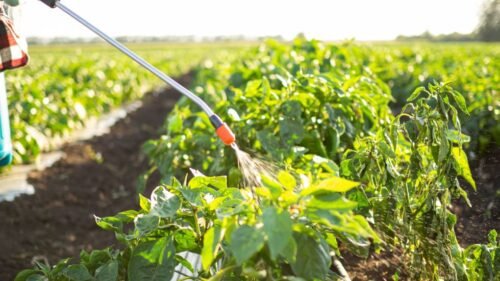
For individuals, regeneration begins in the garden. Avis advises starting small; even a one-meter plot is enough to learn ecological feedback. “You don’t have a slug problem, you have a duck deficiency,” he jokes, showing that every pest has a predator. The goal is to add missing relationships, not apply poisons.
Improving nutrition in crops
Industrial farming, Avis notes, has drained nutrient density from food. Regenerative practices restore minerals and microbial life to soil, improving plant nutrition and taste alike. Healthy soil acts as a living digestive system; chemicals disrupt the exchange of carbon and nitrogen that makes crops nourishing.
Rebuilding soil’s organic matter through composting, cover crops and rotational grazing links directly to public health. Declining soil vitality parallels rising endocrine disorders, infertility and chronic disease. Avis sees this as evidence that human well-being and ecological integrity are intertwined — the health of people mirrors the health of the land.
Reducing the carbon footprint
Despite his background in carbon engineering, Avis calls the world’s fixation on emissions “misguided.” The real issue is that humans dismantled ecosystems that once managed carbon naturally.
Before colonization, North America’s grasslands teemed with bison and beavers that stored water and carbon. Today, soils that once contained 20% organic matter hold less than 3%. Each ton of grain harvested erodes several tons of soil, leaving about 60 crop cycles at current loss rates.
The regenerative answer is to restore the life that cycles carbon for us. Grasslands and forests evolved to regulate the planet’s chemistry through growth and renewal. Focusing on carbon numbers, Avis warns, misses the elegance of these living processes. “We need life-based thinking, not mechanism-based reduction,” he says.
Campani observes that regeneration sounds more like participation than protest. Avis agrees, describing it as a forward movement, not a return to the past. If humanity can engineer nuclear weapons, he concludes, it can also engineer regeneration to make the future brighter. “It has to taste better, it has to be more fun,” he says. We can start by growing a tomato plant, setting a rain barrel or propagating a patch of living soil.
[Lee Thompson-Kolar edited this piece.]
The views expressed in this article/video are the author’s own and do not necessarily reflect Fair Observer’s editorial policy.












































Comment