




[This video was recorded in the days preceding the first round of Bolivia’s election. It has been updated to include more recent information.]
Rohan Khattar Singh, Fair Observer’s Video Producer & Social Media Manager, talks with Leonardo Vivas, professor of political economy at Leslie University in Massachusetts, about Bolivia’s presidential election. It had its first round of votes on August 17 and will have a run-off vote on October 19. This conversation examines why these elections matter, the collapse of the long-dominant Movement Toward Socialism (Movimiento al Socialismo, or MAS), the weakened roles of former Bolivian President Evo Morales and incumbent Bolivian President Luis Arce, and more.
Why Bolivia matters
Vivas begins by noting that Bolivia, a small landlocked country, might seem peripheral to global politics, but its elections reflect important regional dynamics. In Latin America, most conflicts in recent decades have been resolved through democratic institutions rather than violence, with the exceptions of Cuba, Venezuela, Nicaragua and increasingly El Salvador. He argues Bolivia is likely to continue this democratic pattern: There will be a clear winner, and institutions will accept the outcome.
The second reason for global attention is the apparent “demise” of MAS, the party founded by Morales in the 1990s and dominant for nearly 30 years. Vivas believes its decline could reshape local geopolitics, breaking one of the region’s longest political hegemonies.
The race and the MAS collapse
The field of candidates reflects MAS’s diminished standing. Morales’s former protégé, Arce, opted not to run again due to poor approval ratings. Two MAS candidates competed — Senate president Andronico Rodriguez and Arce’s former interior minister — but both polled poorly and will not continue to the second round of the vote.
The opposition appears stronger. Samuel Doria Medina, a wealthy businessman, campaigned as a moderate, aiming to unify the country. His rival, former Bolivian President Jorge “Tuto” Quiroga, takes a harder right stance, promising IMF-backed reforms and economic stabilization. Vivas frames the contest as a struggle between a fading MAS and a reenergized right.
In the first round of the vote, Senator Rodrigo Paz Pereira, a centrist from the Christian Democratic Party, and Quiroga, a conservative, came in first and second place, respectively.
Morales, Arce and the end of an era
For much of the 2000s, Morales oversaw what could be called a “Bolivian miracle.” Gas exports funded poverty reduction and indigenous inclusion, with then-Finance Minister Arce shaping the economic boom. Yet the model collapsed as state-owned gas firms faltered, revenues plunged and exchange-rate pressures deepened.
Today, Arce faces a financial crisis marked by exchange controls and slowing growth. With his political support underwater, he chose not to seek reelection. Morales, once a towering figure, is now legally and politically sidelined. A constitutional court ruling bars him from running; his recent protest calls fell flat and he faces prosecution for statutory rape, further eroding his influence.
Morales has refused to endorse MAS’s current candidates and has instead called for new elections, further fragmenting the movement he once embodied.
The army on the sidelines
Military involvement in Bolivian politics has long been a concern, especially after Morales’s 2019 departure under army pressure. But Vivas stresses that today’s army plays little role. A supposed coup attempt last year proved hollow; General Juan José Zúñiga acted alone and was quickly rejected by both society and the president. Some even suspect the episode was staged to boost Arce’s legitimacy.
Compared to 2019, when the military simply facilitated a constitutional transfer of power, today’s officers remain firmly in the barracks. Vivas does not foresee the army influencing this year’s election.
Economy and the younger vote
The central issue now is the economy. During Morales’s rise, indigenous identity and social inclusion drove politics. After decades of reform, indigenous participation is normalized. Economic hardship — falling gas revenues, high inflation and slow growth — has replaced identity as the defining theme.
The generational shift is also decisive. Younger Bolivians, more urban and educated, care less about old ideological battles and more about future prospects. Many no longer rally behind Morales or MAS, instead leaning toward opposition candidates. Vivas highlights that MAS, as the architect of the current crisis, cannot credibly present itself as the solution.
Indigenous voting patterns reflect this shift: Morales still retains support in the highlands, but lowland communities lean right, accelerating MAS’s decline.
Round two is inevitable
Vivas correctly assumes that the election will head to a runoff. He believes it is possible, though not guaranteed, that both right-wing candidates advance to the second round. Much depends on whether MAS’s residual support materializes late in the race.
Based on pre-election information, Vivas sees the likely outcome as a right-wing victory. This would normalize Bolivian politics, making it resemble Argentina, Brazil, Chile and Ecuador, where power alternates between left and right. For him, that normalization marks Bolivia’s reintegration into regional democratic trends.
External players: US, China and Brazil
Vivas also considers the international angle. The United States has lost much of its regional influence, supplanted by China’s growing role. Washington’s attention has shifted to global crises, leaving Latin America low on the agenda. Vivas sees US President Donald Trump’s current administration as “playing wait and see” while expecting right-wing gains across the region.
China’s involvement is more cautious. Burned by its unpaid investments in Venezuela, Beijing is wary of Bolivia’s struggling state-owned companies and is unlikely to engage deeply if MAS wins. Still, China maintains strong trade links, regardless of ideology.
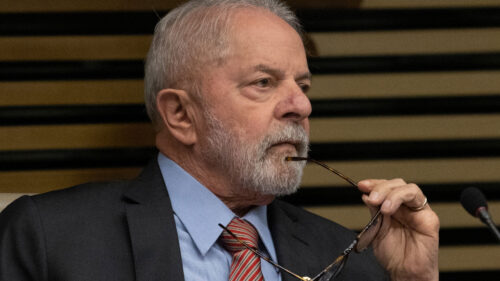
Brazil, under President Luiz Inácio Lula da Silva, could prove more active. As interim head of BRICS, Lula has suggested BRICS could replace the IMF as a source of financing for Bolivia. But such programs remain untested, and Vivas doubts they would materialize unless Bolivia’s government aligns with BRICS priorities.
Cautious optimism
Despite crises, Vivas ends on a hopeful note. He believes Bolivia has a real chance, no matter who wins, to reset its politics and rebuild its economy. For him, the 2025 election could mark both the end of an era dominated by MAS and the beginning of a more balanced, democratic cycle with wider implications for Latin America.
[Lee Thompson-Kolar edited this piece.]
The views expressed in this article/video are the author’s own and do not necessarily reflect Fair Observer’s editorial policy.

































Join the conversation
Share your perspective
Log in to share your thoughts and take part in the discussion.