
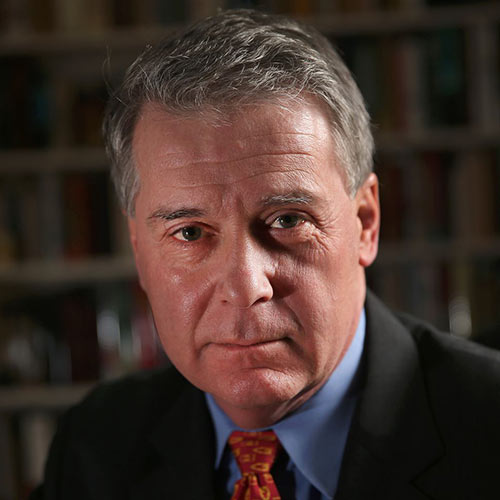
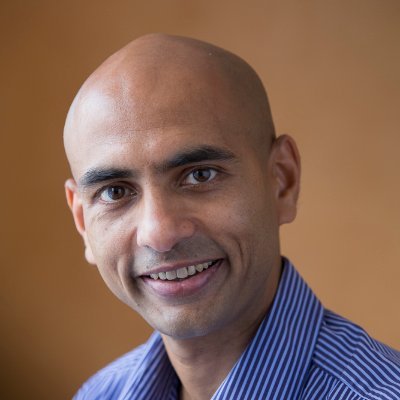


India is a large and vibrant democracy. Yet it was not is not a traditional ally of the US. In fact, for decades after independence, India was close to the Soviet Union. India’s first prime minister Jawaharlal Nehru was a great admirer of Soviet socialism. India even imitated the Soviets by implementing “five-year plans” for economic development directed by its infamous colonial bureaucracy.
Since the collapse of the Soviet Union in 1991, India changed course. Over time, it has moved closer to the US. Recently, the winds of change have been blowing harder. The US and India might not be allies but they are behaving as strategic partners. The US has authorized the sale to India of high-tech jet engines, something it has never done before. American and Indian entrepreneurs and engineers are working closely together to develop new semiconductor and software technologies. The countries have settled six outstanding trade disputes they had held at the World Trade Organization. Things are looking bright.
President Joe Biden and Prime Minister Narendra Modi have summed this all up very visibly with the latter’s state visit to the United States. The meeting is more than a symbolic expression of goodwill. The pomp and circumstance represent a real change in Indo-US relations.
As tensions with China have increased, the US has come to see India as a natural ally. However, India has sought to keep its distance from the capitalist superpower. Having endured the scarring experience of colonization at the hands of the British, Indians were in no mood to let another English-speaking global empire tell them how to direct their foreign policy.
Therefore, Nehru started the Non-Aligned Movement and tried to steer clear of becoming a subordinate power of either the US or the Soviet Union. Atul points out that the US further lost Indian trust by conducting the 1953 coup in Iran for a British oil company. Indians perceived this move as highly colonial. This was only made worse when the US supported India’s archrival Pakistan, particularly from the 1960s.
In the 2020s, things are changing. This is not just because the two enormous, ethnically diverse and rambunctious federal democracies have much in common, or even because of America’s influential Indian minority. More than anything, Glenn explains, India is moving towards the US because of their common fear of a rising and threatening China.
China is now the second most important global power. Its meteoric economic and technological growth has given it tremendous clout. Beijing is also putting pressure on India’s northern borders. Like the US, India wants a free Indo-Pacific region. It does not want the South China Sea to turn into a Chinese lake. Hence, the two imperfect, rambunctious democracies are making common cause against a common threat.
Glenn takes the view that India will not take the backseat in great power conflict any longer. It is no longer the struggling and uncertain ex-colony that it was in those earlier decades. India is now a young, vibrant and assertive society, which is beginning to make its power felt on the world stage. India will not be pushed around by China, and it will make the friends it needs to pursue its national interests. The US is going to be its most important friend.
[Anton Schauble wrote the first draft of this piece.]
The views expressed in this article/video are the author’s own and do not necessarily reflect Fair Observer’s editorial policy.






























Join the conversation
Share your perspective
Log in to share your thoughts and take part in the discussion.