



This is Part 3 of a three-part series. You can find Part 1 and Part 2.
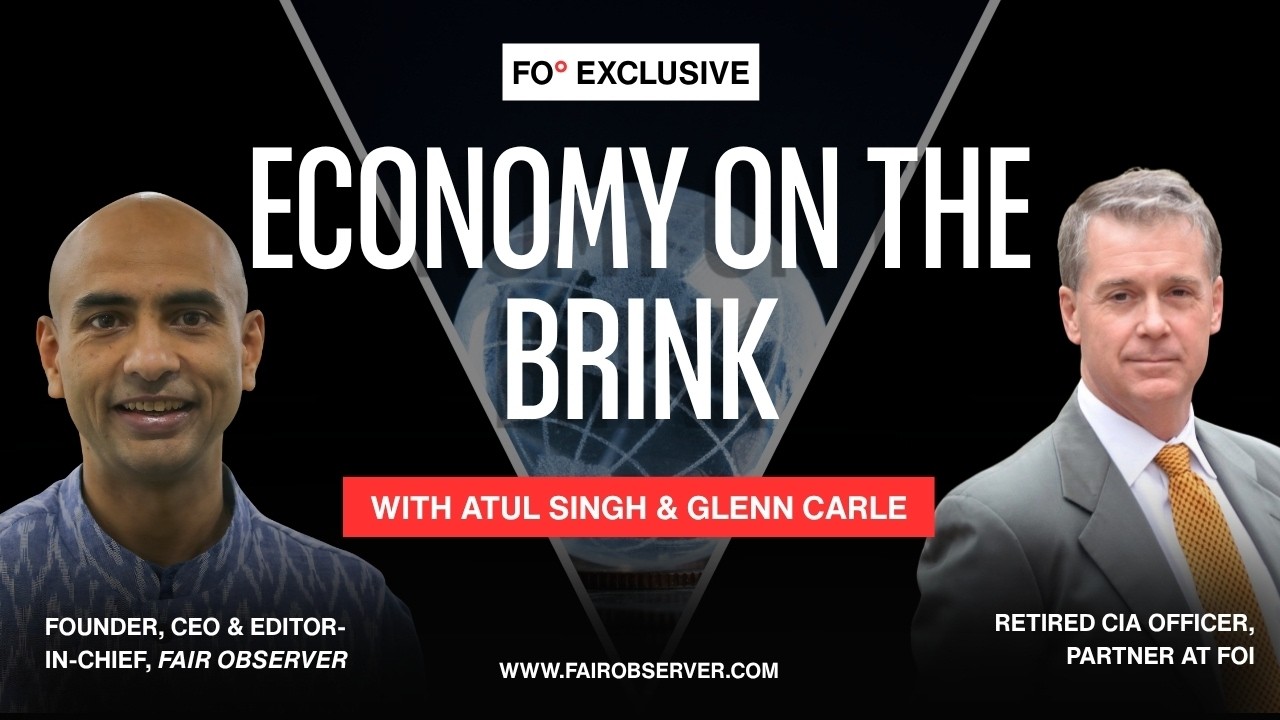
How did Russia end up where it is today? This is a question that Atul Singh poses to Glenn Carle. The answer goes back to the early 1990s, when Glenn was working at the White House. Along with many others, he wanted a gradual transition to a market economy. Another Harvard man, a dashing young professor named Jeffrey Sachs, advocated the infamous “shock therapy.” This policy led criminal syndicates to take over Russia.
Now, shock therapy has been discredited. In those days, it was likened to the equivalent of a bracing swim in cold water, the sort that UK Prime Minister Tony Blair's former spin doctor, British political strategist Alistair Campbell, practices every morning. As per shock therapy, state-owned industry in a socialist or communist country should be privatized immediately, the role of the government curtailed overnight and animal spirits released to vivify a moribund economy. The challenge with such a policy is simple: in the words of the British sitcom Blackadder, “it is bollocks.”
Rapid privatization in economies with poor institutions leads those in power to sell state assets to their friends and relatives for a pittance. Stylish buccaneers rob public assets. An oligarchy replaces the apparatchik as the new ruling class. Inequality shoots up. Inflation soars. People lose their savings overnight. The social fabric itself often tears to shreds.
In Russia, Sachs is now considered a CIA plant. The story goes that the wily CIA boys sent their Harvard mate to give the Russians dodgy advice. As newbies to the market economy, the Russians took that advice. Thanks to this Trojan policy horse, the Russian economy ended up not on its knees but on its back. Sachs engineered the fall of Russia as a great power by playing Pied Piper and leading the country to its doom.
Glenn refutes this story as an example of classic Russian paranoia. He maintains that the US genuinely wanted post-Soviet Russia to succeed. He points out that Russia hired Sachs who was an ideological monetarist at that time. Sachs preached market ideology unrelated to reality. The former communists were looking for a new hymn sheet to sing from and ditched German philosopher Karl Marx to adopt Sachs. It led to an unmitigated disaster.
Glenn spoke about the CIA losing purpose after the fall of the Berlin Wall and the collapse of the Soviet Union. Glenn volunteered to work on Afghanistan in the 1990s and ended up negotiating with the Taliban. When the September 11 attacks rocked New York and Washington in 2001, Glenn found himself engaged as an operative in the Global War on Terror.
Glenn thinks that this war was a distraction. Islamic terrorism and extremism have long been around. It is much older than the Taliban or al-Qaeda. When conservative Islamic societies were conquered by Western powers, they faced two options: reform and modernize or cling harder to traditional Islamic values. Many chose the latter. If the Quran is the word of God, then it must contain truth with a capital T and Islamic societies must have fallen because they strayed from their prophet’s teachings. As per this logic, the only way for them to recapture their lost glory was to return to the truth.
Glenn views terrorism as an important issue but not the key defining issue for the US. It was never an existential challenge. The Global War on Terror cost blood and treasure. More importantly, it distracted the US, which illegally invaded Iraq on the obviously false pretense of Iraqi President Saddam Hussein possessing weapons of mass destruction. The US sunk trillions of dollars into a war with no end in sight. The September 11 attacks changed America’s trajectory and indirectly facilitated the rise of China.
The “Thucydides Trap”, a term coined by Harvard professor Graham T. Allison, comes up in discussion about the tensions between the US and China. This term refers to the common clash between ruling and rising powers. Under Chinese President Xi Jinping, China has become increasingly prickly. The US is also not as diplomatically deft as it once was. So, the dangers of a clash, especially over Taiwan, are rising.
Atul and Glenn also discuss India and Pakistan. Once, Pakistan was a treasured Cold War ally. Now, as per Glenn, Pakistan is a tiger the US holds by its ears. As a nuclear power with a crashing economy, the country could implode. This might lead to nuclear proliferation, massive violence and global instability.
The views expressed in this article/video are the author’s own and do not necessarily reflect Fair Observer’s editorial policy.



























Comment