





“Today’s problems come from yesterday’s solutions”
— Peter Senge, The Fifth Discipline
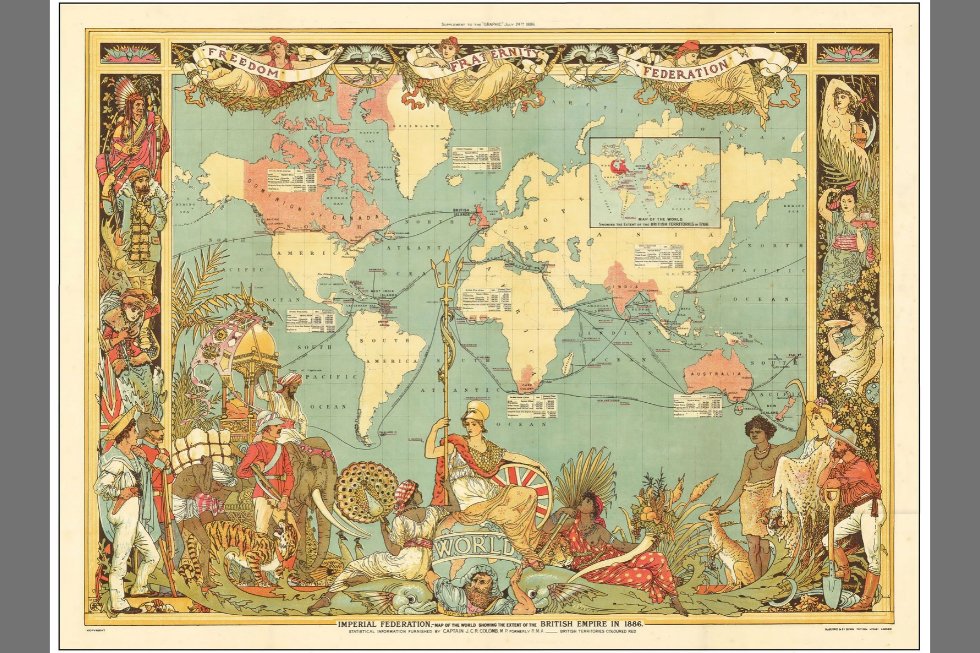
European colonialism continues to shape global migration despite the formal dissolution of many European empires. Decolonization transferred political sovereignty to newly independent states. It did not dismantle institutional connections that colonial rule had established. Former imperial powers and their colonies remain linked through common systems, networks and long-standing patterns of mobility. These old connections continue to influence where people move for work and settlement. As a result, many modern migration routes follow the same paths created during the colonial period.
Over the 20th century, Europe’s imperial powers relinquished their overseas possessions. Britain withdrew from the Indian subcontinent and Israel/Palestine, France from Algeria and Indochina, Belgium from the Congo, and Portugal from Angola and Mozambique. The vocabulary of international politics evolved accordingly, replacing the language of imperial dominion with that of sovereign nation-states. Despite the shift in political authority, the empire’s connective tissue largely endured.
Colonial administrations cultivated durable networks that bound colonies to imperial metropoles. Independence dismantled formal political control but left many of these structures intact. Consequently, they continued to shape where individuals sought opportunity, security and social mobility.
Contemporary migration is the historical sediment of empires. Algerians migrated to France. Indians, Pakistanis and Bangladeshis settled in Britain. Congolese communities took root in Belgium. Angolans moved to Portugal, while Surinamese migrants established themselves in the Netherlands. These movements reflect enduring colonial linkages sustained through legal frameworks and economic integration.
The direction of movement has reversed, but the geography has remained remarkably constant. Where imperial powers once projected authority outward, migrants, students, workers and asylum seekers now move toward former imperial metropoles. Empire persists as a historical structure that continues to organize patterns of global mobility decades after formal decolonization.
Colonialism as a machine for reordering
Colonialism reordered the political, economic and social configuration of colonized societies. Empires sought not only to acquire land but also to reconstruct the institutional, economic and epistemic foundations on which societies functioned. Colonial administrations changed languages, markets, labor regimes, fiscal systems and political authority to meet imperial goals, thus producing structures whose influence outlasted the empire.
European administrations elevated the colonizer’s language into the idiom of law while relegating indigenous languages to the political margins. Colonial governments recast diverse agrarian economies into export-oriented systems subordinated to metropolitan demand. Fiscal systems helped colonial governments extract wealth. Colonial authorities used coercive labor systems and racial hierarchies to control workers. Imperial administrations linked colonial ports to trade networks that favored imperial commerce. These transformations constituted the empire’s governing logic.
However, the most consequential legacy was territorial. Few examples illustrate this more clearly than Africa. At the Berlin Conference of 1884–85, European powers partitioned the continent with little regard for existing political or ethnic affiliations. Colonial boundaries bisected kingdoms and pastoral routes, replacing historically evolved spaces with administrative abstractions. A single Somali community could suddenly find itself divided across multiple jurisdictions.
Colonial borders fragmented Tuareg trading networks, turning centuries-old routes into international frontiers overnight. These boundaries outlived empire itself. Newly independent states inherited borders that possessed administrative permanence but limited historical legitimacy. Many of the political tensions associated with these frontiers continue to influence governance, conflict and human mobility across the continent.
Migration crises seldom arise from isolated episodes of conflict or economic decline. They emerge from the cumulative weight of historical restructuring, in which successive layers of political intervention and institutional redesign gradually produce chronic instability. As Palestinian-American academic Edward Said observed in his book, Culture and Imperialism (1993), imperialism “consolidated the mixture of cultures and identities on a global scale.” It also reorganized the topography of human mobility in ways that continue to forge migration long after empire itself has formally disappeared.
The century of human displacement
The 21st century has become an age of unprecedented human displacement. Although migration has accompanied every era of history, few periods have witnessed such a sustained convergence of armed conflict, state collapse, persecution and environmental precarity. Together, these forces have produced one of the largest movements of people since the Second World War.
The scale is extraordinary. By the end of 2025, conflict or persecution had forcibly displaced more than 117 million people. The Syrian Civil War alone drove over six million people out of the country after 2011. Since the fall of Bashar al-Assad’s regime in December 2024, around 1.3 million to 1.5 million of them have returned, yet 4.9 million Syrians were still refugees at the end of 2025.
The persecution of the Rohingya has driven nearly one million refugees into Bangladesh. At the same time, South Sudan has generated one of Africa’s gravest displacement crises within little more than a decade of independence. Meanwhile, the Mediterranean has evolved into one of the world’s deadliest migration corridors, where thousands have perished attempting to reach Europe. Yet these statistics conceal a sustained misconception. Public discourse often imagines migration through images of overcrowded boats arriving on European shores, creating the impression that the Global North bears the principal burden of displacement. The empirical reality is considerably different.
The overwhelming majority of displaced people never travel far from home. Syrians, by a wide margin, sought refuge in Turkey, Jordan and Lebanon. Rohingya refugees crossed into neighboring Bangladesh. South Sudanese populations fled primarily to Uganda, Ethiopia, Kenya and Sudan, while millions of Afghans found refuge in Pakistan and Iran. Refuge, in other words, is substantially regional rather than intercontinental.
This asymmetry exposes one of contemporary migration’s defining paradoxes. Neighboring low- and middle-income states bear the greatest humanitarian burdens, yet dominant political narratives still originate in Western capitals. Consequently, global debates on migration often reflect destination states’ anxieties rather than the lived realities of the societies that host the overwhelming majority of the world’s displaced populations.
Colonial legacies in contemporary displacement: Syria, Palestine and the Rohingya
Contemporary displacement represents the culmination of historical processes whose origins long predate the conflicts that eventually command international attention. Syria, Palestine and Myanmar each demonstrate a distinct mechanism through which imperial governance continues to shape patterns of contemporary human mobility.
Syria illustrates how inherited political geography can magnify contemporary instability. To understand the Syrian refugee crisis solely through the lens of the 2011 civil war is to overlook the deeper historical configuration beneath it. The modern Syrian state emerged after the collapse of the Ottoman Empire, which had ruled the region for four centuries. Britain and France had already agreed in 1916, through the Sykes–Picot Agreement, to divide much of the Arab East into competing spheres of influence, and France governed Syria under a League of Nations mandate from 1920 until independence in 1946. French rule was brief by comparison, but it fixed the country’s borders, split the territory into statelets along sectarian lines and recruited heavily from minorities such as the Alawites into the armed forces. After independence came a series of military coups, and from 1970 the Assad family built an authoritarian state on that military base, ruling for more than five decades. The 2011 uprising was the moment when the accumulation of these pressures became unsustainable.
Prolonged drought between 2006 and 2010 devastated rural livelihoods, accelerating migration into already congested cities. These environmental stresses converged with authoritarian governance, economic stagnation and intensifying regional rivalries to produce one of the largest displacement crises of the 21st century.
The consequences extended far beyond Syria itself. Turkey became the world’s largest refugee-hosting state, Lebanon absorbed refugees equivalent to a substantial proportion of its own population, while Greece emerged as Europe’s symbolic frontier for asylum seekers crossing the Mediterranean. In the process, the Mediterranean became more than a maritime space. It acquired political and psychological significance as the perceived boundary between European security and external instability.
The Palestinian experience reveals a different dimension of colonial continuity: the institutionalization of exile. Few refugee populations have experienced such permanent displacement. The origins of the Palestinian diaspora lie in the collapse of Ottoman authority and the contradictory political commitments embedded within the British Mandate. These arrangements generated a condition in which displacement became intergenerational. Millions of Palestinians today remain dispersed across Jordan, Lebanon, Syria, the Gulf, Europe and North America, often existing within varying degrees of constrained sovereignty.
Yet this history also produced an unexpected paradox. Forced mobility transformed Palestinians into one of the Arab world’s most educated and professionally influential diasporas, whose teachers, physicians, engineers and academics contributed significantly to state-building across the Gulf throughout the 20th century. Exile became both a condition of dispossession and a catalyst for transnational influence.
The Rohingya crisis demonstrates that colonial legacies can also persist through citizenship. Under British rule, labor mobility between Bengal and Burma formed part of a wider imperial economy. The British actively encouraged movement across colonies. World War II turned these colonial arrangements into open conflict. When Japan invaded Burma in 1942 and the British retreated, most Rohingya Muslims stayed loyal to Britain, which recruited them as scouts and guerrillas, while Rakhine Buddhists and Burmese nationalists largely sided with Japan. The massacres that followed on both sides drove the two communities apart and left the Rohingya marked in nationalist memory as collaborators with the colonial power.
Following independence, these historical movements and wartime loyalties were reinterpreted through ethnonationalist narratives that portrayed the Rohingya as outsiders within the very territory they had inhabited for generations. Successive legal restrictions stripped the community of recognition, freedom of movement and political rights before culminating in the mass expulsions of 2017. The vast settlements at Cox’s Bazar stand as monuments to administrative exclusion. The defining feature of the Rohingya crisis is the bureaucratic production of statelessness, whereby the modern state exercises the extraordinary power to erase a population through legal classification alone.
Taken together, these cases demonstrate that contemporary displacement is rarely an abrupt rupture with the past. It represents the delayed manifestation of colonial borders and inherited systems of political ordering. The refugee crises that dominate contemporary headlines reveal empire’s enduring capacity to shape human mobility long after its formal political structures have disappeared.
North Africa and Europe’s externalized borders
North Africa has become one of the most strategically consequential spaces in contemporary migration governance. Tunisia, Morocco, Libya and, increasingly, Mauritania now function not merely as transit countries but as geopolitical intermediaries in Europe’s evolving border regime. Migration scholars such as Bill Frelick, Ian Kysel and Jennifer Podkul describe this process as the externalization of migration controls, whereby European states seek to regulate migration beyond their own territorial jurisdiction by financing, equipping and cooperating with neighboring states to intercept migrants before they reach European territory. This arrangement has fundamentally reconfigured the geography of the European frontier.
The border increasingly exists not at the shores of Italy, Greece or Spain, but across the ports, deserts and coastlines of North Africa. Tunisia’s prolonged economic deterioration has transformed the country into one of the principal departure points toward Italy. At the same time, Mauritania has acquired unexpected strategic significance as Atlantic crossings toward the Canary Islands have intensified. Morocco occupies an especially complex position, situated simultaneously within African, Arab, Mediterranean and Atlantic political spheres while remaining deeply intertwined with the colonial histories of both France and Spain.
Migration networks display remarkable geographical adaptability. When instability engulfs Libya, migration routes often change. Increased surveillance can also push migrants toward new routes. Migration rarely ceases. Migration networks displace, recalibrate and reconstruct routes elsewhere. Borders therefore function less as absolute barriers than as mechanisms that redistribute the geography, cost and risk of human mobility.
South Sudan and the Mediterranean
Few postcolonial states illustrate the fragility of inherited political orders more starkly than South Sudan. Following decades of protracted conflict, South Sudanese widely celebrated independence in 2011 as the culmination of a long struggle for self-determination. Yet the optimism surrounding statehood rapidly gave way to renewed civil war, exposing the limitations of political independence in the absence of institutional cohesion.
South Sudan inherited many of the structural characteristics common to postcolonial African states: externally demarcated borders, uneven economic development, militarized institutions and political competition shaped by ethnic cleavages. Independence transferred sovereignty but did not resolve the conditions that had given rise to instability. Instead, many of the contradictions embedded within the colonial state persisted beneath the surface of the new republic.
The humanitarian consequences were profound. Within only a few years, South Sudan had generated one of the largest displacement crises in the world, with neighboring Uganda alone hosting more than one million South Sudanese refugees. Yet despite the crisis’s magnitude, it attracted only a fraction of the political attention and media coverage devoted to migration across the Mediterranean. This disparity reveals an asymmetry in the global politics of visibility and media discourse. A refugee arriving on the shores of Europe frequently becomes the subject of international political debate; a refugee who remains within Africa is more likely to be reduced to a statistic.
The so-called migration crisis transformed European politics by unsettling deeply embedded assumptions about Europe’s place in the world. For centuries, Europe understood itself principally as the exporter of people, capital and political authority; the 21st century has extensively confronted it with the inverse condition of arrival.
The debates that followed were hence never solely about migration. They became contests over national identity, sovereignty, secularism, multiculturalism, demographic change, welfare, citizenship and the meaning of Europe’s historical inheritance. Migration evolved into the principal medium through which broader anxieties surrounding globalization came to be expressed.
To understand contemporary European politics is to recognize that migration is not a policy question; it has become one of the European project’s defining political and emotional fault lines.
Imperial boomerang and the return of empire
In Discourse on Colonialism, Martinican writer and politician Aimé Césaire argued that the techniques of domination refined in the colonies ultimately returned to the imperial metropole. Historian and philosopher Hannah Arendt described this as a “boomerang effect” in The Origins of Totalitarianism (1951), and French philosopher Michel Foucault did the same in his 1976 lecture series Society Must Be Defended. More recent writers, such as Connor Woodman in his 2020 Verso series “The Imperial Boomerang,” have given the idea its current name. It remains one of the most prescient insights in postcolonial thought.
Empire reshaped the societies it governed, as well as the political imagination of the states that governed them. Contemporary border regimes have increasingly manifested this inheritance through militarized frontiers, biometric surveillance, detention infrastructures and the normalization of exceptional powers in the name of migration control.
The afterlife of empire is not confined to former colonies. It is equally inscribed within the institutions of the former imperial powers. Commentators frequently portray migration as an interruption of an otherwise stable international order. Yet it may be more accurately understood as its historical revelation. The movement of people across continents does not signify the breakdown of the postcolonial world; it exposes the persisting structures upon which empire built that world.
The Syrian family crossing the Aegean, the Ukrainian family sheltering in Poland, the Rohingya community in Cox’s Bazar, the South Sudanese refugee in Uganda, the Palestinian diaspora in Jordan, the Senegalese worker in Marseille and the Congolese student in Brussels constitute interconnected expressions of a shared condition, one shaped by the institutional and territorial legacies of empire. Ukraine shows that this inheritance is not only Western European: Russia’s 2022 invasion, an attempt to reassert dominance over a former imperial possession, has driven more than five million people abroad.
Colonialism globalized the world asymmetrically. It integrated distant societies into common systems of law and authority while distributing power and mobility unequally. Political decolonization dismantled imperial sovereignty, but it did not dissolve the infrastructures, hierarchies, or pathways that empire had created. Legal traditions and migration corridors continue to bear the imprint of that history.
History sediments into institutions. Migration is not a historical anomaly but one of the principal ways through which empires continue to reveal themselves. The movements that shape contemporary politics often mirror empire’s delayed effects. The influence of colonial powers still lingers. In this sense, migration represents empire’s return to the political consciousness of the very states that once imagined they had consigned it to history.
[Patrick Bodovitz edited this piece]
The views expressed in this article are the author’s own and do not necessarily reflect Fair Observer’s editorial policy.
How Europe’s Migration Dilemma Became the Taliban’s Leverage
The Taliban uses its control over the return of rejected asylum seekers to Afghanistan as a bargaining chip for securing...

Ceuta Exposes Europe’s Moral Blind Spot on Migration
Europe’s response to the tragic deaths of 72 migrants attempting to reach Ceuta has fixated on border security and political...
The Picture Behind the Numbers: Refugees, Power and the Human Cost of Geopolitics
The shift in the profile of refugees arriving in Brazil may look like a dry statistic. To me, it echoes...
Support Fair Observer
We rely on your support for our independence, diversity and quality.
For more than 10 years, Fair Observer has been free, fair and independent. No billionaire owns us, no advertisers control us. We are a reader-supported nonprofit. Unlike many other publications, we keep our content free for readers regardless of where they live or whether they can afford to pay. We have no paywalls and no ads.
In the post-truth era of fake news, echo chambers and filter bubbles, we publish a plurality of perspectives from around the world. Anyone can publish with us, but everyone goes through a rigorous editorial process. So, you get fact-checked, well-reasoned content instead of noise.
We publish 3,000+ voices from 90+ countries. We also conduct education and training programs
on subjects ranging from digital media and journalism to writing and critical thinking. This
doesn’t come cheap. Servers, editors, trainers and web developers cost
money.
Please consider supporting us on a regular basis as a recurring donor or a
sustaining member.
Will you support FO’s journalism?
We rely on your support for our independence, diversity and quality.





Comment