



John Nash’s idea of equilibrium transformed the way we understand decision-making. A Nash equilibrium occurs when every player in a game has chosen the best strategy possible, given what others are doing, so no one benefits from changing course. In politics, this often produces stalemates or arms races, such as the Cold War’s doctrine of Mutually Assured Destruction.
Today, the field is no longer limited to governments and diplomats. With access to digital platforms, real-time data and global communication networks, citizens themselves have become players. They can expose misinformation, shape reputations and even push leaders toward cooperation. From the Arab Spring uprisings to Ukraine’s network of citizen fact-checkers, people now influence the “rules of the game” in international relations.
Game theory beyond states
For decades, international relations scholars used game theory to explain why nations cooperate — or fail to. Two classic examples are:
— The Prisoner’s Dilemma: a model where two actors, fearing betrayal, both choose to defect, even though cooperation would have given them a better outcome. States mirror this behavior when they build up weapons in anticipation of conflict, creating costly arms races.
— The Stag Hunt: a scenario where hunters can only succeed together by trusting each other. If one betrays the pact, everyone loses. In global politics, this resembles ceasefires or trade pacts, which collapse without mutual confidence.
These models help explain why peace is difficult to achieve. Yet the 21st century has changed the cast of participants. Civil society groups, diaspora communities, hacktivist networks and investigative journalists now play alongside states. As political scientist Alexander Wendt argued, “anarchy is what states make of it.”
By extension, the structure of global politics is shaped by people as well. Citizen-driven exposure of war crimes in Syria forced governments to change their narratives — proof that individuals can shift strategic payoffs.
Transparency, reputation and coordination
Citizens influence global strategy in three important ways:
The first is transparency. Much of modern geopolitics depends on who controls information. Here, open-source intelligence (OSINT) plays a crucial role. OSINT refers to the use of publicly available data — such as satellite images, TikTok videos, social media posts or even Google Earth — to verify events in real time. The investigative collective Bellingcat pioneered this approach, showing how citizens armed with laptops could fact-check governments. During the Russian invasion of Ukraine, Bellingcat analysts geolocated missile strikes and debunked fake reports faster than many state intelligence agencies. By making defection visible, OSINT raises reputational costs and deters aggressive behavior.
The second is through reputation and norms. States care about more than territory or weapons — they also care about image and legitimacy. Grassroots campaigns such as #BringBackOurGirls and the International Campaign to Ban Landmines proved that citizen movements can shift reputational incentives. More than 160 countries signed the Ottawa Treaty banning landmines, largely because the reputational cost of refusal outweighed strategic benefits. Citizens create global norms that governments must respect or risk isolation.
Third is coordination. Global cooperation often fails because players cannot trust one another. Scholars Margaret Keck and Kathryn Sikkink describe how transnational networks solve this problem. By linking activists, religious groups and nongovernmental organizations (NGOs) across borders, they build assurance that cooperation will be met with cooperation. Climate movements and interfaith peace dialogues show how such civic coordination can achieve what state diplomacy alone cannot.
Iteration and Enforcement in the Digital Age
Game theory teaches that repeated interaction encourages cooperation. In an Iterated Prisoner’s Dilemma, the “tit-for-tat” strategy — cooperate first, then mirror your partner’s last move — emerges as a stable way to encourage trust. Citizens now enforce this logic globally.
Digital tools such as social media, blockchain records and online archives preserve the memory of who cooperates and who defects. For example, climate watchdog NGOs under the United Nations Framework Convention on Climate Change (UNFCCC) monitor whether governments meet their Paris Agreement pledges. Similarly, sanctions and boycotts during the anti-apartheid movement punished defectors and rewarded those who cooperated with justice. Ordinary citizens, through persistence and digital reach, can now enforce accountability across borders and across decades.
Toward a Civic Strategy for Peace
Of course, obstacles remain. Authoritarian regimes may shrug off reputational pressure, disinformation can spread faster than fact-checks and powerful states sometimes ignore citizen voices. Yet history proves that civic action matters: from anti-apartheid boycotts to Amnesty’s digital activism (Amnesty Decoders) — people have changed the cost-benefit logic of international politics.
A civic strategy for Nash equilibrium would involve four layers:
— Transparency through OSINT and citizen-led verification.
— Reputation leverage via naming-and-shaming campaigns.
— Coordination through global networks and advocacy coalitions.
— Iteration and memory by archiving defection and rewarding cooperation.
The aim is not to build a utopia but to make cooperation rational and self-reinforcing. In a world of AI-driven diplomacy and hybrid warfare, peace will depend not only on leaders negotiating behind closed doors but also on citizens building open systems of accountability. By reshaping the rules of the game, people can help make peace the most logical move.
[Patrick Bodovitz edited this article.]
The views expressed in this article are the author’s own and do not necessarily reflect Fair Observer’s editorial policy.
Communal Resilience as a Young Person in an Increasingly Volatile US
In the US, many members of Generation Z (Gen Z) believe that democracy is at risk from threats that Gen...
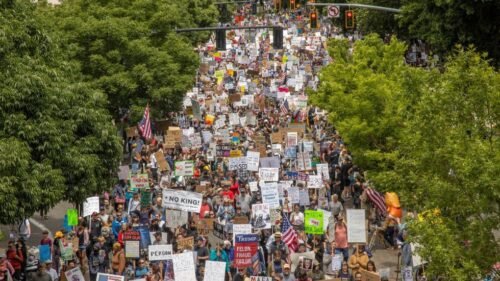
Transparency as the Foundation for Bangladesh’s 2026 General Elections
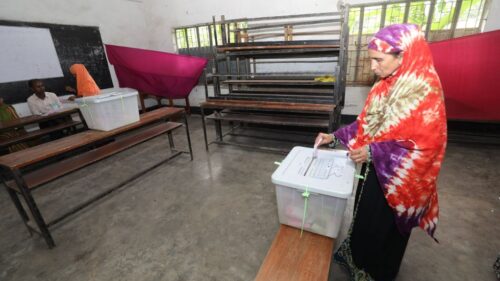
Bangladesh heads toward a pivotal 2026 election under Chief Adviser Muhammad Yunus’s provisional government. After Sheikh Hasina’s ouster, transparency is...
Civil Society Groups Face Rising Threats From Powerful Institutions
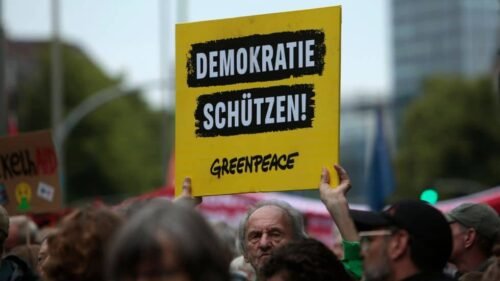
Lawsuits and funding cuts from governments such as the US and the EU, aimed at restricting free speech, are putting...
Support Fair Observer
We rely on your support for our independence, diversity and quality.
For more than 10 years, Fair Observer has been free, fair and independent. No billionaire owns us, no advertisers control us. We are a reader-supported nonprofit. Unlike many other publications, we keep our content free for readers regardless of where they live or whether they can afford to pay. We have no paywalls and no ads.
In the post-truth era of fake news, echo chambers and filter bubbles, we publish a plurality of perspectives from around the world. Anyone can publish with us, but everyone goes through a rigorous editorial process. So, you get fact-checked, well-reasoned content instead of noise.
We publish 3,000+ voices from 90+ countries. We also conduct education and training programs
on subjects ranging from digital media and journalism to writing and critical thinking. This
doesn’t come cheap. Servers, editors, trainers and web developers cost
money.
Please consider supporting us on a regular basis as a recurring donor or a
sustaining member.
Will you support FO’s journalism?
We rely on your support for our independence, diversity and quality.





Comment