




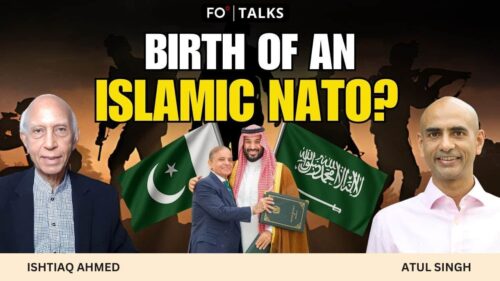
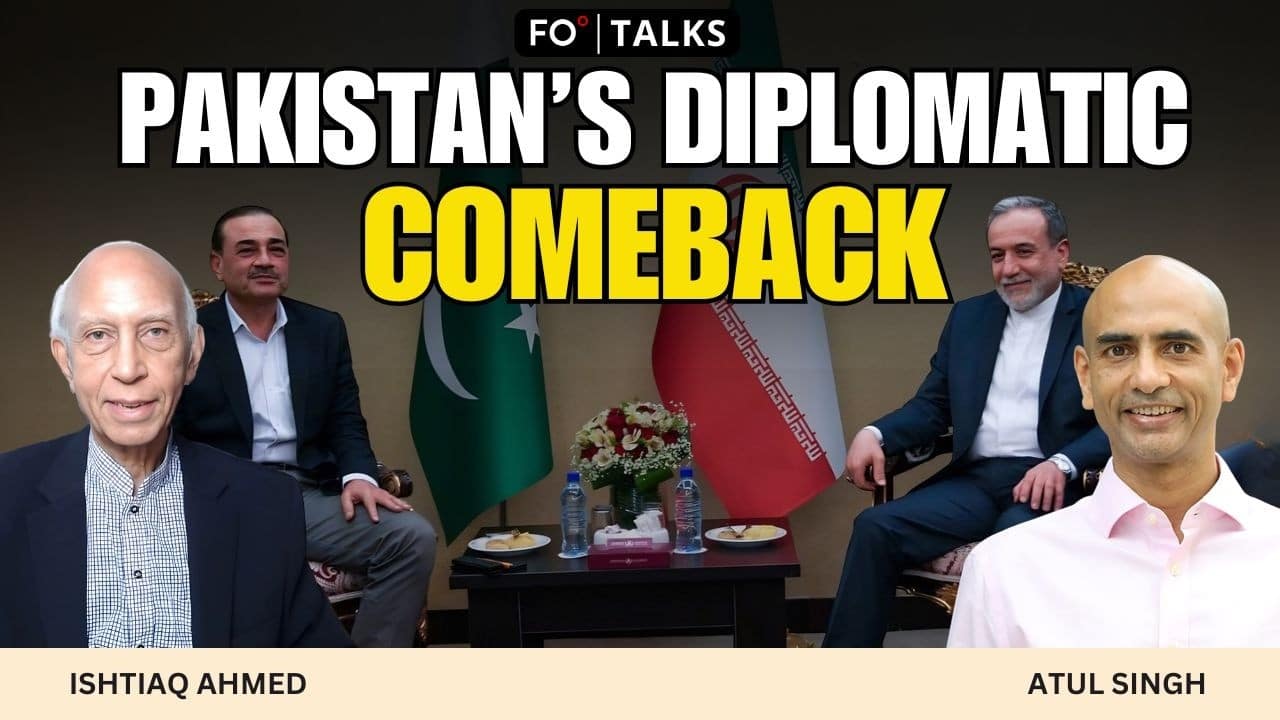
Editor-in-Chief Atul Singh and eminent scholar Ishtiaq Ahmed explore Pakistan’s striking contradiction: The country faces political instability, economic strain and fragile institutions, yet it has emerged as a facilitator for dialogue between the United States and Iran. Singh and Ahmed examine how geography, relationships and leadership have created this moment of diplomatic relevance, and whether it can endure.
A fragile state at the center of diplomacy
Singh opens by outlining Pakistan’s internal strains. Economic instability, repeated reliance on assistance from the International Monetary Fund and a lack of broad political legitimacy define the current moment. Regional tensions compound this picture; Pakistan has strained ties with Iran, Afghanistan and India.
Against this backdrop, Pakistan’s emergence as a diplomatic venue appears counterintuitive. Ahmed acknowledges the contrast but points out that context matters. When major powers seek a channel for dialogue, practical constraints narrow the field. Pakistan excludes Israel because it does not recognize Israel, while other potential venues carry their own political complications.
Why Pakistan, not Turkey?
Why are peace talks not being hosted in a more obvious location, like Turkey? Ahmed points to leadership dynamics and geopolitical rivalries. Personal rapport plays a role in shaping diplomatic choices, particularly under the current US administration. He notes that strained relations between Turkish President Recep Tayyip Erdogan and US President Donald Trump make Turkey a less appealing venue.
Pakistan, by contrast, benefits from a convergence of factors. Its leadership maintains working ties with Washington, reinforced by recent economic and business engagements. Simultaneously, Pakistan is not seen as a direct rival by Iran in the way Turkey might be. This combination creates a degree of acceptability across parties. As Ahmed puts it, “It’s been more credible to have such talks in an apparently neutral Pakistan than, let’s say, in Istanbul.”
Strategic depth and social links
Geography and demography further strengthen Pakistan’s case. The country shares a long border with Iran and maintains deep cultural and religious linkages. Its sizable Shia Muslim minority, integrated across political, military and economic life, provides an additional layer of connection. These factors contribute to a level of familiarity and understanding that can facilitate dialogue.
Leadership also matters. Singh highlights the role of Pakistani Field Marshal Asim Munir, described as an Iran specialist with prior engagement on related issues. Ahmed says that this expertise enhances Pakistan’s credibility in the eyes of external actors. Combined with ties to Saudi Arabia, China and the US, Pakistan occupies a rare position of overlapping relationships. This allows it to engage multiple sides without appearing fully aligned with any single one.
A diplomatic opening with domestic impact
Ahmed characterizes Pakistan’s current posture as unusually effective. “For once, I think Pakistan’s diplomacy has been very effective this time,” he says. In the past, Pakistan’s geostrategic positioning was often used primarily for military alliances rather than diplomatic leverage.
This shift has produced tangible domestic effects. A government previously criticized for weak legitimacy has gained a measure of public approval. Even political opponents have adjusted their behavior to avoid disrupting the diplomatic process. The perception of Pakistan as a constructive international actor has created a narrative of competence at a time when internal governance remains contested.
Pakistan presents its approach as balanced. It has criticized both US–Israeli actions against Iran and Iranian actions against Saudi interests, framing its role as principled rather than partisan. Ahmed broadly accepts this characterization, noting that such positioning helps sustain credibility across competing actors.
Limits, risks and regional implications
Despite the current momentum, both Singh and Ahmed remain cautious about long-term outcomes. The situation remains fluid, with only a ceasefire rather than a durable settlement in place. If negotiations falter or conflict escalates, Pakistan’s role could quickly diminish.
Ahmed stresses that future influence depends on execution. “Right now, they have done it very well,” he observes, but sustaining that advantage requires continued diplomatic skill and favorable external conditions. A second round of talks could reinforce Pakistan’s standing, while failure could expose its limitations.
Regional implications further complicate the situation. India has reacted critically, reflecting broader tensions in South Asian geopolitics. Meanwhile, unresolved conflicts with Afghanistan highlight the limits of Pakistan’s diplomatic reach. Ahmed raises a pointed question: Can a country capable of facilitating dialogue between distant powers apply similar energy to resolving disputes closer to home?
Ultimately, Pakistan’s current role reflects a convergence of circumstance rather than a guaranteed shift. It draws on historical patterns, including its past role in facilitating US–China rapprochement, but unfolds in a more volatile environment. Whether this moment translates into sustained influence or remains a passing alignment of interests will hinge on how Pakistan and the wider region respond to what follows.
[Lee Thompson-Kolar edited this piece.]
The views expressed in this article/video are the author’s own and do not necessarily reflect Fair Observer’s editorial policy.

































Comment