



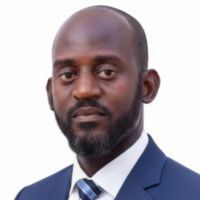

Fair Observer’s Video Producer Rohan Khattar Singh speaks with Olawole Fajusigbe, a lawyer based in Lagos, Nigeria, about the ramifications of the recent US airstrikes inside his country. The strikes, ordered by US President Donald Trump, targeted Islamic militant groups and were publicly framed as an effort to protect persecuted Christians. Inside Nigeria, however, the explanation is far more complex. The conversation examines competing narratives around religion and security, the regional geopolitics behind the strikes and the deeper structural weaknesses that continue to fuel violence across Africa’s most populous nation.
Airstrikes, sovereignty and the regional chessboard
The US airstrikes took place on December 26, 2025, in northwestern Sokoto State, a region bordering Niger. According to Fajusigbe, geography matters. After Niger’s 2023 military coup, US forces faced expulsion from a surveillance base that had monitored extremist movements across Africa’s northern Sahel region. Russian forces later occupied the same facilities, shifting the regional balance of power.
Washington and the Nigerian capital of Abuja offered different explanations for the strikes. Trump stated they were intended to punish those killing Christians, while Nigerian authorities described them as counter-insurgency operations aimed at destabilizing armed groups fueling regional unrest. The absence of a joint statement underscored the lack of narrative alignment and raised questions about consent, coordination and sovereignty.
Khattar Singh situates the strikes within Trump’s broader foreign policy posture, where military action increasingly doubles as strategic signaling. With Niger lost, Venezuela freshly destabilized and China expanding its footprint in Africa, Nigeria suddenly appears on a crowded geopolitical chessboard.
Yet Fajusigbe doubts Washington wants to open another major front. He warns that destabilizing a country of roughly 250 million people would carry continent-wide consequences.
Religion, violence and the danger of oversimplification
Nigeria is frequently ranked among the world’s most dangerous countries for Christians. Islamist groups such as Boko Haram and Islamic State West Africa Province openly seek to establish a caliphate and have targeted Christians, moderate Muslims and traditional communities alike. The nation has seen churches bombed, priests kidnapped and villages attacked.
Simultaneously, Fajusigbe urges caution against reducing Nigeria’s violence to a single religious narrative. In the northwest and northeast, Muslims form the majority and are often the primary victims of kidnappings and killings. Many attacks are opportunistic rather than sectarian and religious identity is frequently layered onto deeper disputes.
As he explains, “it may be religious, but it’s underpinned by economic factors and land disputes.” Long-running clashes between predominantly Muslim cattle herders and predominantly Christian farming communities over grazing land have become deadlier as climate stress, population growth and weak governance intensify competition. According to Fajusigbe, a “minority of malcontents” benefits from framing every conflict in religious terms, inflaming tensions and attracting external attention.
This complexity is often lost in Western political discourse, where simplified narratives make military solutions appear more decisive than they truly are.
Governance, migration and the limits of military power
The conversation then turns to Nigeria’s diplomatic response. Facing scrutiny from Washington, Abuja hired a major lobbying firm to demonstrate its commitment to protecting Christians. But Fajusigbe insists rhetoric alone will not suffice. Quoting Nigeria’s defense minister, he notes that “military intervention will only solve about 30% of the current issues,” with the remaining 70% dependent on governance.
In remote regions where the state is absent, insurgent groups often function as de facto authorities, collecting taxes and enforcing order. Breaking this cycle requires arrests, prosecutions, territorial control and credible public services, not just airstrikes. Without tangible results, lobbying efforts in Washington risk ringing hollow.
US–Nigeria relations face additional strain from Trump’s 2026 travel restrictions, which placed Nigeria among 75 affected countries. While Washington cites illegal immigration and vetting failures, Fajusigbe calls the framing misleading. As the world’s most populous black nation, Nigeria naturally produces large migrant numbers. For him, the visa ban presents the deeper challenge that unless Nigeria improves domestic opportunity, people will continue to leave in droves.
The discussion closes on the question many Nigerians are now asking: Could Nigeria become the next Venezuela? Despite Nigeria’s oil wealth, Fajusigbe remains skeptical that Washington seeks another regime-shaking intervention. He cautions that foreign military action often leaves societies worse off and emphasizes local responsibility over external rescue.
Fajusigbe makes a stark conclusion: “We are on our own. Don’t look for a savior out there.” Sustainable peace, he believes, cannot be imposed from the air. It must emerge from within, shaped by Nigerians who understand the social, economic and cultural roots of their own conflicts.
[Lee Thompson-Kolar edited this piece.]
The views expressed in this article/video are the author’s own and do not necessarily reflect Fair Observer’s editorial policy.



































Comment