



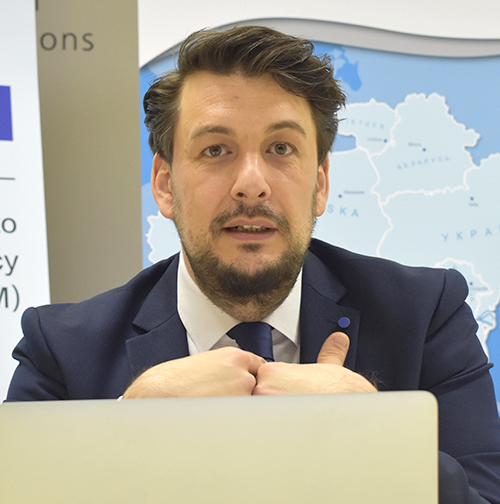

Fair Observer’s former Video Producer Rohan Khattar Singh and Sebastian Schäffer, Director of the Institute for the Danube Region and Central Europe, discuss the state of Ukraine after more than four years of war. Fresh from a visit to Kyiv, Schäffer describes a society balancing remarkable resilience with growing exhaustion as Russian attacks intensify. The discussion examines the reasons behind Moscow’s latest escalation, the uncertain role of the United States and Europe’s struggle to adapt to a deteriorating security environment.
Life under constant threat
Schäffer returns from Kyiv with a stark assessment of life in Ukraine. On the surface, daily life continues much as it would in any European capital. Cafés remain open, people go to work and public spaces stay active. Yet beneath this normality lies continuous danger.
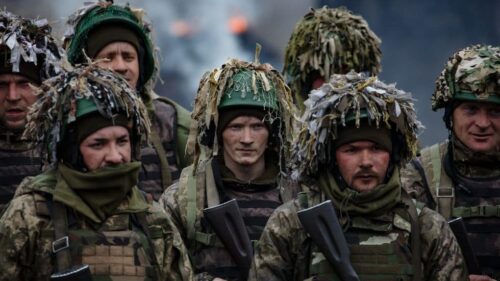
Residents live with frequent air raid alerts delivered through mobile applications and public warning systems. When alarms sound, people must quickly assess whether the threat is immediate or whether they can continue with their daily activities. Schäffer describes hearing drones being intercepted near Kyiv shortly after an alert, a reminder that danger remains ever-present.
He considers the defining characteristics of Ukraine today to be resilience and fatigue. With the war now lasting longer than World War I, civilians continue to endure repeated attacks while trying to preserve some sense of normal life.
Russia’s escalating campaign
Khattar Singh notes that Russian missile and drone attacks intensified dramatically in late May, including large-scale strikes on Kyiv and renewed use of advanced missile systems. Schäffer rejects Kremlin claims that the escalation is simply retaliation for Ukrainian actions.
Instead, he argues that domestic pressures within Russia are driving the increase in attacks. According to Schäffer, the Kremlin faces mounting challenges as the war drags on and battlefield results fail to deliver the decisive victory initially promised.
He also emphasizes that civilian infrastructure has become a deliberate target. Citing figures presented by Katarína Mathernová, the European Union’s ambassador to Ukraine, Schäffer notes that there were only four days in 2025 when Russia did not strike civilian infrastructure and no such days in 2026.
“We need to really be open with this,” Schäffer says. “They have not only tried to continue their genocidal attacks.”
He points to strikes on cultural institutions and essential infrastructure, including water-treatment facilities, arguing that these attacks are intended to make civilian life increasingly difficult rather than achieve major military gains.
Beijing, Washington and the changing geopolitical picture
The conversation turns to the broader geopolitical context. Khattar Singh highlights the timing of Russian President Vladimir Putin’s visit to Beijing shortly before the latest escalation.
Schäffer believes the visit itself was planned long in advance and was not directly linked to the attacks. However, Moscow may have viewed the international environment as favorable for escalation, particularly given what he sees as limited resistance from major powers.
Schäffer says that Washington’s attention has shifted overwhelmingly toward the Middle East, leaving Ukraine largely absent from senior American messaging even during major Russian attacks.
“There is an absolute blind eye from the current US administration when it comes to Ukraine,” he says.
This perceived disengagement removes an important deterrent and creates uncertainty about the future of Western support. He characterizes US President Donald Trump’s approach as erratic and questions whether the US remains committed to defending democratic partners in Europe.
Europe’s concerns and Ukraine’s battlefield position
While much international attention has focused on developments in the Middle East, Schäffer believes that European leaders remain aware of Russia’s renewed offensive. Leaders such as German Chancellor Friedrich Merz and French President Emmanuel Macron have publicly condemned the attacks.
Simultaneously, he acknowledges that European governments face immediate political pressures related to energy prices and economic stability. Events affecting the Strait of Hormuz have a more direct impact on voters than developments on the Ukrainian front, creating competing priorities for policymakers.
Schäffer also pushes back against narratives suggesting Ukraine is collapsing militarily. “The momentum on the battlefield on the front line is shifting towards Ukraine,” he states. Russia, he posits, remains unable to achieve its original objective of capturing the Ukrainian capital.
Nevertheless, war fatigue affects both Ukrainian and Russian societies. The conflict increasingly resembles a prolonged struggle of endurance rather than a contest likely to produce a rapid breakthrough.
Europe’s security challenge
The discussion concludes with concerns about Europe’s broader security posture. Khattar Singh points to the withdrawal of some US military assets from Germany and questions whether Europe possesses sufficient air-defense capabilities if Russian aggression expands beyond Ukraine.
Schäffer argues that European governments understand the threat but are moving too slowly to address it. He warns that Europeans often underestimate the psychological impact of living under constant missile and drone threats, something Ukrainians experience every day.
For Schäffer, the central lesson is that Europe can no longer assume American leadership will reliably fill security gaps. Instead, European states must strengthen both military capabilities and public preparedness.
Supporting Ukraine remains the most effective way to prevent wider instability. The longer Europe delays building its own resilience, the more vulnerable it becomes to the security challenges emerging on its eastern frontier.
[Lee Thompson-Kolar edited this piece.]
The views expressed in this article/video are the author’s own and do not necessarily reflect Fair Observer’s editorial policy.





























Comment