

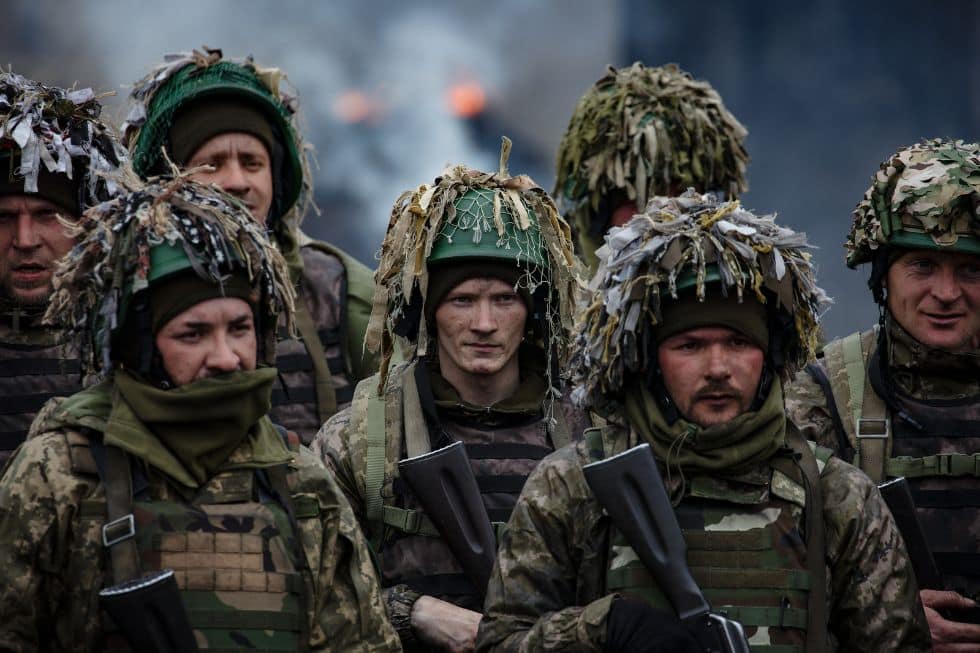



Wars are often judged by their outcomes — victories, defeats and territorial gains. Yet some conflicts resist such clear conclusions. The war in Ukraine increasingly appears to be one of them: a prolonged confrontation in which neither side can secure a decisive victory and in which the costs of continuation steadily outweigh the prospects of success.
The conflict, which began in 2014 and escalated into a full-scale invasion in 2022, has affected not only the two countries directly involved but also the broader international system. What initially appeared as a war that could produce a clear outcome now raises a more complex question: Will there be a true winner, or only two exhausted losers?
Over the years since the war began, the steady erosion of both sides’ military capabilities, the growing scale of external involvement and the repeated failure of diplomatic efforts have all pointed in a similar direction. This is no longer a war moving toward victory, but one settling into a prolonged strategic deadlock — one that increasingly looks structurally incapable of producing a decisive winner.
From blitzkrieg expectations to stalemate
On February 24, 2022, Russian President Vladimir Putin announced what was expected to be a rapid and decisive military operation. In the early days, Russian forces advanced quickly across multiple fronts, reaching the outskirts of Kyiv and creating the impression that the capital could fall within days.
That expectation did not last long. Ukrainian resistance proved far more resilient than anticipated. Russian advances slowed, then stalled and in some areas were pushed back. What began as a fast-moving campaign gradually turned into a grinding war of attrition, particularly along the Donbas axis and the southern front.
In this sense, the war began to diverge from earlier short conflicts like the 2008 Russia–Georgia war and instead moved closer to a prolonged and costly confrontation. The failure to secure a decisive early breakthrough marked a turning point — not just militarily, but strategically.
Russia’s strategic overreach and a new Afghanistan
From the outset, the invasion appeared to rest on assumptions that underestimated both Ukrainian resistance and the scale of Western response. Over time, comparisons with the Soviet Union’s experience in Afghanistan have become more frequent. This isn’t because the conflicts are identical, but due to similar patterns of overextension, rising costs and diminishing returns.
Despite early operational advantages, Russia has been forced to adapt. Initial expectations of rapid territorial control gave way to a slower, attritional approach. Non-state actors like the Wagner Group played a visible role in certain phases of the war, particularly in battles such as Bakhmut, though their influence has since declined. Auxiliary forces, including Chechen units, have also been present, but without fundamentally changing the broader trajectory.
At the same time, the material and manpower costs have increased. Western estimates suggest that Russian casualties have reached significant levels. Beyond the battlefield, sanctions, diplomatic isolation and reduced global influence have added further pressure. What was intended as a demonstration of strength has, in many ways, turned into a prolonged test of endurance.
Shrinking influence from the Middle East to the Caucasus
The war has also affected Russia’s position beyond Ukraine. Its ability to project influence in regions such as the Middle East and the Caucasus has become more limited. While Moscow maintains a presence in Syria and continues to engage with regional actors, its capacity to operate simultaneously across multiple fronts has weakened.
Institutions like the Collective Security Treaty Organization (CSTO) have also shown signs of strain, with member states pursuing more independent policies. In parallel, Ukraine has expanded its diplomatic and military partnerships, particularly with European countries, strengthening its position within a broader Western security framework. This shift does not mean a complete loss of influence for Russia, but it does suggest a gradual redistribution of geopolitical weight under the pressure of a prolonged war.
Sanctions, frozen assets and growing dependence on China
For the Putin administration, already reliant on energy revenues to sustain its wartime economy, one of the most significant shocks has been the EU’s decision to freeze Russian assets. As sanctions intensified, Russia’s growing economic and strategic dependence on China has become increasingly visible. Beijing has expanded its role as a key trade partner, increasing purchases of Russian oil and gas at discounted rates while also providing financial channels that help Moscow mitigate the effects of Western restrictions.
This growing asymmetry, however, is not without long-term implications. As Russia has become increasingly dependent on Chinese markets, financing and logistical networks, Beijing’s potential leverage over Moscow has expanded. In practical terms, this may allow China to shape the terms of economic cooperation to its advantage. This includes securing favorable energy prices, influencing infrastructure routes and limiting Russia’s room for independent strategic maneuver. While this does not translate into direct political control, it creates a structural imbalance between Russia and China.
Looking ahead, this dependency could become even more drastic if Western sanctions remain in place. Over time, this dynamic may constrain Russia’s ability to act autonomously not only in economic terms but also in broader geopolitical decision-making, particularly in regions where Chinese and Russian interests do not fully align.
Beyond economics, cooperation between the two countries has deepened in the military and technological domains, including joint exercises and selective equipment transfers. Diplomatic backing from China in international institutions has further allowed Russia to retain a degree of global maneuverability despite its relative isolation.
Taken together, these developments point to a gradual but meaningful erosion of Russia’s strategic autonomy, with Beijing gaining increasing leverage over Moscow’s long-term decisions. In this sense, comparisons with the Soviet experience in Afghanistan become more relevant.
Ukraine’s heavy price and conditional resilience
For Ukraine, the costs have been devastating. Large parts of the country’s infrastructure have been damaged or destroyed, millions have been displaced and economic losses have reached staggering levels. Historical traumas, from the Holodomor to Chornobyl, add another layer to the national experience of crisis.
And yet, Ukraine has not collapsed. With sustained Western support, it has managed to maintain resistance and even develop aspects of its domestic defense industry. This has allowed it to remain an active participant in the war, not merely a dependent actor.
Still, this resilience is conditional. Without continued external support, sustaining the same level of resistance would be extremely difficult. In that sense, Ukraine’s strength is real, but not entirely self-sufficient.
Lessons from Armenia and Central Asia
Other post-Soviet contexts offer partial points of comparison. Armenia, for example, has in recent years shown signs of shifting toward a more pragmatic foreign policy approach, seeking to reduce tensions through diplomatic means. Similarly, Central Asian states have generally managed their relations with Russia through careful balancing rather than open confrontation.
Ukraine’s trajectory has been different. Despite attempts at negotiated frameworks such as the Minsk agreements and earlier security arrangements, the conflict escalated into full-scale war. This suggests that while pragmatic diplomacy can sometimes reduce tensions, it is not always sufficient in the face of deeper geopolitical confrontations.
What could break the deadlock?
If the war is indeed locked in a cycle of mutual exhaustion, the real question is not who will win, but what might bring it to an end. Several possibilities stand out.
One option is a frozen conflict, similar to the Korean Peninsula. Front lines would stabilize without a formal peace agreement. While large-scale fighting would likely decrease, the underlying hostility would persist, effectively institutionalizing instability. This model is shaped by an asymmetric security architecture: South Korea is a part of the US-led security system, hosting American forces and relying on external support. North Korea, by contrast, remains heavily isolated, economically constrained and governed by a highly militarized system with limited external support. If this model were applied to Ukraine, it would imply that the conflict remains unresolved but becomes a permanent fixture of the landscape.
Another possibility is a negotiated settlement. This would require difficult compromises from all sides. Ukraine would likely seek security guarantees, even if full NATO membership remains out of reach. Russia, on the other hand, would aim to preserve at least part of its territorial or strategic gains. Western actors may gradually shift from supporting outright victory to backing a plan that offers both parties a way out.
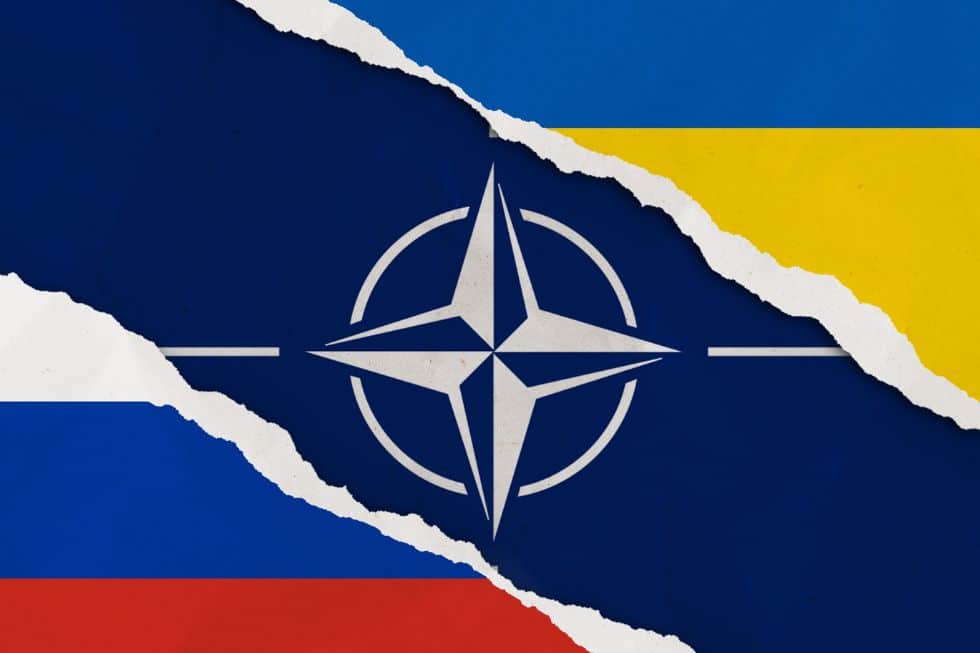
A third scenario is escalation. This could take several forms. One possibility is deeper NATO involvement through expanded intelligence sharing, greater integration of air and missile defense, or increased logistical and advisory support for Ukraine. Another is regional spillover, where the conflict begins to affect neighboring NATO states through airspace violations, border incidents or hybrid operations, raising the risk of direct confrontation between Russia and the Alliance. This has already happened with Russian drones entering Polish and Estonian airspace. In a more extreme case, miscalculation or accidental engagement between NATO and Russian forces could open a new theater of war with new actors involved.
The absence of victory and the persistence of loss
At this stage, the war appears less like a contest that can be won and more like a condition that both sides are forced to endure. Ukraine continues to fight, but at immense cost and with heavy reliance on external support. Russia continues its campaign, but under growing economic pressure, diplomatic isolation and increasing dependence on China.
Neither side is collapsing, but neither is clearly advancing toward victory. What emerges instead is a form of balance defined not by success, but by sustained loss. One side faces long-term erosion, the other ongoing destruction. And as time passes, the distinction between winning and simply continuing becomes harder to draw. Ultimately, this may be the defining feature of the conflict: not a war that ends in victory, but one that gradually settles into exhaustion.
[Patrick Bodovitz edited this piece]
The views expressed in this article are the author’s own and do not necessarily reflect Fair Observer’s editorial policy.







Join the conversation
Share your perspective
Log in to share your thoughts and take part in the discussion.