




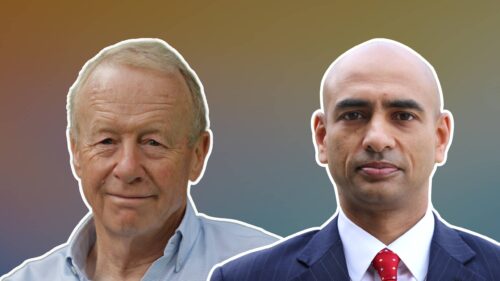
Martin Plaut, a journalist, academic and author, explains the wave of xenophobic violence unfolding across South Africa. As groups demand that undocumented migrants leave the country, he examines the economic pressures driving the unrest, the government’s response and the broader political forces he believes may be shaping the crisis.
Economic hardship fuels rising violence
Plaut describes South Africa’s xenophobic violence as an urgent national crisis that intensified after activist groups gave undocumented migrants a deadline of June 30 to leave the country. Marches have taken place across the country, with participants carrying weapons and whips while targeting migrants from elsewhere in Africa. Calling the situation “extremely explosive,” Plaut argues that the unrest reflects deep social and economic frustrations rather than isolated incidents.
South Africa’s exceptionally high unemployment rate, Plaut explains, lies at the heart of the violence. Around 60% of people under the age of 24 are unemployed, leaving many young South Africans with few economic opportunities. Rather than directing their anger toward political leaders or economic structures, many instead blame migrants competing for scarce jobs.
Plaut points to the human cost of this violence. Nearly 500 foreign Africans have been killed over the past four years, while thousands more have fled areas such as Durban or accepted evacuation assistance from governments including Malawi, Ghana, Kenya and Nigeria. Roughly three million migrants currently live in South Africa, many without formal documentation, making them especially vulnerable during periods of unrest.
Civic organizations are attempting to counter the anti-migrant narrative by arguing that South Africa’s economic woes stem from systemic failures rather than the presence of foreign workers. This message has struggled to gain widespread support, however.
Political narratives and disputed outside influence
Beyond the economic causes, Plaut argues that political rhetoric and competing interests are aggravating tensions. He points specifically to the African National Congress, criticizing comments by the party’s secretary general blaming Zimbabwean workers for undermining unions during apartheid. Such statements risk encouraging further hostility toward migrants at a particularly volatile moment.
Plaut also presents broader claims about foreign influence, while acknowledging that evidence remains incomplete. He says there are “indications” that Israeli or Jewish funders have supported xenophobic political groups following South Africa’s case against Israel at the International Court of Justice, although he is not alleging direct involvement in the street marches themselves.
He advances a second, more far-reaching argument involving Russia and South Africa’s abandoned 2015 nuclear agreement with Moscow. Plaut contends that interests connected to that project have supported campaigns seeking constitutional changes, including replacing the preamble stating that South Africa belongs to all who live there with language limiting that principle to South African citizens. He acknowledges that the argument “sounds bizarre” but maintains that political efforts surrounding constitutional change are genuine.
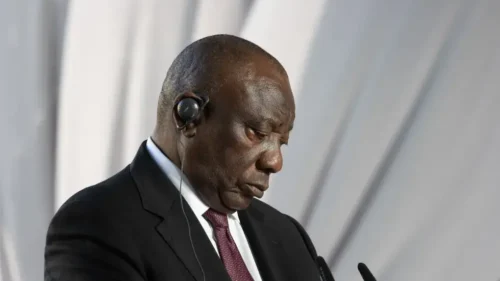
Plaut concludes that South Africa faces an immediate security challenge. Although South African President Cyril Ramaphosa has appealed to traditional leaders and deployed police, Plaut criticizes authorities for failing to enforce existing laws prohibiting demonstrators from carrying weapons. He also notes that the government has neither declared a state of emergency nor banned the marches despite the escalating tensions.
Unless the government can contain the violence and address deeper economic problems, both migrants and South African society face growing risks.
[Lee Thompson-Kolar edited this piece.]
The views expressed in this article/video are the author’s own and do not necessarily reflect Fair Observer’s editorial policy.
































Comment