





Multimedia journalist Luke De Cresce and Mehdi Alavi, author and founder of the Peace Worldwide Organization, discuss how the ongoing war has reshaped political life inside Iran. While much international attention focuses on military operations and diplomacy, Alavi argues that the domestic consequences tell a different story, with tighter information controls, rising nationalism and growing public support for the Islamic Revolutionary Guard Corps (IRGC). He contends that many Western assessments misunderstand Iranian society and therefore misread both the country’s internal politics and its negotiating position.
Communication restrictions reinforce domestic control
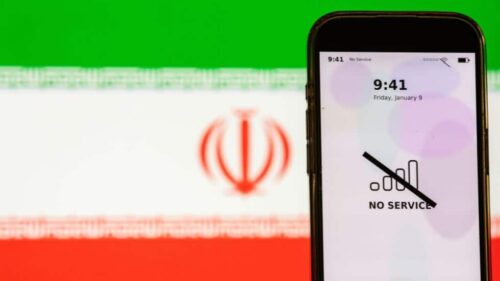
De Cresce and Alavi begin with the state of communications inside Iran. Although Western media reports that Internet access has largely returned, Alavi says restrictions on international communication remain significant. Before January 8, contacting relatives and friends through WhatsApp was straightforward, but since then international calls often fail and messages that once received replies within hours can now take days or even a week.
Simultaneously, Alavi notes that communication within Iran remains far more reliable through domestic platforms such as Bale. He says that the government has maintained these internal systems while limiting outside connections because it believes foreign intelligence agencies have used international communication channels to organize terrorist opposition activity. In his view, these restrictions are intended to strengthen domestic security rather than isolate ordinary citizens.
War strengthens the IRGC and national unity
A central theme of the interview is the growing influence of the IRGC. Alavi argues that American military action has produced the opposite effect from what Washington expected by increasing public support for the Iranian state instead of encouraging regime change. “They really united Iran,” he says, describing frequent large nighttime demonstrations in support of the Revolutionary Guard across major cities.
Alavi attributes this response to Iran’s long civilizational history, saying that outsiders underestimate the strength of national identity. He compares the country to a family that may have internal disagreements but will unite against an external threat. He believes this shift has strengthened the IRGC politically and will allow it to play an even larger role after the conflict ends.
He also distinguishes between Iran’s elected government, which he characterizes as more willing to negotiate with Western countries, and the IRGC, which he says prioritizes national strength and self-reliance. According to Alavi, many Iranians now favor a significantly tougher response toward the United States than government leaders have been willing to pursue.
Economic hardship does not weaken public resolve
Inflation and sanctions have affected everyday life in Iran. Alavi acknowledges that economic conditions have deteriorated sharply, with some consumer prices doubling within a year. Despite these pressures, he says many Iranians are prepared to accept financial hardship if they believe it protects the country’s independence.
“Inflation is very bad in Iran,” Alavi says. But strong family and community networks help people endure economic difficulties. He contrasts Iranian social structures with those in the US, noting that relatives and neighbors often assist one another during periods of financial distress.
Alavi also suggests that many Iranians believe prolonged conflict will impose increasing economic costs on the US through higher energy prices and domestic political pressure. From this perspective, enduring short-term hardship is viewed as part of a longer strategic contest rather than a sign of national weakness.
Western reporting and future geopolitical alignment
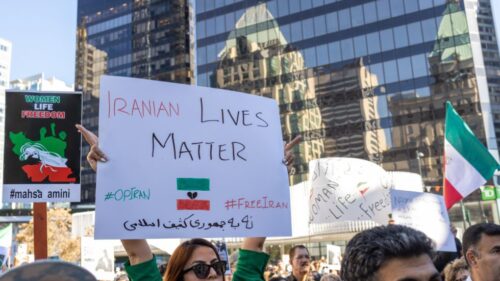
Alavi concludes by assessing media coverage, domestic unrest and Iran’s long-term future. He states that protests reported in Western media were much smaller than portrayed and notes that authorities relied largely on volunteer Basij forces operating within the IRGC rather than deploying the regular military, which he interprets as evidence that officials did not view the demonstrations as an existential threat.
Alavi further contends that Western media coverage consistently exaggerates negative developments inside Iran while overlooking events that contradict prevailing narratives. This, he argues, contributes to persistent misunderstandings of Iranian public opinion and government policy.
Looking ahead, Alavi predicts that Iran will increasingly orient itself toward China, Russia and other non-Western partners. “The future should be with China and Russia and the neighboring countries,” he says. He believes the war has convinced many Iranians that closer ties with the West are unlikely to deliver lasting economic or political benefits. In his view, this strategic reorientation will shape both Iran’s postwar economy and its place in an increasingly multipolar international system.
[Lee Thompson-Kolar edited this piece.]
The views expressed in this article/video are the author’s own and do not necessarily reflect Fair Observer’s editorial policy.



















Comment