


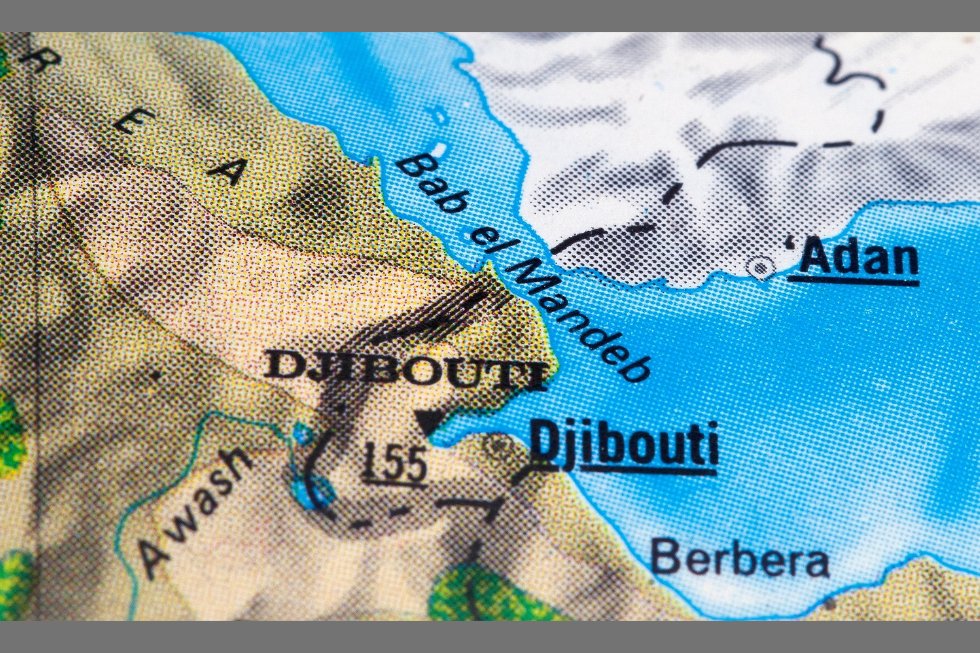



The battle for the Bab al-Mandeb Strait is no longer simply another episode in Yemen’s protracted war. It has become a test of who can defend Yemen’s strategic coastline, protect one of the world’s most important maritime corridors, and provide a credible alternative to further devastation and an escalating humanitarian crisis.
The Houthis’ recent capture of the Red Sea port city of Mocha and the events that followed have reopened a fundamental political question: Can Yemen be stabilized through existing power-sharing arrangements, or must its political structure change to reflect the forces that actually control territory, provide security and fight on the ground?
The Houthi lightning offensive
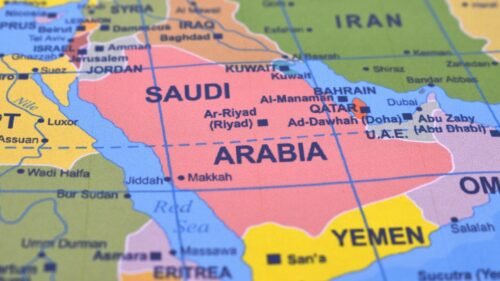
In September, the Houthis launched a rapid offensive along Yemen’s western coastline. On September 10, Al Jazeera reported that the movement had captured Mocha and was expanding its control towards Bab al-Mandeb and the Dhubab area. The advance exposed serious weaknesses among the forces opposing the Houthis and threatened to disrupt the military and logistical connections between Taiz, the western coast and southern Yemen.
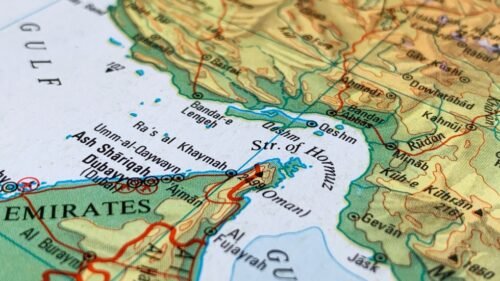
The international significance was immediate. Bab al-Mandeb connects the Red Sea with the Gulf of Aden and provides access to the Suez Canal, making it a critical passage for international trade and maritime traffic. The strategic stakes became even greater amid the reported closure of the Strait of Hormuz, increasing pressure on alternative routes for energy exports and international commerce.
The Houthi advance was therefore more than a territorial gain. It potentially offered the movement and its Iranian backers an additional instrument of strategic leverage over regional security and international shipping. In my view, sustained control over, or the ability to threaten, Bab al-Mandeb could provide the Houthis with a powerful negotiating card that extends well beyond Yemen’s internal conflict.
The Saudi response: Operation Yemen Dawn
The response came with considerable force.
On October 4, Yemen’s internationally recognized government announced a major offensive intended to reclaim territory from the Houthis and ultimately restore state institutions and retake Sana’a. Reuters reported the announcement by Presidential Leadership Council (PLC) chairman Rashad al-Alimi and described the operation as an attempt to reverse the Houthi advances.
On October 5, the Saudi-led coalition announced a major air campaign in support of the ground offensive. According to The Guardian, coalition spokesman Major General Turki al-Maliki said that 100 fighter jets were participating in the operation. The coalition also claimed it struck hundreds of targets and was providing air protection for Bab al-Mandeb and the forces advancing along the coast.
The intervention’s military significance was substantial. Saudi air power provided support that could help Southern ground forces regain territory and disrupt Houthi deployments. Yet air power alone cannot hold towns, secure roads or establish lasting authority. Those tasks require organized ground forces, functioning command structures and a sustainable security presence.
This distinction is central to understanding the latest developments. The counteroffensive cannot be assessed solely through the number of aircraft deployed or targets struck. It must also be evaluated through the performance of the forces that advance, hold positions and protect the population from the Houthis after the fighting.
Southern mobilization and the battle for Bab al-Mandeb
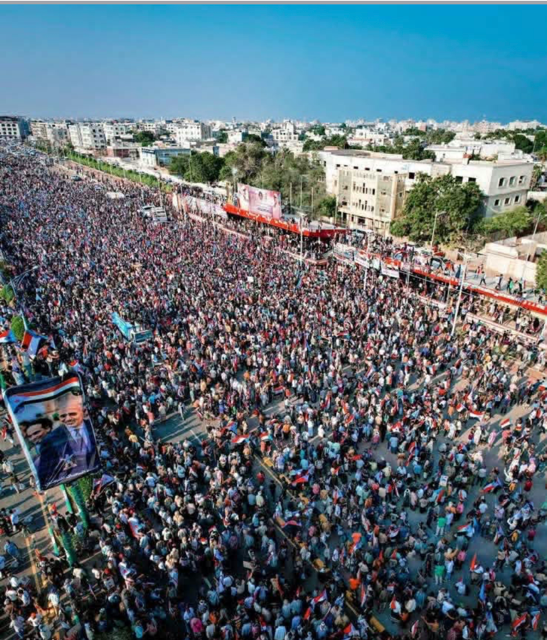
One important aspect of the recent developments is the political and military context surrounding the Southern mobilization announced by the Southern Transitional Council (STC). The sequence deserves closer attention. After the STC’s announcement, footage began circulating showing pictures of President Aidarous al-Zoubaidi on armored vehicles and at field positions, along with other material from inside the battle.
These images carry political significance because they place Southern leadership visibly within the broader military effort at a moment when defending the western coast has become a major regional concern. The broader question is more important: Did the mobilization reinforce Southern forces’ readiness and show the political leadership’s intent to play a more visible role in defending strategic territory? The role of Southern formations in the ground campaign makes this question particularly relevant.
The Southern Giants Brigades have developed extensive battlefield experience through years of fighting the Houthis and other armed groups. Alongside other formations, they have become an important part of the military landscape in southern and western Yemen.
The Associated Press reported that Saudi-backed Yemeni forces, supported by more than 100 Saudi warplanes, had retaken several locations around Bab al-Mandeb, including Dhubab and Hadeid. The reporting highlighted the operation’s combined nature, with air power supporting ground advances. The central issue, therefore, is not simply which political authority announces a military operation. It is also which forces carry out the fighting, secure the recovered territory and bear responsibility for defending it against renewed attacks.
If Southern forces are expected to play a major role in defending the coastline and the approaches to Bab al-Mandeb, their political representatives will inevitably seek a meaningful voice in decisions concerning security arrangements and the future governance of those areas. That is a political question that military communiqués alone cannot resolve.
The failure of the anti-Houthi front
The Houthi breakthrough did not occur in a vacuum. For years, the anti-Houthi camp has been weakened by competing political interests, divided command structures and disagreements over the distribution of military authority. The fall of Mocha and the rapid advance towards Bab al-Mandeb demonstrated how quickly territorial positions can deteriorate when political fragmentation undermines coordination and preparedness. Taiz provides a particularly important example.
Competition among political and armed groups has long affected the city and its surrounding military structures. The Islah movement has exerted considerable influence within parts of the local political and military establishment, while rival factions have repeatedly questioned how authority and resources are distributed. The Sana’a Center for Strategic Studies has examined the role of party-aligned forces and irregular military formations in Taiz, including the political tensions surrounding the Taiz Military Axis.
The latest fighting has again exposed the Taiz front’s vulnerability. Reuters reported advances by Houthi forces around al-Turbah and other areas, raising fears that government positions could become increasingly isolated. However, military sources disagreed over the extent to which key routes had been cut. Critics of the existing military arrangements argue that excessive political influence over military formations has weakened the broader anti-Houthi effort and obstructed the development of a coherent national strategy.
The underlying lesson is straightforward: Military effectiveness depends not only on manpower and equipment, but also on coordination, accountability and a command structure that can prioritize common objectives over partisan interests.
Saudi Arabia and the question of its strategic partner
The latest offensive raises a broader question concerning Saudi Arabia’s approach to Yemen. Riyadh has legitimate security interests in preventing Houthi expansion, protecting its territory and infrastructure, and securing maritime routes essential to regional and international trade. Yet Saudi policy has had to navigate a complicated political landscape involving the internationally recognized government, Southern forces, Islamist-aligned formations, local resistance groups and other armed actors. These forces do not necessarily share the same political objectives, even when they oppose the Houthis.
The House of Commons Library has documented the changing relationships among the principal Yemeni actors. This includes Saudi Arabia’s support for the internationally recognized government and the United Arab Emirates’ (UAE) previous backing of the STC and other armed groups. This fragmented landscape presents Riyadh with a strategic dilemma: How can Saudi Arabia build a coherent security arrangement when some of the forces it depends on have distinct political identities, local constituencies and long-term ambitions?
Southern forces have repeatedly fought the Houthis in strategically important areas. Their experience and local connections make them significant participants in any effort to defend southern and western Yemen. At the same time, military effectiveness should not automatically translate into a mandate to govern. Any durable political arrangement must also address civilian protection, public accountability, representation and the rights of communities living in the territories concerned.
Saudi Arabia and its international partners must reconcile operational effectiveness with a political settlement that reflects Yemen’s actual balance of power. An arrangement that marginalizes influential local forces could undermine security. Conversely, an arrangement that gives armed actors authority without clear accountability could deepen the fragmentation that has contributed to the conflict.
Aden: a second security front
While attention has focused on Bab al-Mandeb and the western coastline, the security situation in Aden deserves equal scrutiny. Aden is a major population center, an important political and administrative hub, and a strategic center for Southern Yemen. Its stability is therefore inseparable from the South’s broader security.
Recent announcements by Yemen’s Ministry of Interior have raised concerns about alleged Houthi-linked networks operating beyond the movement’s established areas of control. On September 30, the ministry announced that security forces had detained several cells and individuals it described as linked to the Houthis in a number of provinces. It reported suspicious communications and meetings, attempted smuggling, intelligence gathering, recruitment and other activities it said threatened security and stability.
The announcement is relevant, but its geographical scope must be understood accurately. The ministry referred to several provinces and did not establish that all the reported arrests took place in Aden, nor did it provide independently verified evidence of the full extent of the alleged networks. Consequently, claims that Houthi-linked cells are being arrested in Aden every day should be supported by individual, dated reports rather than presented as an established daily pattern.
Even with that qualification, the reported arrests raise important questions about the ability of armed groups to gather intelligence, recruit informants, exploit personal networks and operate clandestinely in areas controlled by their opponents. If such activity is confirmed, it would demonstrate that the conflict extends beyond conventional front lines. Intelligence gathering, clandestine organization and attempts to exploit security weaknesses can create serious risks even when territorial advances are being reversed elsewhere.
For Aden, the appropriate response must combine effective intelligence work with lawful investigations, judicial accountability and civilian protection. Security agencies need the capacity to identify genuine threats without letting political rivalry or unsubstantiated accusations replace evidence.
The wider political implications are also significant. If the South is expected to defend its territory against military advances while confronting alleged internal networks, its leaders will argue that local security institutions require sufficient authority, resources and coordination to meet those responsibilities. But arrests alone cannot measure security. Sustainable stability also requires public confidence, professional policing, reliable judicial institutions and safeguards against arbitrary detention.
Aden’s security is therefore not a secondary issue. It is part of the same strategic challenge unfolding around Bab al-Mandeb: whether the authorities responsible for defending territory can also provide effective and accountable governance.
The battle is about more than Mocha
The battle for Mocha and Bab al-Mandeb is about much more than a handful of strategically located towns. It is about who can hold territory, secure Yemen’s coastline, protect maritime traffic and maintain a credible security presence. It is also about whether the forces involved can prevent renewed territorial collapse once the immediate military pressure has eased.
As of October 6–7, the internationally recognized government and its allies claimed major gains around Bab al-Mandeb, Dhubab and Mocha. Reuters reported that government forces had advanced towards Mocha with heavy Saudi air support, while noting that the extent of the gains could not be independently verified and that Houthi sources disputed the government’s account. This distinction matters. Announced gains must be consolidated before they can be considered lasting strategic victories.
The same applies to the counteroffensive’s political consequences. Participation in a successful military operation may strengthen a faction’s claim to a greater role in security arrangements, but it does not, by itself, settle questions of political legitimacy, territorial jurisdiction or constitutional authority. Those questions require a broader process that includes the interests of the communities affected by the fighting.
The question of the internationally recognized government
The latest developments raise a fundamental question: What does it mean to be Yemen’s internationally recognized government when effective power and military responsibility remain so fragmented?
International recognition remains an important diplomatic asset. It provides a basis for representation and engagement with other states and international institutions. But recognition alone does not guarantee effective authority over territory, a unified chain of command or the capacity to protect the population. A government that relies on multiple armed formations with distinct leadership structures and political objectives faces a difficult challenge in turning diplomatic recognition into functioning institutions.
The issue is not simply whether the internationally recognized government should continue to exist. It is whether Yemen’s existing political framework can accommodate the distribution of power that has emerged during the war. Some form of political and security realignment may therefore be necessary.
This does not necessarily require an immediate declaration of Southern independence or a predetermined constitutional outcome. It could begin with practical arrangements that give Southern authorities a clearly defined role in administering and securing the territories for which they are responsible, while establishing transparent mechanisms for coordination with the internationally recognized government and regional partners.
Such arrangements would need to address the division of security responsibilities, public finances, civilian administration, accountability and the representation of local communities. The objective should be to build institutions that reflect realities on the ground without making the division of armed authority permanent or leaving civilians without effective legal protection. A political settlement will remain fragile if it treats territorial control as the only source of legitimacy. Equally, it will struggle to endure if it ignores the forces and institutions that actually provide security.
Southern mobilization is about defense
Southern mobilization should be understood within this wider context. Its stated rationale rests on the perceived need to defend Southern territory, resist Houthi expansion and strengthen local forces’ capacity to respond to military and security threats. The recent developments around Bab al-Mandeb have made that argument more prominent.
The combination of Houthi advances, a Saudi-backed counteroffensive and visible Southern participation has brought questions of military responsibility and political representation back to the center of the debate. For Southern leaders, the central issue is whether the South can be expected to defend strategically important territory while remaining dependent on political arrangements that offer limited clarity about its long-term authority.
The Southern Armed Forces, Southern Resistance formations and local tribal forces are among the actors involved in the wider struggle against the Houthis. Their respective roles and capabilities, however, should be assessed individually rather than treated as a single unified command.
Meanwhile, the STC remains a significant political actor in the Southern question. Its ability to translate political mobilization into lasting security and governance arrangements will depend on more than battlefield visibility. It will also depend on institutional coordination, civilian protection, public accountability and its capacity to work with other communities and political actors.
After a year away from the political scene, al-Zubaidi’s October 13 speech introduced a new dynamic into Yemen’s conflict. It places the Southern question within a broader strategic framework, linking the restoration of South Yemen’s statehood with confronting the Houthi threat, combating terrorism and safeguarding international maritime security. This signals an attempt to reposition the Southern cause beyond Yemen’s internal political dispute and highlight its broader regional and international significance. The speech raises important questions about the future balance of power, the role of Southern forces in regional security and how regional and Western governments will engage with the Southern question in the period ahead. Al-Zubaidi’s condemnation of the Houthis attacks on Saudi Arabia also provides an opportunity for some form of dialogue between the STC and Saudi Arabia.
The international community should therefore look beyond political labels and examine the practical questions: Which forces are responsible for defending particular territories, under what command arrangements, with what resources, and subject to what legal and political oversight? Those questions are central to any realistic discussion of Yemen’s future.
A political reality that can no longer be ignored
The events of September and October have exposed the limitations of attempting to stabilize Yemen through political arrangements that do not consistently translate into effective territorial control or unified security institutions. The Houthis have demonstrated their ability to exploit divisions among their opponents and threaten strategically important areas. The Saudi-led coalition has shown that substantial air power can enable rapid battlefield gains, but those gains depend on capable ground forces and effective arrangements to hold recovered territory.
Southern formations have again become important participants in the effort to contain Houthi expansion along Yemen’s southern and western approaches. Their involvement raises legitimate questions about political representation and the future distribution of security responsibilities. Meanwhile, the reported detention of alleged Houthi-linked cells underlines the need to consider internal security alongside conventional military operations, particularly in Aden and other population centers.
The humanitarian consequences must remain central to any assessment. Renewed fighting, disrupted transport routes and insecurity threaten civilian lives, livelihoods and access to essential supplies. A military advance cannot be considered a lasting success if it produces further displacement without establishing the conditions for safe return and recovery. The international community therefore faces a difficult choice in how it approaches Yemen’s political future. It can continue to rely on existing institutional arrangements without adequately addressing the divisions that have repeatedly undermined their effectiveness. Or it can support a more realistic political process that considers territorial realities, local communities’ interests, the contribution of Southern forces and the need for accountable security institutions.
Such a process should not predetermine Yemen’s constitutional future. It should create space for meaningful negotiations over governance, security, representation and the relationship between North and South.
The battle for Bab al-Mandeb may ultimately prove to be more than a military confrontation. It may become a defining test of whether Yemen’s political arrangements can adapt to the conflict’s realities and provide a sustainable framework for peace. The decisive question is not only who can advance on the battlefield, but who can protect civilians, hold territory, maintain security and build institutions capable of surviving beyond the next military campaign.
That is where Yemen’s future — and the future of its South — will ultimately be decided.
[Kaitlyn Diana edited this piece.]
The views expressed in this article are the author’s own and do not necessarily reflect Fair Observer’s editorial policy.
The South Must Be a Strategic Partner in Confronting the Houthi Threat
Renewed Houthi aggression has moved the threat beyond an internal issue to a regional one. As a US-designated Foreign Terrorist...
Hadramaut: The Battle Saudi Arabia Won and the Trust It Lost
The recent Houthi offensive along Yemen’s Red Sea coast has exposed the limits of Saudi Arabia’s strategy in Yemen. Riyadh’s...
Waterways Will Shape the Middle East’s Future
The battle for control of the Strait of Hormuz and Bab al-Mandab is reshaping the post-war political map of the...
Saudi Arabia’s Strategic Dilemma in Yemen
Saudi Arabia’s military intervention in Yemen, particularly its recent push against the Southern Transitional Council in Hadramaut, highlights a persistent...
Support Fair Observer
We rely on your support for our independence, diversity and quality.
For more than 10 years, Fair Observer has been free, fair and independent. No billionaire owns us, no advertisers control us. We are a reader-supported nonprofit. Unlike many other publications, we keep our content free for readers regardless of where they live or whether they can afford to pay. We have no paywalls and no ads.
In the post-truth era of fake news, echo chambers and filter bubbles, we publish a plurality of perspectives from around the world. Anyone can publish with us, but everyone goes through a rigorous editorial process. So, you get fact-checked, well-reasoned content instead of noise.
We publish 3,000+ voices from 90+ countries. We also conduct education and training programs
on subjects ranging from digital media and journalism to writing and critical thinking. This
doesn’t come cheap. Servers, editors, trainers and web developers cost
money.
Please consider supporting us on a regular basis as a recurring donor or a
sustaining member.
Will you support FO’s journalism?
We rely on your support for our independence, diversity and quality.





Comment