


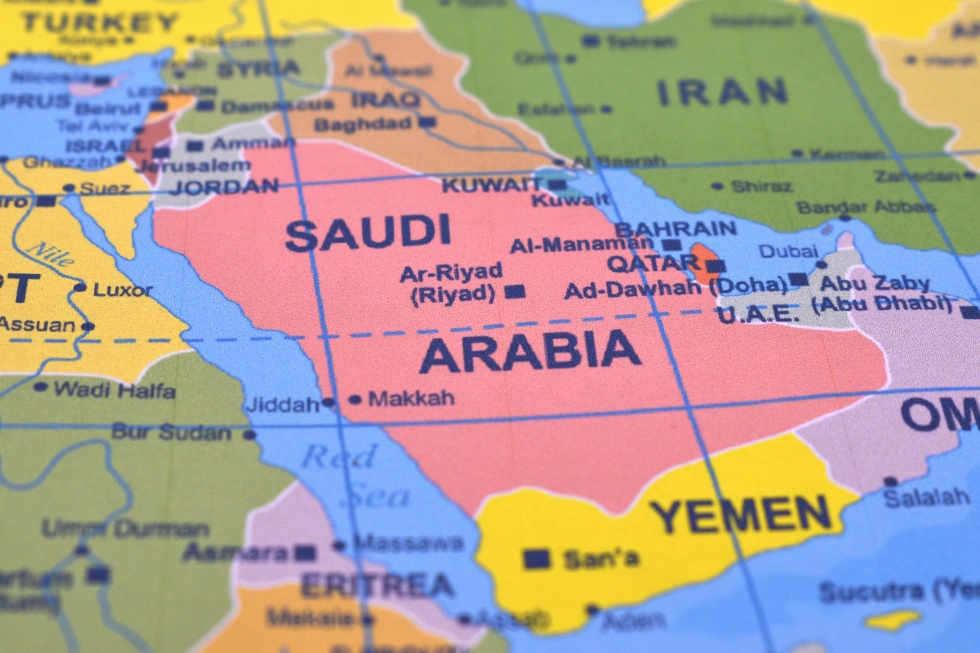



The greatest challenge facing Saudi Arabia in Yemen has never been purely military. It has always been political. Since Riyadh launched its intervention against the Houthi movement in 2015, the Kingdom has possessed overwhelming advantages in conventional military power, air capability and financial resources. Yet after years of conflict, the Houthis remain entrenched in northern Yemen and have repeatedly demonstrated their ability to threaten Saudi territory through missile attacks, drone operations and political warfare.
The reason Saudi Arabia is losing trust in northern and southern Yemen is that Yemen’s conflict has always been fought on two battlefields: the battlefield of weapons and the battlefield of legitimacy. Saudi Arabia relies on the use of military force rather than political and economic action in the liberated areas of Yemen. Winning the battle of ideas and the hearts of Yemenis is more important than winning on the battlefield.
The renewed Saudi intervention in Hadramaut, southern Yemen, against the Southern Transitional Council (STC) in late December 2025 and early January 2026 illustrates this dilemma. Militarily, Riyadh achieved an important operational objective: Saudi-backed forces restored control over key areas of Hadramaut and Al Mahra after the STC expanded its influence across eastern Yemen. But military success does not automatically translate into strategic success, and the political consequences of the intervention may prove far more complicated.
The battlefield of legitimacy
By moving against the STC, Riyadh risked weakening an important source of southern political support at precisely the moment when Saudi Arabia required reliable southern partners capable of helping contain the Houthi threat. The intervention created a perception among some southern Yemenis that Saudi Arabia was no longer simply acting as a partner, but as an external actor willing to shape Yemen’s internal political future according to its own security interests. That perception matters.
The Houthis understood this dynamic years ago. Their most effective weapon was never only their military capability. It was their ability to portray themselves as defenders of Yemeni sovereignty against foreign intervention.
The Houthis have their own ideological and political objectives, including consolidating control over northern Yemen and expanding their influence over the country’s future political order. However, their ability to frame themselves as resisting external interference has remained central to their survival. Saudi Arabia may therefore have strengthened the very political narrative that allowed the Houthis to withstand years of military pressure.
The crisis began when the STC expanded its influence in eastern Yemen during December 2025, gaining control over strategically important areas in Hadramaut and Al Mahra. These provinces are among Yemen’s most significant territories, as they border Saudi Arabia, contain important energy infrastructure and provide access to the Arabian Sea. For Riyadh, instability in eastern Yemen represents a direct security concern.
Saudi Arabia has long viewed eastern Yemen as a critical buffer zone. Political fragmentation in these areas creates opportunities not only for local rivals but also for the Houthis, who have repeatedly demonstrated their ability to exploit divisions among their opponents. The Saudi position reflected a broader concern: that Yemen’s political fragmentation could create competing centers of power along the Kingdom’s southern border. Analyses from organizations such as the Sana’a Center for Strategic Studies and the International Crisis Group have repeatedly highlighted the importance of local political structures, armed actors and regional competition in shaping Yemen’s conflict.
Operationally, Saudi-backed forces regained influence in Hadramaut. But the deeper question was political: Would the operation strengthen Saudi influence, or weaken the trust required for long-term stability?
The Saudi-Emirati divide
Saudi Arabia’s decision to confront the STC did not emerge in isolation. Riyadh had genuine strategic concerns regarding the growing relationship between the STC and the United Arab Emirates (UAE).
Since the beginning of the Yemen conflict, Saudi Arabia and the UAE shared the broad objective of preventing Houthi expansion. However, their approaches gradually diverged. Saudi Arabia generally prioritized preserving Yemen’s internationally recognized political institutions and supported the Presidential Leadership Council (PLC). The UAE developed a closer relationship with southern actors, particularly the STC, which became one of the most influential political and military forces in southern Yemen.
For Riyadh, the issue was not simply the STC itself. The concern was the emergence of a powerful southern political movement closely connected to another Gulf state. Saudi Arabia feared that Yemen’s future could become shaped by competing regional interests rather than a unified political process. However, Riyadh may have underestimated a critical reality: the difference between international recognition and on-the-ground political influence.
The PLC possessed diplomatic legitimacy. But diplomatic legitimacy did not necessarily translate into local authority. The PLC remained dependent on external support and struggled to establish the same level of grassroots influence as actors such as the STC. The STC, by contrast, had developed stronger local networks and a more visible political presence among sections of southern society.
This created a strategic dilemma: Saudi Arabia supported the institution recognized internationally. But the STC represented a political force with greater capacity for local mobilization. The intervention therefore highlighted one of Yemen’s central problems: the gap between formal authority and actual power.
The power of narrative
The Arabic word adwan (عدوان), meaning “aggression,” became one of the Houthis’ most effective political tools after the Saudi-led intervention began in 2015. The Houthis framed the war not primarily as an internal Yemeni struggle, but as resistance against foreign intervention. This message resonated because opposition to outside domination has deep historical roots in Yemen’s political identity.
Many Yemenis in the north did not necessarily support Houthi ideology. Many disagreed with the movement’s governance, religious views and relationship with Iran. Yet the Houthis successfully transformed the political debate. They presented the conflict as a choice between a Yemeni movement claiming to defend sovereignty, or a foreign coalition operating inside Yemen. For many communities, nationalism became more powerful than ideological disagreement.
This explains why Saudi Arabia’s legitimacy challenge has often been more significant than its military challenge. The danger for Riyadh is that the intervention in Hadramaut may reproduce elements of the political environment that strengthened the Houthis in northern Yemen. The issue is not whether Saudi Arabia had legitimate security concerns. It did. The issue is how those concerns are perceived locally.
For many southern Yemenis, the STC represents a movement connected to long-standing southern political grievances, including demands for greater autonomy and, among some supporters, independence. When Saudi Arabia moved against the STC, some southern communities interpreted the action as evidence that Riyadh was prepared to override southern political aspirations. The result is a potential erosion of trust.
As research from the Chatham House Yemen Program and Carnegie Middle East Center has noted, legitimacy and local political relationships remain essential factors in Yemen’s future settlement.
The timing of the Hadramaut intervention is especially significant. The Houthis continue to represent a major security challenge for Saudi Arabia. Any future escalation would require more than air power. Saudi Arabia would need reliable Yemeni ground forces, local intelligence networks, tribal cooperation and political legitimacy among affected communities. The problem is that these assets cannot simply be purchased; they depend on trust. A military coalition can be assembled quickly; a political coalition takes years to build.
Strategic adaptation: the path forward
However, even if Saudi Arabia concludes that the Hadramaut intervention created unintended political costs, the Kingdom still has options.
First, they would need to recognize that Yemen cannot be managed solely through institutions created outside the country. Political stability requires alignment with political realities on the ground.
Saudi Arabia’s challenge is not simply disagreement with the STC. The deeper challenge is that the STC represents a significant southern constituency that cannot be ignored. A sustainable Saudi strategy therefore requires engagement rather than confrontation. One possible path would be a diplomatic reset with both Abu Dhabi and the STC.
The Saudi-Emirati relationship remains strategically important. Despite differences over Yemen, both countries share common interests: regional stability, preventing uncontrolled Houthi expansion, maritime security and protecting Gulf security interests. A renewed understanding between Riyadh and Abu Dhabi could reduce competition between regional partners and prevent Yemeni actors from becoming instruments of wider Gulf rivalries.
Equally important would be a reassessment of Saudi Arabia’s relationship with the STC. This does not mean Riyadh must automatically support southern independence or abandon its preference for Yemen’s unity. It means recognizing political realities. The Kingdom may need to move from attempting to manage southern politics toward building a partnership with southern actors based on mutual interests. Saudi Arabia could acknowledge that aspects of its intervention produced unintended political consequences and seek a renewed framework of cooperation with previous partners. Strategic adaptation is not weakness; it is often the foundation of long-term influence.
Prussian military theorist Carl von Clausewitz argued that war is an extension of politics. Modern counterinsurgency theorists reached a similar conclusion. French Army officer and counterinsurgency theorist David Galula argued that the central contest in irregular warfare is not simply territory, but the population itself. The population is the center of gravity. The Houthis understood this principle. They transformed a military struggle into a political struggle over sovereignty.
The limits of military power
Saudi Arabia has often approached Yemen primarily through security concerns: border defense, missile threats, hostile militias and regional competition. Those concerns are real. But Yemen demonstrates a wider lesson: Military power without political legitimacy has limits. Saudi Arabia’s intervention in Hadramaut demonstrated that Riyadh retains significant military influence in Yemen. But military influence is not the same as strategic success. The Kingdom’s greatest challenge in Yemen has always been legitimacy.
The Houthis survived because they successfully transformed a military conflict into a nationalist struggle against foreign intervention. By damaging trust with southern actors, Saudi Arabia risks allowing the Houthis to expand that same narrative beyond the north.
The lesson of Hadramaut may ultimately be that strategic success requires more than defeating opponents. It requires maintaining partnerships. Saudi Arabia does not need to abandon its interests in Yemen. It needs to rebuild the political foundation necessary to protect them.
The future struggle with the Houthis and the Southerners will not, in my opinion, be decided solely by missiles, drones or soldiers but rather by the politics of reason and the interests of all concerned.
[Kaitlyn Diana edited this piece.]
The views expressed in this article are the author’s own and do not necessarily reflect Fair Observer’s editorial policy.
South Yemen’s Near Moment of Independence: Hadramaut, Regional Anxiety and the Saudi Reset
South Yemen is edging closer to independence amid rapid advances by the Southern Transitional Council and a constitutional declaration, challenging...
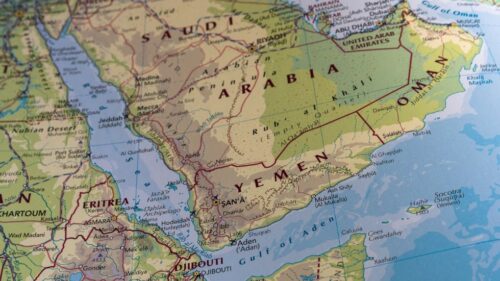
The Houthis’ Southern Ambition: A Threat the International and Regional Community Must Never Ignore
The international push for a unified Yemen risks empowering the Houthis at the expense of southern aspirations and regional stability....

Houthi Ambitions and the Southern State: A Regional Flashpoint
The Southern Transitional Council has expanded its reach in southern Yemen and shifted the balance of power in the war....
Support Fair Observer
We rely on your support for our independence, diversity and quality.
For more than 10 years, Fair Observer has been free, fair and independent. No billionaire owns us, no advertisers control us. We are a reader-supported nonprofit. Unlike many other publications, we keep our content free for readers regardless of where they live or whether they can afford to pay. We have no paywalls and no ads.
In the post-truth era of fake news, echo chambers and filter bubbles, we publish a plurality of perspectives from around the world. Anyone can publish with us, but everyone goes through a rigorous editorial process. So, you get fact-checked, well-reasoned content instead of noise.
We publish 3,000+ voices from 90+ countries. We also conduct education and training programs
on subjects ranging from digital media and journalism to writing and critical thinking. This
doesn’t come cheap. Servers, editors, trainers and web developers cost
money.
Please consider supporting us on a regular basis as a recurring donor or a
sustaining member.
Will you support FO’s journalism?
We rely on your support for our independence, diversity and quality.





Comment