


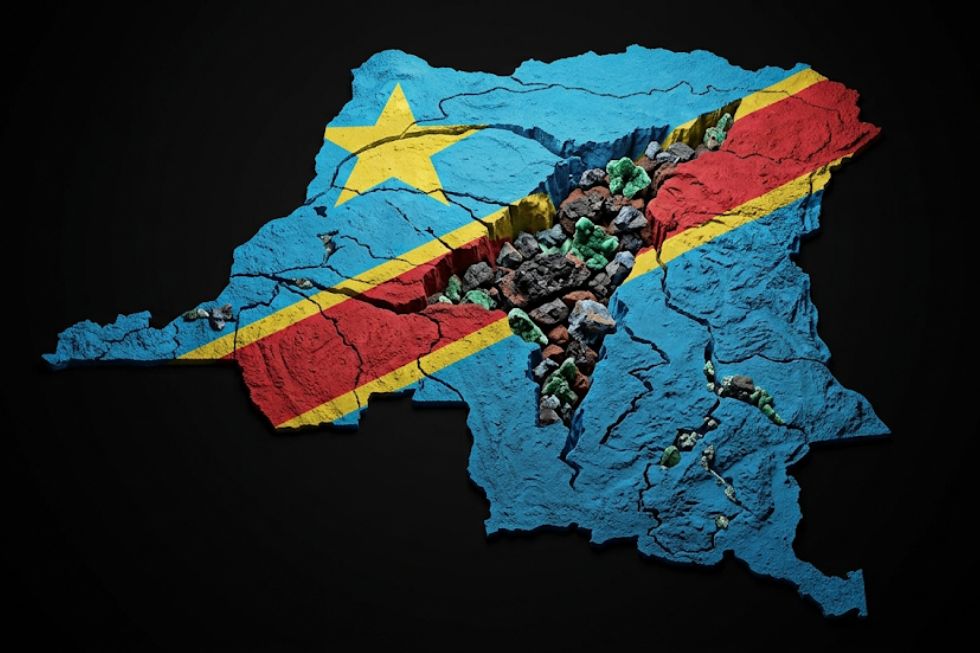



The Democratic Republic of Congo (DRC) sits at the center of the global energy transition, yet the international community continues to treat it as a governance problem to be managed from a distance.
On April 30, the US sanctioned former DRC President Joseph Kabila Kabange for allegedly providing financial support to the Alliance Fleuve Congo (AFC)/March 23 Movement (M23) rebels. US Treasury Secretary Scott Bessent framed the move as necessary to uphold the 2025 Washington Accords — a diplomatic agreement designed to foster peace and economic stability between the DRC and Rwanda — and to enforce its terms using the newly enacted STABLE DRC Act, a legislative mechanism specifically created to compel compliance with those peace objectives. The move reflects a familiar Western instinct: target individuals in the hope of reshaping governance outcomes.
In the DRC, that assumption is reckless. The country’s instability is not primarily a function of individual behavior but of structural weakness in the state. By focusing on Kabila, Washington risks misdiagnosing the problem and, in doing so, contributing to the very instability it seeks to contain.
Recent developments underscore the depth of that fragility. Kabila has been stripped of parliamentary immunity and sentenced to death in absentia by a military court, following the government’s 2024 decision to lift a two-decade moratorium on capital punishment. These measures signal not a consolidation of President Felix Tshisekedi’s authority, but a system displaying signs of exhaustion.
The central issue is the erosion of the Congolese state’s capacity to control territory, monopolize force and secure its own strategic resources.
A state losing its grip
Since the late 1990s, the DRC has struggled to maintain a monopoly on force. The Second Congo War, also known as the Great War of Africa, drew in multiple neighboring states and became one of the deadliest conflicts since World War II.
The Congolese armed forces, rebuilt through repeated integration processes, have long faced challenges of cohesion, logistics and command. In 2023, security expert Jean-Jacques Wondo noted that the Armed Forces of the DRC (FARDC) remains a weak and heterogeneous army with an almost non-existent order of battle due to overlapping authorities and multiple parallel chains of command.
Against that backdrop, Tshisekedi’s proposal to establish a dedicated “Mining Guard” reflects a deeper institutional reality: The state does not fully trust its own army to secure its most strategic assets. This distrust was recently underscored by the arrest of several senior officers and generals, including former army chief Lieutenant General Christian Tshiwewe and General Franck Ntumba, on accusations of collusion with Rwanda, embezzlement of military resources and undermining state security.
Rather than restoring centralized authority, such measures risk formalizing a patchwork security system in which different actors, state and non-state, exercise control over different territories.
The martyrdom effect
In the DRC, Kabila is still affectionately remembered by some as “Papa Kabila,” “Shina Rambo” or “Rais Kabange.” For many, he continues to represent hope in the face of unemployment, entrenched inequality and persistent hunger. In recent years, he had receded from the center of Congolese political life. Washington’s intervention risks changing that.
External pressure, particularly when it originates from the US, can revive the relevance of figures who might otherwise remain dormant. For instance, in Zimbabwe, sanctions against President Robert Mugabe allowed him to recast himself as a defender of African sovereignty against Western imperialism.
The DRC carries the same vulnerability. Where suspicion of foreign interference runs deep, the risk is that Kabila emerges not as a relic of a previous era, but as a political martyr capable of galvanizing networks that had begun to drift or disengage.
Optics and credibility
The optics of US policy further complicate this picture. Politico recently noted US President Donald Trump’s unsubstantiated claim that Congo sent prisoners to the US border with Mexico, a remark that only reinforces perceptions of how Washington views the continent. Such rhetoric feeds a narrative that American engagement is driven less by partnership than by condescension or strategic self-interest.
The response to the ongoing Ebola crisis reinforces this further, where the US barred non-US citizens and even green card holders who had been in the DRC within the previous 21 days from entering the US, a measure the DRC’s own health minister denounced as discriminatory and unsupported by science. In that context, sanctions risk being read not as principled governance tools, but as selective interventions designed to protect access to critical resources.
The irreplaceable “Fantômas”
To understand what has been lost in the DRC’s security architecture, it is necessary to understand a figure who has operated in its shadows for four decades. François Beya Kasonga — known variously as “Monsieur Security,” “Fantômas” or simply the Gentleman Spymaster. Beya is among the rarest of political animals: an intelligence professional who has navigated, survived and shaped the security apparatus of every Congolese president from Mobutu Sese Seko to Félix Tshisekedi.
That matters because the DRC has repeatedly depended on individuals who can navigate security networks across different political eras. Under Kabila, Beya was a trusted senior security official at a time when the state still had more predictable control over key institutions and strategic zones. He was also part of the broader continuity that helped manage the first peaceful transfer of power between Kabila and Tshisekedi in 2019.
If the country enters a post-Tshisekedi phase, that kind of knowledge will be highly relevant. In politico-environments like the DRC’s, continuity often matters more than slogans, as security arrangements and elite bargains tend to outlast those who announce them.
The DRC does not need individuals learning to ride a bike up a hill; it needs an experienced hand, which figures like Jean-Claude Bukasa and Lisette Kabanga do not provide. Beya represents something the current security architecture manifestly lacks: institutional memory. In a state with almost no bureaucratic continuity across administrations, he carried four decades of accumulated knowledge — the networks, pressure points and informal architectures that help hold a system of this scale and complexity together, particularly during moments of transition.
Constitutional uncertainty
Tshisekedi signaled openness to seeking a third term if “the people want it,” while hinting that the 2028 elections may be impossible to hold because of the conflict in the country’s east. Both signals deepen doubts about the stability of the current order.
Ironically, the Tshisekedi regime did not anticipate the scale of the public response. The opposition coalition C64, led by figures including former Katanga Governor Moïse Katumbi, Martin Fayulu, Delly Sesanga and former Prime Minister Augustin Matata Ponyo, called a ville morte on June 3, 2026, which was widely observed in Kinshasa and across several other cities and localities throughout the country, including the strategic mining city of Lubumbashi.
C64, named after Article 64 of the Congolese constitution, which obliges every citizen to resist any person who seizes or exercises power unconstitutionally, was launched in direct opposition to any prospect of a third Tshisekedi term. Further protests have occurred throughout June, with the country marking its independence from Belgium on June 30, 2026
Security expert Jean-Jacques Wondo drew a pointed historical parallel, writing that in 1997 Mobutu Sese Seko embodied the ultimate theatrical display of power, yet behind the image of the undisputed leader lay a state emptied of its substance, a demoralized army and structures incapable of resisting the advance of the rebellion. The myth persisted, Wondo observed, but real power had vanished. The implication for today’s regime is uncomfortable.
Writing for the Council on Foreign Relations, Ambassador Michelle Gavin described Tshisekedi as having “ascended to office under highly irregular circumstances” in 2019 and noted that his 2023 re-election was similarly “flawed.”
That uncertainty matters because constitutional engineering in fragile systems rarely appears neutral. It can embolden opponents who believe they are resisting an illegitimate consolidation of power rather than simply opposing a government. It can also make Article 64 of the constitution, which calls on citizens to resist unconstitutional seizure of power, a more attractive rallying point for mobilization. The real danger is not a legal debate over the constitution — it is the possibility that constitutional uncertainty becomes a trigger for broader political confrontation.
Lessons from the Kabila era
This is where current Western policy may be overlooking an uncomfortable historical lesson. Joseph Kabila’s presidency perhaps did not produce democratic stability in the Western sense, but it would be a mistake to judge the DRC without accounting for the realities of its African context, where geography, fragmentation and regional conflict shape the political environment.
Nevertheless, it did maintain a more predictable security architecture in key mining regions. Large-scale mining operations, particularly in Katanga, expanded significantly during this period, supported by agreements with multinational firms and relatively stable state oversight. The system was perhaps deeply flawed, marked by corruption and limited transparency. Yet it provided a degree of territorial control that is increasingly absent today.
A security-first imperative and a choice
History offers a clear, if uncomfortable, lesson: in large, resource-rich states with weak institutions, order often precedes reform. In the DRC, rebuilding that order will require more than sanctions or diplomatic signaling. It will require sustained investment in cohesive military command structures, territorial control in key mining regions and coordination between state forces and international partners. Without these foundations, efforts to secure supply chains for the global energy transition will remain vulnerable to disruption.
The international community faces a strategic choice. It can continue to prioritize political signaling, sanctions, declarations and accords, or it can engage with the harder problem of how authority is exercised on the ground.
The minerals that power the Green Revolution do not extract themselves. They come from a state undergoing what some have described as “Sudanisation,” from communities living under the shadow of armed groups and from institutions that have been weakened by Tshisekedi’s mismanagement.
The future of the energy transition may depend less on policy frameworks in Washington than on whether the Congolese state can reassert control over its own territory. That is the question the international community has yet to seriously answer.
[Andrew Litz edited this piece]
The views expressed in this article are the author’s own and do not necessarily reflect Fair Observer’s editorial policy.
Greenland and the New Frontier of Eco-Geopolitics
As Arctic ice melts, Greenland is increasingly becoming a pivotal area of geopolitical competition, where issues of resource extraction, logistics...
FO Exclusive: Global Lightning Roundup of February 2026
In this section of the February 2026 episode of FO Exclusive, Atul Singh and Glenn Carle survey a world marked...
The Green Transition Needs a Blue Transition, Too
The response to the climate crisis is itself in crisis. As political goals shift and mineral extraction intensifies, the role...

Powering Progress: How Can Pakistan Transform Its Energy Potential?
Pakistan possesses significant untapped oil, gas, and shale reserves, offering a path to reduce its reliance on costly imports. While...
Support Fair Observer
We rely on your support for our independence, diversity and quality.
For more than 10 years, Fair Observer has been free, fair and independent. No billionaire owns us, no advertisers control us. We are a reader-supported nonprofit. Unlike many other publications, we keep our content free for readers regardless of where they live or whether they can afford to pay. We have no paywalls and no ads.
In the post-truth era of fake news, echo chambers and filter bubbles, we publish a plurality of perspectives from around the world. Anyone can publish with us, but everyone goes through a rigorous editorial process. So, you get fact-checked, well-reasoned content instead of noise.
We publish 3,000+ voices from 90+ countries. We also conduct education and training programs
on subjects ranging from digital media and journalism to writing and critical thinking. This
doesn’t come cheap. Servers, editors, trainers and web developers cost
money.
Please consider supporting us on a regular basis as a recurring donor or a
sustaining member.
Will you support FO’s journalism?
We rely on your support for our independence, diversity and quality.





Comment