


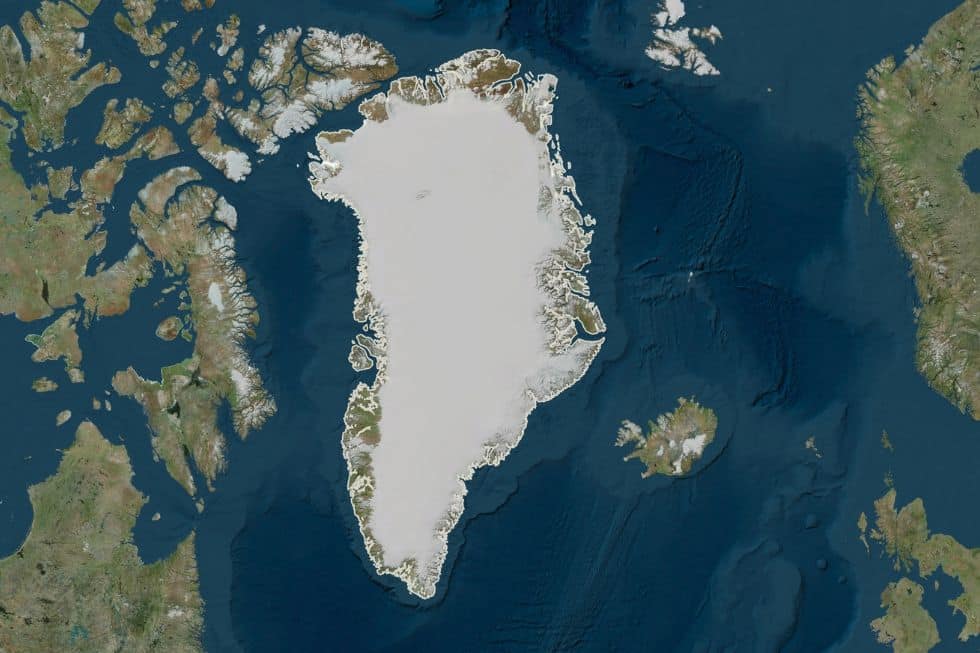



As the Arctic ice diminishes, Greenland evolves from a “peripheral” region to a focal point in international affairs. It is progressively recognized as a contested area of strategic significance. Previously an inaccessible, icy territory, Greenland now holds a central role in the security considerations of Washington, Brussels, Beijing and Moscow.
Greenland is not just entering global politics — it is reshaping it.
Greenland’s rising geopolitical significance
Beneath its ice lie vital minerals indispensable to tech-driven economic development and defense infrastructures. Concurrently, Arctic thawing offers potentially new maritime routes, military corridors and other strategic advantages. For the US, reducing dependence on China’s dominance in rare-earth processing has become a national security priority. For China, the Arctic represents an extension of its “Polar Silk Road,” a space for future trade and influence. Russia, meanwhile, is expanding its Arctic military capabilities and seeking control over northern sea routes. For NATO member countries on both sides of the Atlantic, the Arctic has been a vital military buffer since the Second World War.
This convergence of interests has revived a familiar geopolitical logic: Control of territory means access to resources and strategic positioning. Yet this renewed attention rests on questionable assumptions — that Greenland’s resources can be readily extracted and integrated into global supply chains, that new routes will open effortlessly and that military presence in the Arctic is easily manageable.
The economic viability of large-scale mining remains uncertain. Deposits are often located in remote, infrastructure-poor regions. Extraction requires massive investment, long timelines and complex logistics. Political constraints also matter. Greenland’s autonomy within the Kingdom of Denmark gives local authorities significant influence over resource decisions, and recent policy choices — including restrictions on uranium mining — reflect public resistance to certain forms of extraction. In other words, Greenland is not simply a resource frontier waiting to be unlocked. It is a politically and economically constrained environment where expectations often exceed feasibility.
The environmental paradox of Arctic accessibility
More importantly, the growing geopolitical competition over Greenland obscures a deeper and more consequential issue: the environmental cost of turning the island into a strategic asset. Climate change is making Greenland more accessible. But this accessibility comes at a price. The Greenland ice sheet — the second largest in the world — is melting at an accelerating rate, contributing to global sea-level rise and altering climate systems. As ice retreats, it exposes land for potential extraction and infrastructure development. At the same time, these activities risk intensifying environmental degradation in one of the planet’s most fragile ecosystems.
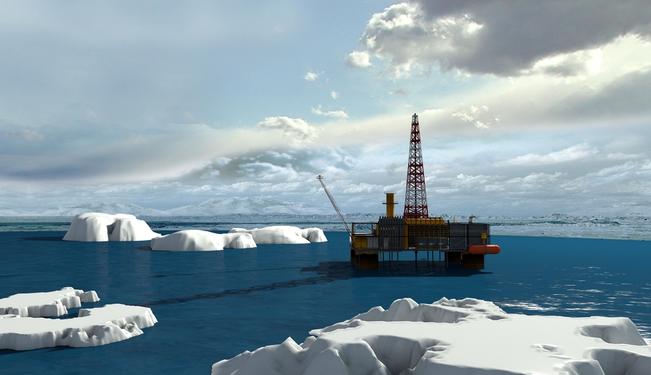
This creates a paradox. The very process that enables economic opportunity — climate change — is also what makes exploitation increasingly dangerous. Mining and hydrocarbon exploration carry well-documented risks: habitat destruction, water contamination, disruption of fragile Arctic ecosystems and long-term pollution. In extreme conditions, these risks are magnified. Oil spills, for instance, are particularly difficult to contain in cold environments with limited infrastructure. Even small-scale disturbances can have long-lasting and irreversible effects.
These local impacts connect to global environmental systems. Greenland plays a critical role in regulating the Earth’s climate. Changes in ice cover affect albedo — the planet’s reflectivity — and influence temperature dynamics. Meltwater contributes to sea-level rise and may disrupt ocean circulation patterns such as the Atlantic Meridional Overturning Circulation (AMOC), with cascading consequences for global climate stability.
What appears as a regional issue is, in fact, planetary in scope. Greenland is a test case for how the international system manages the tension between strategic ambition and ecological constraint. This is an emerging frontier of eco-geopolitics.
In this frontier, trade-offs become more acute. Economic development promises greater autonomy for Greenland but risks long-term environmental damage. Military presence enhances security but increases geopolitical tension. New shipping routes improve efficiency but raise the probability of ecological accidents. Each decision involves competing priorities that cannot be easily reconciled.
There is also an ethical dimension. Exploiting resources made accessible by climate change raises a troubling question: Can an environmental crisis be used to justify further extraction that may deepen that same crisis? This dynamic reflects what some scholars describe as “carbon myopia” — a focus on short-term gains that obscures long-term environmental costs.
The risk is that Greenland becomes another example of how global competition accelerates environmental degradation, rather than constraining it.
Toward cooperative and inclusive governance
Avoiding this outcome requires a shift in perspective. Greenland cannot be treated solely as a strategic asset or a repository of resources. Its role in the global system is more complex. It is part of a fragile environmental equilibrium that extends far beyond its borders.
This calls for governance approaches that move beyond zero-sum competition. Multilateral cooperation is essential, particularly in areas such as resource management, environmental protection and Arctic security. Indigenous participation must also be central, not peripheral, to decision-making processes. The principle of “nothing about us without us” is not only a matter of justice but also of legitimacy and sustainability.
At the same time, regulatory frameworks need to reflect the unique risks of Arctic environments. This includes stricter standards for extraction, stronger liability regimes for environmental damage, and enhanced mechanisms for monitoring and enforcement. Without such safeguards, economic activity may proceed faster than the capacity to manage its consequences.
Greenland’s future will not be determined solely by geology or geography. It will depend on political choices by global powers, regional actors and Greenlanders themselves.
Regulating Arctic risks and the stakes of climate-driven geopolitics
What is at stake is not just control over resources or territory. It is the ability of the international system to navigate a world where environmental limits are no longer external constraints but central factors in geopolitical competition. Greenland is, in this sense, a warning.
It shows how climate change is reshaping the map of global power — not by replacing geopolitics, but by transforming its conditions. Territories once considered marginal are becoming strategic. Resources once inaccessible are becoming attainable. But the costs of pursuing them are rising, not falling.
If Greenland is treated as just another arena of competition, the result will likely be a familiar pattern: short-term gains, long-term damage and increasing instability. But if it is approached as a shared ecological and strategic space, it may offer a different path — one where cooperation tempers competition and environmental limits shape, rather than constrain, political ambition.
The future of Greenland is not only about the Arctic. It is about the kind of world that is emerging in an age of climate change. And whether that world will be governed by rivalry or restraint.
[This article is based on a research paper co-authored by the author and Lysette Bazán, PhD, Adjunct Professor, Social and Political Environment Department, IPADE Business School. The paper was presented at the Eighteenth International Conference on Climate Change: Impacts & Responses, Common Ground Research Networks, University of the Aegean, April 2026.]
[Kaitlyn Diana edited this piece.]
The views expressed in this article are the author’s own and do not necessarily reflect Fair Observer’s editorial policy.
FO Talks: Trump’s Greenland Strategy Exposes the Next Phase of Great Power Competition
In this episode of FO Talks, Rohan Khattar Singh and Maurizio Geri discuss how climate change is opening the Arctic...
Trump Dreams of Minerals — in Ukraine and Greenland
In 2025, Trump shifted US focus toward fossil fuels while pursuing mineral deals in Ukraine and Greenland. He aims to...
Support Fair Observer
We rely on your support for our independence, diversity and quality.
For more than 10 years, Fair Observer has been free, fair and independent. No billionaire owns us, no advertisers control us. We are a reader-supported nonprofit. Unlike many other publications, we keep our content free for readers regardless of where they live or whether they can afford to pay. We have no paywalls and no ads.
In the post-truth era of fake news, echo chambers and filter bubbles, we publish a plurality of perspectives from around the world. Anyone can publish with us, but everyone goes through a rigorous editorial process. So, you get fact-checked, well-reasoned content instead of noise.
We publish 3,000+ voices from 90+ countries. We also conduct education and training programs
on subjects ranging from digital media and journalism to writing and critical thinking. This
doesn’t come cheap. Servers, editors, trainers and web developers cost
money.
Please consider supporting us on a regular basis as a recurring donor or a
sustaining member.
Will you support FO’s journalism?
We rely on your support for our independence, diversity and quality.





Comment