





Thirty-one-year-old conservative activist Charlie Kirk’s shooting happened at Utah Valley University on September 10, 2025, while he was addressing an audience of thousands. A tent still fluttered with the words “The American Comeback” when the gunshot split the afternoon. Within days, police had a 22-year-old suspect, Tyler Robinson, in custody. Authorities described a lone actor from a Christian background who was steeped in online youth culture.
Yet the aftermath did not feel solitary at all. It felt like a culture war made literal for a moment. Nine months later, the case has entered the slow machinery of a capital prosecution, with Utah prosecutors seeking the death penalty. The shock phase is over. What is left is more revealing: how a spectacular act of political violence has been converted into procedure, narrative and state response.
The public record still leaves parts of Robinson’s motive unresolved. Thus, false narratives and conspiracy theories filled the vacuum, becoming part of the event’s political afterlife. In September, rumors and false claims spread before the facts had settled. By March, the shooting was still serving as raw material for theories involving foreign agents and governments through a familiar process of mass misinformation. If the event seemed like an isolated incident, the reaction revealed something systemic. It quickly became another episode in the charged conflict between social liberals and conservatives, largely along government-opposition party lines.
But the US is not unique here: Polarization, disinformation and democratic backsliding have become a global triad. The 2025 Report by Varieties of Democracy (V-Dem) found that freedom of expression was eroding and that “toxic” levels of polarization were rising across the West — conditions under which executive shortcuts and the erosion of the rule of law become significantly more likely. The 2026 version is even starker. It says democracy for the average global citizen has fallen to 1978 levels, while warning about democratic backsliding in the US.
The question, then, is not simply who killed Charlie Kirk and why, but what kind of politics his death reflects. What does the immediate translation of identity conflict into policy after political violence tell us about current liberal-republican institutions? Identifying relevant mechanisms with historical precedents can help answer this question.
In search of historical analogies
In the months following Kirk’s assassination, the deployment of US Immigration and Customs Enforcement (ICE) in Minnesota triggered an unusually militarized federal crackdown, police shootings and mass protests. Not only has this been linked to a violent escalation in post-Kirk culture-war politics, but it has also been repeatedly described in a vocabulary borrowed from the upheavals of interwar Germany.
That comparison casts the United States as a constitutional republic strained by conspiracy theories, political violence and government by emergency powers. The “Weimar Republic” analogy remains tempting for a reason. After World War I, Weimar combined three elements that still feel familiar today.
The first is an elite humiliated by geopolitical reversal and prone to conspiracy alibis, such as the “stab-in-the-back” legend that transmuted military defeat into a tale of betrayal by socialists, liberals and Jews. The second, the armed politics of the street: Freikorps veterans, clandestine cells like Organization Consul and a judiciary whose marked leniency toward right-wing terror contrasted with its harshness against the Left. Third is an emergency-clause governance — Constitution Article 48 wielded frequently amid crises — through which legality and exception coexisted in a tense embrace.
The analogy is easy to understand. Across today’s West, polarization is rising, conspiracy theories spread quickly online and crisis-era emergency practices persist. Europol also continues to document extremist violence and terrorism in Europe. But when today’s crisis is framed as “Weimar Republic all over again,” the conversation slides into a morality tale. Scholars have warned for years that the analogy is overused and often misleading. At best, it focuses attention on the failure of republican and liberal institutions. At worst, it obscures the incremental mechanisms by which liberal regimes erode while retaining a rule-of-law façade.
What Weimar also had was a mass socialist movement that elites treated as an existential threat, as documented by historian Richard Evans in his book The Coming of the Third Reich. This critical aspect is almost entirely missing today. For present purposes, the better analogies are the ones that match the mechanisms at issue: law used to harden identity conflict, executive workarounds used to escape deadlock and constitutional continuity preserved even as liberal substance erodes. By that measure, two earlier European episodes fit more precisely than the usual 1920s specter.
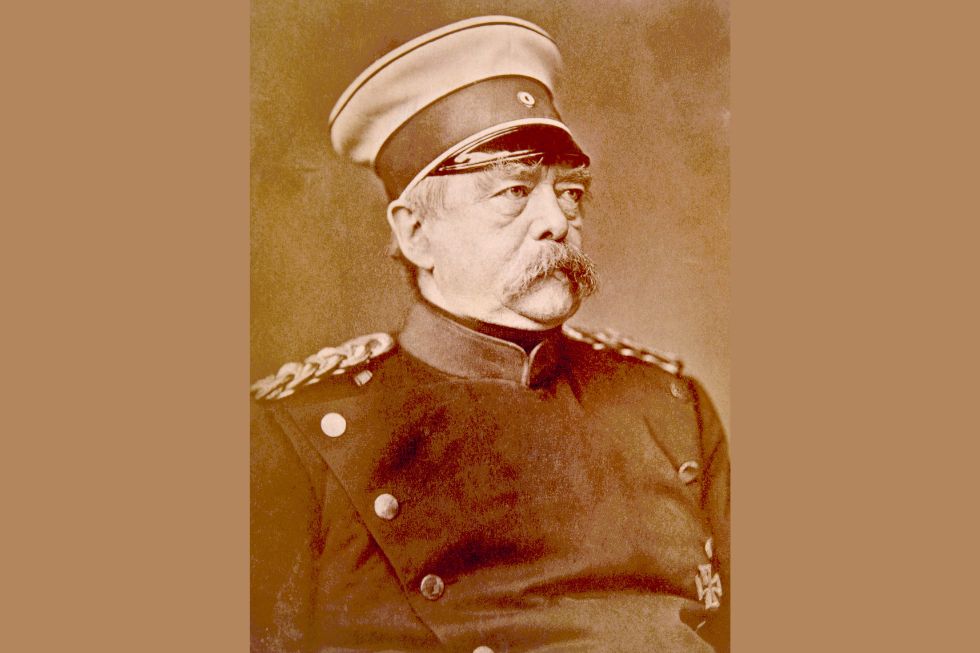
First, the German Empire’s Kulturkampf in the 1870s: a state-driven cultural struggle under Chancellor Otto von Bismarck that used law to reorder identity and authority at the expense of the Church. A series of laws regulated clerical training and appointments, passed primary and secondary education into government hands, imposed civil marriage and banned the Jesuit Order. As Evans shows, it was an attempt to translate value conflicts into institutions, to centralize loyalty by legislating culture. Today, it illuminates how governments “solve” cultural conflict by institutionalizing it.
Additionally, in the late Austro-Hungarian Empire before World War I, a multinational parliament was jammed by identity politics (famously, the Badeni language ordinances of 1897), leading to governance via Paragraph 14 emergency decrees when the legislature could not function. This was constitutional rule-by-exception — legalistic workarounds that normalized executive autonomy.
These are not just historical curiosities. For the first and third criteria, Kulturkampf is the clearer parallel: It shows how a state can translate cultural cleavage into law while remaining recognizably constitutional. As for the second and fourth, late Habsburg Austria fits better: It shows how deadlock normalizes executive workarounds without requiring Weimar’s revolutionary horizon. Together, they map a path that many Western regimes now tread: identity conflict embedded in law and governance by exception when the resulting political polarization obstructs formal procedures.
When law makes identity the battlefield
In the early 1870s, Prussian Minister of Education Adalbert Falk pushed through the May Laws — placing seminaries and clerical appointments under state oversight, tightening control over confessional schools and institutionalizing civil marriage. The 1872 ban on the Jesuit Order dramatized the conflict. The point was not only to separate Church and state as a modernization project, but to discipline a cross-cutting identity (Roman Catholicism) within a new nationalist frame, with the liberal establishment largely in support.
Polarization was an instrument of rule, instead of a rhetorical accident. Nor did Kulturkampf stop at confession. It bled into assimilationist campaigns against Polish minorities in Prussia, trading on the logic of homogeneity. These efforts fused nationalism, security and administration, leaving long tails in trust and partisan alignment that empirical work is only now tracing.
Nineteenth-century repression also galvanized political Roman Catholicism. Professor Lukas Haffert has argued that those organizational legacies can still shape modern voting patterns, though parts of his findings remain contested. At the time, this mobilization congealed into institutions. On the Roman Catholic side, the People’s Association for Catholic Germany and the Catholic Centre Party built a nation-spanning pedagogy of pamphlets, lectures and local circles, reaching hundreds of thousands of members before World War I. They defended confessional prerogatives, but also illuminated the cracks of imperial politics.
The event shows how a state-driven culture struggle, once institutionalized, reorganizes parties and civil society for generations. If that sounds familiar, it is because many contemporary policy fights — over curricula, religious exemptions, migration or protest — operate like Kulturkampf: They are pitched as neutral governance but function as identity ordering, even in ways unforeseen by the state’s culture warriors.
Today, the subject on the other end of the law may be a rival party, a different culture, immigrants or a stigmatized movement rather than a confession, but the mechanism is strikingly close: use administrative power to fix identities in place, then reward the loyal and sideline the deviant. Such dramas play out even in unlikely places.
In early 2023, Brian Covey, a substitute teacher at Jacksonville’s Mandarin Middle School, filmed rows of empty library shelves. He said he posted the footage to show how new review requirements were limiting access to books while titles awaited approval by certified media specialists. Duval County had told educators to “err on the side of caution.” The district countered that the video showed only part of a library that remained stocked. The clip went viral, and Governor Ron DeSantis called the resulting account a “fake narrative.” Covey’s staffing contractor later dismissed him after the district cited social media and cellphone policy violations. The episode shows one way culture war becomes statecraft.
When procedure bends until it breaks
A parallel mechanism historically surfaced in late-Habsburg Austria, in a drama both different and similar to Kulturkampf. In 1897, Minister-President Kasimir Felix Badeni issued language ordinances elevating Czech alongside German in the Bohemian administration, effectively excluding many German Bohemians from the civil service unless they could certify bilingualism. What followed — mass protest, parliamentary obstruction and government collapse — revealed an empire of multiple nations that were trying to act like individual national states.
When the Reichsrat could not function, cabinets fell back on Paragraph 14 of the 1867 December Constitution: emergency decrees to run a modern empire without modern consensus. But the habit stuck, as nationalist movements emerging from the Empire’s diverse ethnic identities challenged the country’s political cohesion. By the 1910s, decree rule had become routine.
The interwar Weimar Republic also had its share of presidential decrees that bypassed parliamentary approval. But the Habsburg story’s warning is procedural, not apocalyptic: Liberal republics can drift into autocratic executive government by legal means when polarization makes ordinary bargaining impossible. No coup is required. Only gridlock, a broad sense of emergency and a constitutional escape hatch. Together, these pressures can normalize emergency rule in polarized but still constitutional settings.
In the Austrian part of that dysfunctional, multiethnic Empire, the most energetic currents of German nationalism were supported by the lower middle strata and the agrarian periphery. They processed economic unease and status anxiety into an ideology that married romantic anti-modernism with a newly confident scientific vocabulary, as Evans shows.
Thus, pan-German circles and Christian populists fused völkisch racial thinking, social Darwinist hierarchies and antisemitism into a mass politics that seemed at once archaic and strikingly modern. It was a politics that sanctified homogeneity as a civic virtue and imagined national purity as a biological principle. And if the press and the lecture hall were the multipliers, then the feedback loops of the contemporary attention economy now play an analogous role, teaching citizens to essentialize identity and to read ordinary contestation as existential peril.
Back to Utah, and outward to the West
After World War II, many Western countries sought to absorb labor and parts of the Left into moderate liberal and social-democratic institutions. This strategy succeeded in weakening radical socialist movements, as shown by historian Aurélie Dianara Andry in the book Social Europe, the Road not Taken. Once the Cold War ended, market-oriented policy gained ground while identity questions became more prominent in public debate. That helped produce a centrist settlement that attached market liberalism to a more individualist politics of personal identity, while formerly massive social democratic parties weakened and, in practice, moved toward the political center.
After the 2008–2009 Great Recession, as historian Adam Tooze argues in his book Crashed, inequality, insecurity and geopolitical strains deepened. In this climate, the Right mounted a conservative backlash against the identity side of that liberal centrist settlement, while leaving intact its material foundations that had disempowered traditional social democracy in the first place. That helps explain why so many current battles are now cultural rather than economic, despite wealth inequalities in Western societies.
Set in this context and against the previous historical analogies, the Kirk assassination feels predictable: a polarized culture war ecosystem amplifies grievance, commodifies outrage and naturalizes exceptional measures. The speculation spiral that began immediately after the shooting — pinning motive and blame before facts, as reported by Reuters — replayed the mobilization logic of Kulturkampf on the timeline of the attention economy.
Meanwhile, law-and-order responses to such violence often expand exceptional powers. In Kirk’s case, the White House prepared an order on “political violence and hate speech” within days. By September 22, President Donald Trump had signed an order targeting Antifa as a “terrorist organization,” despite the lack of any evidence of involvement by any radical leftist networks. By November, Reuters reported that more than 600 people had been punished for posts about Kirk. The salient mechanism here is the rapid conversion of a murder into surveillance, speech policing and associational pressure. None of those explanations is wrong. But none is sufficient on its own.
Online platform algorithms amplify and redirect attention but do not, by themselves, explain why executives encode cleavage in law. Ordinary law-and-order politics after an assassination explains the availability of exceptional tools, but not the wider pattern by which conflicts over schools, speech, migration and protest are repeatedly converted into administrative sorting and executive workaround.
V-Dem also finds a link between polarization and autocratization. It argues that democracies in decline rarely recover without a sharp reversal. The risk lies not in one country but in a pattern: politics centered on cultural identity clashes and institutional fatigue can normalize executive workaround. In the contemporary West, this comes after a gradual normalization of executive decrees that sidestep legislatures and bypass judicial control. This process is already endangering liberal guarantees of individual freedoms and the separation of powers. Political science has a name for the dynamic beneath the headlines: “pernicious polarization.” It is not ordinary division but an us-vs-them alignment that bleeds across social life and encourages political entrepreneurs to choose strategies that win by hardening the split, even if the quality of political discourse suffers.
That is precisely why Weimar is the wrong historical analogy here: It captures widespread street violence and a revolutionary horizon that is not the mechanism most salient now. In contrast, Kulturkampf and late-Habsburg Austria better illuminate the nominally constitutional use of law and executive procedure to harden identity conflict and route around legislative deadlock.
Implications for democratic design
The two historical analogues ended rather badly. The Kulturkampf gave way to a different, illiberal campaign to suppress socialism by curbing a wide variety of individual freedoms. The mainstream political scene of Austria slid into authoritarianism — despite the introduction of universal and equal male suffrage in 1907 — until it was destroyed by World War I.
If today’s West is moving in that direction, stopping it could still unite people across party lines in order to exert grassroots pressure. First, they could force governments to stop turning cultural disputes into law. Policies that single out groups — whether through school standards, speech codes or broad public order statutes — nationalize symbolic conflict and harden partisan identity. The Kulturkampf shows how quickly such laws become ideology and how long the backlash lasts. The aim should be simple: draft identity-related laws precisely, limit them to what is truly necessary, make them expire unless renewed and secure bipartisan backing where possible.
More importantly, guardrails around emergency powers ought to be restored and fortified. The Habsburg path to decree government was paved with good legal intentions. Modern republics should establish independent review, clear legislative triggers and public audit trails for any emergency regime: exceptions have to be explicitly de-normalized.
For instance, South Africa’s post-apartheid Constitution offers a compact model that treats such power as a temporary, reviewable delegated authority. The President may declare a state of emergency and issue emergency regulations by proclamation, but only when the country is seriously threatened by war, invasion, general insurrection, disorder, natural disaster or a similar public crisis, and only when the declaration is necessary to restore peace and order. The emergency state lapses after 21 days unless the National Assembly extends it after public debate, for just three months at a time: The first renewal requires a majority of Assembly members, while later ones require 60% support. Not only may the National Assembly disapprove of emergency measures, but courts may review the declaration, any extension, and any legislation or action taken under it.
Another route would be to change the incentives that reward “pernicious” strategies. Reforms that open intra-party competition, adopt ranked-choice voting, implement independent redistricting, enable grassroots decision-making and establish cross-caucus committees can make bridge-building electorally rational.
In fact, studies by the Organisation for Economic Co-operation and Development (OECD) have shown that citizens’ assemblies can build trust and help produce consensus on value-laden issues. Overall, these are measures to foster political behavior that can dampen the us-vs-them equilibrium.
Finally, the problem should be named correctly. Contemporary political violence is the blunt edge of a sharper system: culture conflict weaponized to obscure socioeconomic divisions, administered by law and delivered through governance by exception. The fix is not to suppress conflict, which is impossible, but to route it through institutions that do not monetize outrage, reward stalemate or thicken social barriers.
Choosing a different usable past
History is not a script, but it can serve as a heuristic diagnostic. The Kulturkampf teaches how values become policy and then the party system, while late-Habsburg Austria shows how legal shortcuts become habits. Both are better guides to today’s West than the melodrama of Weimar and fascism’s rise. By looking only for brownshirts at the door, we might miss the actual danger.
Statutes that rewrite or punish identity and procedures that bypass parliaments should always be met with a great deal of scrutiny, suspicion and resistance — no matter the pretext. Whenever tragedy tempts us toward expediency, we should ask ourselves whether our political systems can still welcome dissent, tolerate diversity and reflect the public will without disabling themselves. Otherwise, today’s culture wars will keep pushing us toward harsher and more exclusionary forms of rule.
[Patrick Bodovitz edited this piece]
The views expressed in this article are the author’s own and do not necessarily reflect Fair Observer’s editorial policy.
MAGA’s Trans Strawman: All Filler, No Brain
Make America Great Again-aligned media and politicians exploit a “trans strawman,” portraying trans people as violent or manipulative despite evidence...
If I Had a Hammer, I’d Hammer All Over This Land
US President Donald Trump and his cronies are selfish liars unfit to govern. The regime now uses the shooting of...

No Bones About It: The Canonization of Charlie Kirk
In our age of mass media, no event has more power to spontaneously produce a dominant narrative than the murder...

Support Fair Observer
We rely on your support for our independence, diversity and quality.
For more than 10 years, Fair Observer has been free, fair and independent. No billionaire owns us, no advertisers control us. We are a reader-supported nonprofit. Unlike many other publications, we keep our content free for readers regardless of where they live or whether they can afford to pay. We have no paywalls and no ads.
In the post-truth era of fake news, echo chambers and filter bubbles, we publish a plurality of perspectives from around the world. Anyone can publish with us, but everyone goes through a rigorous editorial process. So, you get fact-checked, well-reasoned content instead of noise.
We publish 3,000+ voices from 90+ countries. We also conduct education and training programs
on subjects ranging from digital media and journalism to writing and critical thinking. This
doesn’t come cheap. Servers, editors, trainers and web developers cost
money.
Please consider supporting us on a regular basis as a recurring donor or a
sustaining member.
Will you support FO’s journalism?
We rely on your support for our independence, diversity and quality.





Comment