


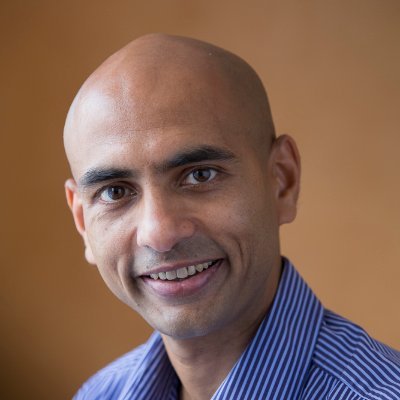


Editor-in-Chief Atul Singh and retired CIA officer Glenn Carle examine France in this episode of their flagship podcast, The Dialectic. Glenn and Atul are also partners at FOI, which advises companies and governments on geopolitical risk, and both of them spend a lot of time researching the major issues of our times.
 Spotify
 Amazon Music
Atul and Glenn explore whether France’s latest turmoil is just another episode in a long tradition of crises or the moment when the Fifth Republic finally crumbles. They start with the brutal arithmetic of debt and deficits, then move through centuries of French political culture — from Louis XIV and Napoleon Bonaparte to Charles de Gaulle and Emmanuel Macron — to explain why the state is both the country’s pride and its trap. They also speak about immigration, the challenge Islam presents to laïcité — the French version of secularism — and the challenges France faces in a changing global landscape.
A rising mountain of debt
France is facing rapidly mounting debt, which has resulted in a dangerous political paralysis. The country has cycled through five prime ministers in two years. French Prime Minister Sébastien Lecornu lasted only 26 days before resigning and then returned through the back door. The National Assembly, France’s parliament, has failed to pass a 2026 budget even though it is already December. Members of parliament suggested more than 1,100 amendments to the latest budget proposal. The budget deficit is now 5.8%, well above the EU’s 3% limit, pushing France into the danger zone.
Thanks to this persistent fiscal crisis, credit ratings agencies have slashed ratings for French debt, and Moody’s has lowered its outlook from stable to negative. Public debt has soared to 114.1% of GDP, putting France in the same conversation as Italy and Greece. Bond markets now demand higher interest rates, which means more of the state budget goes toward servicing debt instead of “guns and butter.” As borrowing costs rise, “no dreams can be realized to the extent that the society wants them,” because there is simply less money to spend for schools, hospitals or defense.
Behind the deficit is a gigantic state. Government spending peaked at 61.1% of GDP in 2020 and still sits at 57.1%, higher than most developed economies. France is increasingly becoming the greatest concern for business leaders, investors and economists in the eurozone. Canadian historian Timothy B. Smith’s argument that France combines Swedish-style spending with worse outcomes holds true. The country is suffering from chronic unemployment, persistent poverty and limited social mobility, especially compared with countries like Canada or Sweden.
A paralyzed politics
Part of the reason France’s sovereign debt crisis is alarming is because its political system is unable to respond. As stated above, political paralysis has brought France down to its knees. The National Assembly has three blocs at loggerheads with each other. No bloc has a majority.
Importantly, the traditional political parties have collapsed. The old Gaullist right has imploded, the traditional left has fragmented and three incompatible blocs have emerged to take their place. French President Emmanuel Macron has his centrist camp, Jean-Luc Mélenchon is the leader of the leftist group and far-right leader Marine Le Pen heads the Rassemblement National party. The three cannot seem to agree on anything.
When Macron was first elected in 2017, he tried to build a centrist coalition from moderate left and right — a French version of “silent majority” politics — but, since coming to power, he has failed to carry through major reforms. Governments fall frequently, the parliament cannot pass a budget and prime ministers keep falling. Macron himself is the pure product of France’s elite pipeline — elite graduate school École nationale d’administration, investment banking, ministerial office — which makes him both well trained and deeply resented as a symbol of a closed caste.
This results in a democracy that expresses social division rather than resolving it. In the absence of a clear majority, the Fifth Republic’s semipresidential machinery seizes up, and that has been the case in recent years. Instead of a strong president plus a sacrificial prime minister, France has an unpopular president, disposable prime ministers and a divided parliament.
The heavy hand of history
For students of history, France seems to be the land of perpetual crises. The country has been through several successive constitutions. Each time, the French have rewritten “the basic rules of the state. France has experienced the First Republic, the First Empire, the Restoration, the liberal monarchy, the Second Republic, the Second Empire, the Third Republic, the Vichy regime, the Fourth Republic and then the Fifth Republic.”
To explain why crises in France feel so repetitive, Atul and Glenn go back to King Louis XIV and his finance minister, Jean-Baptiste Colbert. Louis crushed the power of regional nobles and made the state, embodied in the monarch, the “unit of power” and the court at Versailles the “heart of power.” As Louis XIV allegedly said, “L’État, c’est moi” (“I am the state”). Colbert’s mercantilism centralized taxation, spending and economic decision-making in Paris.
This top-down model differs sharply from the Anglo-American tradition, where power and initiative rise from local communities and markets. As the great political analyst Louis Hartz once said, the American Revolution was fundamentally conservative: It preserved forms of self-government that colonists had already practiced. The French Revolution, by contrast, dismantled the monarchy and the church without a strong civil society ready to replace the two traditional institutions, producing a centralized democracy rather than a decentralized republic. In the US, 1789 marked the official adoption of a constitution that Americans still treat as a durable social contract. The same year, France experienced the storming of the Bastille and the beginning of a recurring pattern of institutional rupture.
Napoleon Bonaparte reinforced Louis XIV’s tradition of centralization. The dashing emperor imposed the Napoleonic Code, standardized weights and measures, and promoted an “aristocracy of merit” through les grandes écoles, France’s elite educational institutions. The state became the ultimate organizer of law, infrastructure and careers. This legacy still shapes France: When something goes wrong, people look to Paris for the solution — and then blame Paris when the solution fails.
After World War II, Charles de Gaulle followed the Napoleonic tradition. It is de Gaulle who created the Fifth Republic in his image with an imperial presidency overseeing foreign and defence policy, with the prime minister in charge of the day-to-day running of the country and the economy. One of the great figures of French history, de Gaulle was a true son of la grande nation. He wrote, “La France ne peut être la France sans la grandeur” (France cannot be France without greatness). Unsurprisingly, de Gaulle’s successors have struggled to fill the tall Frenchman’s big boots, and Atul calls them midgets.
In the Fifth Republic, the president is almost a Republican monarch. As the head of state, he claims a mystical bond with the nation and leaves the dirty work of budgets and taxation to a prime minister who can be sacrificed if things go wrong. However, the system works only if there is a governing majority. When no party, bloc or coalition has a majority, the tension between the president and parliament becomes unmanageable.
When the Fifth Republic began in 1958, de Gaulle’s presidential style worked. He was far more interested in foreign policy than economics. Today, the awkward division of labor where the president thinks in grand strategic terms and short-lived prime ministers wrestle with deficits simply does not work.
In essence, France is fundamentally from the Anglo-Saxon world. Alexis de Tocqueville’s observations on the US still ring true today. The great French political philosopher admired the dense web of associations, churches, town meetings and voluntary groups in 19th-century America. Citizens solved problems locally and viewed the state as a referee, not as a savior or enemy. In France, by contrast, a weak civil society and a strong administrative tradition left citizens oscillating between dependence on the state and rebellion against it.
Immigration troubles, integrating Muslim youth and rising poverty
The structural tensions in French political culture are now colliding with a profound demographic shift. Approximately 17.2% of France’s population is foreign-born, and an estimated 10–11% is Muslim, up from about 1% in the 1980s. Immigrants from North and West Africa, the Middle East and Turkey are concentrated in suburban banlieues marked by poor planning, high unemployment and fraying public services. This is creating major problems for France.
Glenn references the “10% rule” derived from the writings of Swedish economist Gunnar Myrdal: Immigration tends to be tolerated until minorities reach around a tenth of the population, after which a backlash often sets in. Today, Le Pen, who has inherited her party and politics from her father, is leading a rising far-right party that terrifies not only the French but also the European establishment.
At the same time, Muslims in France are increasingly unhappy with their lot.
They often experience racism and discrimination. Although the French football (soccer in America) team is now mainly composed of immigrants, where Zinedine Zidane (Berber), Thierry Henry (Caribbean-French) and Didier Deschamps (Basque), who won the 1998 FIFA World Cup together, represent a vision of a melting pot, France struggles to integrate its immigrants. Muslims clash with the French tradition of laïcité — the strict secularism that bans overt religious symbols from public institutions — and with memories of French colonization of their ancestral lands. The memory of Algeria’s brutal 1992–2002 civil war against Islamists also animates many religious immigrants from France’s former colony.
Persistent high unemployment, racism and discrimination have often led to riots. More dangerously, radicalization is a real danger in the banlieues because many Muslim youth rally around mosques where charismatic imams/mullahs lead them astray. Such youth have gone in disproportionate numbers to fight for the Islamic State in Syria and Iraq. They have also committed several major terrorist attacks in France, which has fueled support for Le Pen and her party.
Le Pen’s rise is remarkable in the poorer regions of France. A fantastic AP report shows how her party is winning support in the poorest regions of the country. France’s poverty rate has gone up from 13.8% to 15.4% since Macron became president, and an additional 1.2 million people have fallen below the poverty threshold. The worse off France has become, the better Le Pen has fared.
An increasingly dangerous world
France’s internal troubles unfold amid a more dangerous global environment than at any time since 1945. The world seems to be drifting back toward a pre-1914 great-power system, with Russia resurgent, China globally assertive and the US increasingly unpredictable and often sympathetic to Moscow.
France is no longer one of the world’s top-tier powers but a significant middle power within Europe. Yet domestic paralysis in Paris has weakened the Franco-German axis that underpins the EU. France’s ability to shape European outcomes has also weakened as the EU has expanded, Germany has stumbled and other states, notably Italy, position themselves as energy hubs by channeling North African gas and oil into the continent.
As Russia’s war in Ukraine grinds on and NATO faces new challenges, French Chief of the Defence Staff Fabien Mandon has now openly warned citizens to prepare to “lose [their] children” in the conflict. France must navigate espionage, hybrid warfare and economic coercion at a time when it has little money. Inevitably, the country is struggling to fund its military, modernize its economy and maintain social peace under the monetary constraint of the euro and the fiscal constraints of the EU.
A doom loop or a potential comeback
One view of France is that the country is an “eternal loop of self-destruction.” The French expect the state to solve social and economic problems, resent the state’s intrusiveness and then mobilize to block any reform that touches benefits, working hours or pensions. The country desperately needs reforms, but the people stubbornly block any change. Atul recalls his friend, Paulo Montfort, saying in 2007, “Revolution is the only way the French do change.”
Glenn contrasts France’s Système D — working the system to get by — with the American ethic of deferred gratification and what de Tocqueville called “l’interet de soi bien compris” (“self-interest well understood”). The French have historically lacked the rugged individualism or strong civil society of America. The French support the state for personal benefit and work its imperfections to get by, but they remain deeply conservative and hostile to change. Ultimately, the French expect the state to provide for them and reject any reform that might increase their working age, lower their pension or reduce any state support. They are largely unwilling to find security and success through individual obligation and initiative.
Given the history of the country and the current crisis, a stark question arises: Can the Fifth Republic still function? If not, are we headed toward either a more clearly presidential or a more parliamentary system? Also, what happens when bond markets eventually refuse to finance French deficits at reasonable rates? In that scenario, political change would be forced on the French from above rather than as per demands from below.
Despite all their problems and current crisis, it is foolish to write France off. The country retains formidable assets: nuclear weapons, a capable navy, world-class defense industries such as the Dassault and Airbus aerospace companies, a dominant nuclear energy sector, the leading commercial airline company, a globally admired luxury industry and deep reservoirs of human capital and culture.
France is not running out of water, trees or breathable air. Its universities and research institutes still attract talent. If the state can be slimmed down, private initiative unleashed and institutions adjusted to produce stable majorities, France could yet experience a renaissance.
The choice sits between drifting deeper into fiscal, social and political paralysis or using this moment of crisis to renegotiate the social contract. Whether the Fifth Republic survives in its current form or evolves into something new, the stakes extend far beyond Paris. Not only France’s but also Europe’s future depends on whether France can find a way back from the brink.
[Lee Thompson-Kolar edited this piece.]
The views expressed in this article/podcast are the author’s own and do not necessarily reflect Fair Observer’s editorial policy.
The Dialectic: Can Germany Outgrow Its Postwar American Model?
In this episode of The Dialectic, Atul Singh and Glenn Carle explore how Germany faces acute economic, political and social...
The Story of World War II
On the 80th anniversary of the beginning of World War II, we look at the story of this tragic conflict....

The Dialectic: Can Germany and France Make Europe Great Again?
In this episode of The Dialectic, Atul Singh and Glenn Carle examine Europe’s rise from Renaissance brilliance to post-World War...
Emmanuel Macron’s Embarrassing Hour of Reckoning
French Prime Minister Michel Barnier’s minority government collapsed yesterday. President Emmanuel Macron’s maneuvering has brought General Charles de Gaulle’s 1958-vintage...

The Dialectic: Narendra Modi’s Vegetarian Stalinism Has Ruined the Indian Economy
In this episode of The Dialectic, Atul Singh and Glenn Carle explain how India’s current leader has rolled back the...

FO° Podcasts: Maduro, the War on Drugs and Trump’s Revival of the Monroe Doctrine
In this episode of FO° Podcasts, Atul Singh and Benjamin Delille examine US President Donald Trump’s confrontation with Venezuela, questioning...

FO° Podcasts: Myanmar Votes During a Civil War: Why This Election Could Tear the Country Apart
In this episode of FO° Podcasts, Rohan Khattar Singh and Asanga Abeyagoonasekera examine Myanmar’s December 28 elections against the backdrop...

FO° Podcasts: The Forbidden C-word, Class in America
In this episode of FO° Podcasts, Atul Singh and Kent Jenkins Jr. discuss how class shapes US identity and political...

The Dialectic: Can Germany Outgrow Its Postwar American Model?
In this episode of The Dialectic, Atul Singh and Glenn Carle explore how Germany faces acute economic, political and social...

FO° Podcasts: The Right to Play: How Women Fought and Won the Battle for Equality in Sports
In this episode of FO° Podcasts, Atul Singh and Lauren Greenberg explore how Title IX reshaped women’s sports and personal...

FO° Podcasts: Enemy of the Sun — How Palestinian Poetry Became a Weapon of Resistance
In this episode of FO° Podcasts, Atul Singh and Edmund Ghareeb trace the unlikely journey of the Palestinian poetry anthology...

FO° Podcasts: Why is the US Deporting Illegal Migrants to a Tiny African Nation Called Eswatini?
In this episode of FO° Podcasts, Rohan Khattar Singh and Zweli Martin Dlamini examine the secret deportation deal between the...

The Dialectic: Can Germany and France Make Europe Great Again?
In this episode of The Dialectic, Atul Singh and Glenn Carle examine Europe’s rise from Renaissance brilliance to post-World War...
Project 2025 and Donald Trump’s Dangerous Dismantling of the US Federal Government
In this episode of The Dialectic, Atul Singh and Glenn Carle dissect US President Donald Trump’s destruction of federal institutions....
FO° Podcasts: Why Has Trump Deployed Thousands of National Guard Troops in Washington, DC?
In this episode of FO° Podcasts, Atul Singh and Ankit Jain examine US President Donald Trump’s interventions in Washington, DC....

FO° Podcast: The Story of Millions of Syrian Refugees and Why They Can Never Return Home
In this episode of FO° Podcasts, Atul Singh and William McChesney examine why millions of Syrian refugees remain in exile...





Comment