


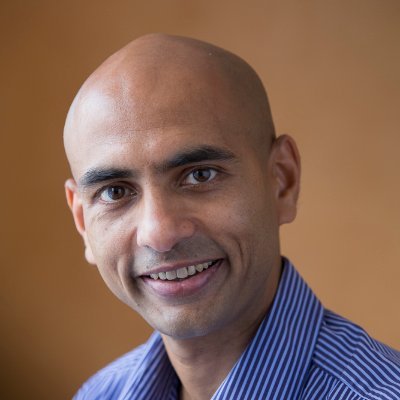


Editor-in-Chief Atul Singh and Benjamin Delille, foreign correspondent for the French newspaper Libération, discuss US President Donald Trump’s confrontation with Venezuela. The discussion probes Washington’s stated war on drugs, the revival of the 1823 Monroe Doctrine and the internal dynamics that continue to insulate Venezuelan President Nicolás Maduro from regime change. Delille situates current US actions within a broader geopolitical contest involving China, Russia and Latin America’s future alignment.
 Spotify
 Amazon Music
A fake war on drugs
Delille opens with a blunt assessment of US military operations in the Caribbean, describing them as a “fake war on drugs.” While Washington claims it is targeting narcotics trafficking to save American lives, Delille argues that the stated rationale does not align with available evidence or operational priorities. He believes the drug narrative functions primarily as a political cover for pressuring the Maduro regime.
He challenges claims that Venezuela plays a central role in fentanyl trafficking, stating that such assertions are “completely false.” Fentanyl is produced in Mexico and enters the United States primarily through the southern border. On cocaine, Delille cites data collected by the United Nations showing that only about 10% of Colombian production transits through Venezuela, with most of that flow bound for Europe rather than the US.
Delille does not deny that elements within the Venezuelan state may participate in trafficking networks, particularly in cooperation with Colombian armed groups along the border. However, he characterizes Maduro as a marginal figure in the global drug economy — a survivalist actor rather than a dominant trafficker. If the objective were genuinely narcotics enforcement, Delille argues, US policy would focus far more directly on Mexican and Colombian cartels.
The Trump corollary and strategic motives
Singh steers the conversation toward geopolitics, asking why Venezuela has become such a focal point for the Trump administration. Delille points to Trump’s national security strategy from December 5, 2025, which formally articulated what the president called a corollary to the Monroe Doctrine. The document signals a renewed emphasis on enforcing US primacy in the Western Hemisphere.
Delille situates this move within a longer historical arc. The original Monroe Doctrine sought to exclude European powers from the Americas, while the Roosevelt Corollary later justified US military intervention to protect American interests. The Trump corollary, Delille argues, goes further by asserting Washington’s willingness to act decisively against governments that challenge US dominance in the region.
While Venezuela’s oil reserves and mineral wealth, including gold and coltan, are significant, Delille sees geopolitics as the primary driver. The country’s close ties with China and Russia under Hugo Chávez and Maduro have made it a symbolic and strategic target. Reasserting influence in Venezuela, he suggests, would signal a broader rollback of Chinese and Russian presence across Latin America.
The 2024 election and María Corina Machado
The discussion then turns to Venezuela’s disputed 2024 presidential election and the rise of opposition leader María Corina Machado. Singh notes the scale of Venezuela’s humanitarian collapse, citing UN figures that 8.5 million people have fled the country since 2015 — the largest exile in modern history for a country not formally at war.
Delille describes Machado’s campaign as unusually effective, centered on a simple promise of family reunification. When the Maduro government disqualified her from running, she backed retired diplomat Edmundo González as her proxy, telling voters, “A vote for Edmundo González is a vote for me.” According to Delille, the regime’s failure to publish verifiable election results — citing a cyberattack on voting systems — made the theft of the election visible to both Venezuelans and the international community.
Delille also emphasizes Machado’s ideological alignment with right-leaning leaders such as Argentinian President Javier Milei and Salvadoran President Nayib Bukele, making her a natural partner for the Trump administration. Her long-standing calls for US intervention further distinguish her from previous opposition figures.
Why regime change remains elusive
Despite mounting pressure, Delille remains skeptical that Maduro will be removed quickly. He recalls the failed 2019 effort during Trump’s first term, when Washington attempted to flip the Venezuelan military by recognizing Juan Guaidó, who had a claim to the presidency. That effort faltered because the armed forces are deeply fragmented and internally surveilled — a structure former Venezuelan President Hugo Chávez designed after surviving a 2002 coup attempt.
Delille also highlights the role of Cuban intelligence in protecting Maduro. Since an early-2000s deal between Chávez and Cuban President Fidel Castro exchanging oil for security expertise, Cuban operatives have helped insulate the Venezuelan leadership from internal betrayal. This, Delille argues, makes it unlikely that even large bounties or sustained pressure will prompt insiders to turn Maduro over.
Looking ahead, Delille suggests the Trump administration cannot sustain a costly Caribbean deployment indefinitely without tangible results. Whether through a limited military strike or a negotiated deal granting US access to Venezuelan resources, he believes Washington will eventually manufacture a decisive outcome — a “flame of victory” — and move on, regardless of whether genuine regime change occurs.
[Lee Thompson-Kolar edited this piece.]
The views expressed in this article/podcast are the author’s own and do not necessarily reflect Fair Observer’s editorial policy.
US Strike on Venezuela: A Violation of the Sovereign Equality of Nation-State Principle
The US strike on Venezuela violates the long-standing principle of sovereign equality, undermining international law and global stability. Driven by...
How the US Capture of Nicolás Maduro Impacts China’s Engagement with Indonesia
The US capture of Venezuelan President Nicolás Maduro has sparked global debate over sovereignty and international law, impacting China’s diplomatic...
Gunboat Diplomacy Returns: US Resource Grab in Venezuela
US forces’ seizure of Venezuela’s President Nicolás Maduro under “Operation Absolute Resolve” revives a century-old imperial strategy focused on controlling...
The Dialectic: Narendra Modi’s Vegetarian Stalinism Has Ruined the Indian Economy
In this episode of The Dialectic, Atul Singh and Glenn Carle explain how India’s current leader has rolled back the...

FO° Podcasts: Myanmar Votes During a Civil War: Why This Election Could Tear the Country Apart
In this episode of FO° Podcasts, Rohan Khattar Singh and Asanga Abeyagoonasekera examine Myanmar’s December 28 elections against the backdrop...

FO° Podcasts: The Forbidden C-word, Class in America
In this episode of FO° Podcasts, Atul Singh and Kent Jenkins Jr. discuss how class shapes US identity and political...

The Dialectic: France: The Eternal Crisis Strikes Again. What Now?
In this episode of The Dialectic, Atul Singh and Glenn Carle examine France’s deepening polycrisis. Rising debt, political paralysis and...
The Dialectic: Can Germany Outgrow Its Postwar American Model?
In this episode of The Dialectic, Atul Singh and Glenn Carle explore how Germany faces acute economic, political and social...

FO° Podcasts: The Right to Play: How Women Fought and Won the Battle for Equality in Sports
In this episode of FO° Podcasts, Atul Singh and Lauren Greenberg explore how Title IX reshaped women’s sports and personal...

FO° Podcasts: Enemy of the Sun — How Palestinian Poetry Became a Weapon of Resistance
In this episode of FO° Podcasts, Atul Singh and Edmund Ghareeb trace the unlikely journey of the Palestinian poetry anthology...

FO° Podcasts: Why is the US Deporting Illegal Migrants to a Tiny African Nation Called Eswatini?
In this episode of FO° Podcasts, Rohan Khattar Singh and Zweli Martin Dlamini examine the secret deportation deal between the...

The Dialectic: Can Germany and France Make Europe Great Again?
In this episode of The Dialectic, Atul Singh and Glenn Carle examine Europe’s rise from Renaissance brilliance to post-World War...
Project 2025 and Donald Trump’s Dangerous Dismantling of the US Federal Government
In this episode of The Dialectic, Atul Singh and Glenn Carle dissect US President Donald Trump’s destruction of federal institutions....
FO° Podcasts: Why Has Trump Deployed Thousands of National Guard Troops in Washington, DC?
In this episode of FO° Podcasts, Atul Singh and Ankit Jain examine US President Donald Trump’s interventions in Washington, DC....

FO° Podcast: The Story of Millions of Syrian Refugees and Why They Can Never Return Home
In this episode of FO° Podcasts, Atul Singh and William McChesney examine why millions of Syrian refugees remain in exile...





Comment