




The global race for critical minerals is rapidly becoming a defining feature of geopolitical competition. As the US seeks to reduce dependence on China’s dominance in mineral processing, new supply frontiers are gaining strategic significance. Among them, Pakistan’s largely untapped mineral reserves are attracting growing attention despite the country’s complex security environment.
In the emerging global order, control over critical minerals increasingly defines technological leadership, industrial competitiveness and military power. Rare earth elements feed precision-guided munitions and advanced electronics. Copper underpins electrification, defense manufacturing and grid modernization. Lithium anchors the battery economy. According to data from the US Geological Survey, the US is effectively 100% import-dependent for separated rare earth elements, while China controls roughly 85–90% of global rare earth processing capacity — even when the ore itself is mined elsewhere.
Demand pressures are accelerating rapidly. Under global energy transition scenarios, demand for minerals such as lithium, cobalt, nickel and copper is projected to increase several-fold over the coming decades as electric vehicles, renewable energy infrastructure and battery storage systems expand worldwide.
At the same time, widening instability across the Middle East and South Asia, including the war between Iran, Israel and the US, and growing Pakistan-Afghanistan military clashes, are reshaping the strategic environment in which mineral supply chains must operate.
These overlapping conflicts are turning the region into a strategic intersection of resource security, maritime access and geopolitical competition. This structural asymmetry has reframed access to minerals as a national security imperative. Diversification is no longer optional; it is strategic insurance. Diversification, however, does not remove risk; it merely shifts it. In this shifting landscape, Pakistan has once again become a critical factor.
Pakistan’s mineral reserves in the US–China supply chain competition
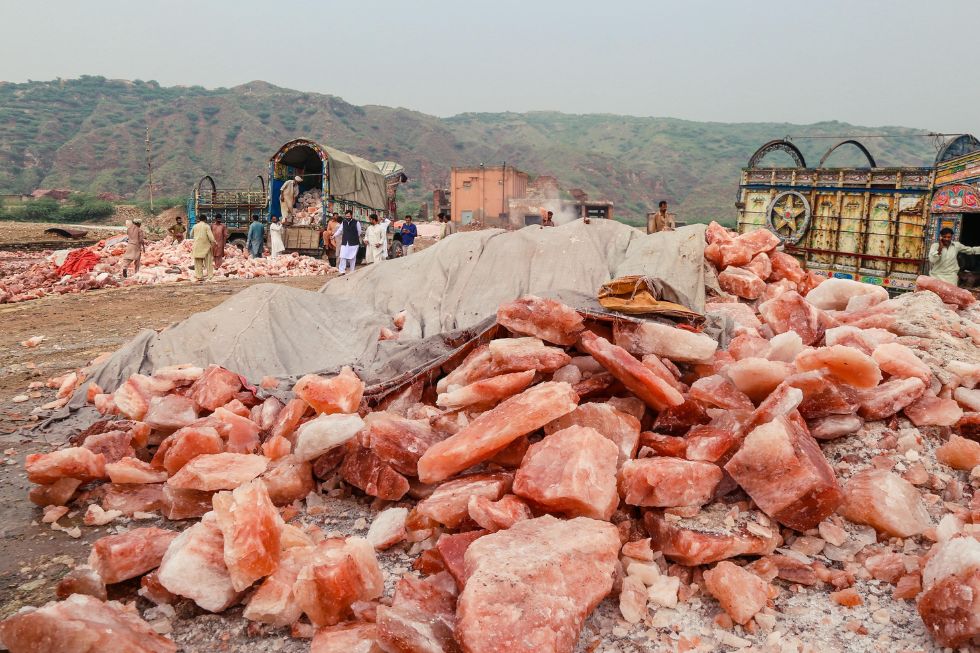
Pakistan possesses significant untapped mineral reserves, particularly in Balochistan. The Reko Diq project alone is widely regarded as one of the world’s largest undeveloped copper-gold deposits. Public feasibility estimates suggest potential annual output in the range of 200,000-250,000 tons of copper at peak production, a meaningful contribution at a time when global copper demand is projected to rise more than 40% by 2040 under energy transition scenarios.
Moreover, Pakistan has extensive mineral resources that extend beyond its currently discovered deposits. Pakistan possesses substantial coal reserves, located in Sindh, Punjab and Balochistan, totaling 186 billion metric tonnes and seventh-largest copper reserves, with estimates placing the overall value of its mineral wealth at approximately $6.1 trillion. The US needs this resource potential as it seeks to diversify supply networks amid the growing demand for electrification and advances in military technology.
Washington has noticed. The Export-Import Bank of the US has signaled support for mineral-sector financing in Pakistan, reportedly backing projects valued at around $1.25 billion. Pakistan, for its part, is actively seeking foreign direct investment to stabilize its economy and unlock its extractive potential.
Compared to heavily regulated Western jurisdictions, where mine permitting and environmental review can stretch beyond seven to ten years and sometimes longer, Pakistan offers the possibility of faster development timelines and lower extraction costs, provided security and governance conditions stabilize. Geographically, access to the Arabian Sea enhances the appeal. Proximity to major maritime lanes linking the Middle East, Africa and Asia creates export optionality. Pakistan is not yet central to US mineral strategy. But it is no longer peripheral.
China’s economic presence in Pakistan is institutionalized through the China-Pakistan Economic Corridor, including development at Gwadar Port, often described as a strategic maritime node connecting western China to the Arabian Sea. Yet Beijing’s mineral security rests less on Pakistan specifically than on its dominance over global midstream and downstream processing. China’s leverage derives from refining capacity and industrial integration, not reliance on any single upstream supplier.
Therefore, Pakistan’s mineral reserves hold comparatively greater diversification value for Washington than for Beijing. For the US, new upstream access reduces concentration risk. For China, it supplements an already integrated ecosystem. Yet the promise of mineral wealth cannot be assessed without confronting the security conditions that define Balochistan’s operating environment.
Security constraints and investment risk
Balochistan has long experienced insurgent violence. The Balochistan Liberation Army (BLA), designated by the US State Department as a Foreign Terrorist Organization, has targeted infrastructure and foreign personnel. High-profile attacks on Chinese projects illustrate the vulnerability of large-scale investment in the province. Beyond localized insurgency, Pakistan’s western frontier remains unsettled. Islamabad claims that elements of the Tehreek-e-Taliban Pakistan (TTP) are operating from Afghan territory, straining bilateral relations. Persistent cross-border militancy increases insurance costs, complicates logistics and erodes investor confidence.
Islamabad has responded by raising a dedicated Frontier Corps formation tasked with protecting mineral installations and strengthening border security along the Iran and Afghanistan frontiers. The initiative reflects recognition in Pakistan’s security establishment that economic corridors and extractive projects require hardened protection to remain commercially viable.
For American firms, the issue is practical. Mining requires secure transport corridors, predictable regulatory enforcement and reliable export routes. If disruption becomes chronic, even if episodic in intensity, capital will gravitate toward jurisdictions with lower political risk — regardless of higher operational cost. Diversification carries its own exposure profile.
A further complication lies in the evolving regional security matrix. Pakistan’s leadership increasingly frames instability in Balochistan and along the western frontier as being exacerbated by an emerging Indo-Taliban dynamic, suggesting that regional rivalries intersect with militant safe havens in ways that sustain pressure on Pakistan’s southwestern corridor. India rejects such allegations. Afghanistan’s internal political fragmentation adds ambiguity. Yet perception itself influences strategic behavior.
Strategic tradeoffs in diversification and regional connectivity
From Washington’s perspective, attribution may be contested, but impact is measurable. If persistent proxy dynamics, whether state-sponsored or opportunistic, sustain insecurity in mineral-rich corridors, US diversification efforts could face structural constraints. Political risk perception alone can redirect capital flows. In geopolitics, instability need not be formally coordinated to be strategically consequential.
Beyond extraction lies connectivity. Central Asian states seeking to reduce transit dependence on Russia view southern corridors through Afghanistan toward Pakistani ports as potential alternatives. But connectivity presupposes security. If Afghanistan remains permissive terrain for transnational militancy, confidence in infrastructure erodes. Cross-border instability undermines corridor reliability, complicates energy diversification and constrains regional integration.
Preventing Afghanistan from functioning as a hub of destabilization is therefore not solely a counterterrorism objective — it is an economic prerequisite for broader Eurasian diversification strategies. The policy question becomes unavoidable: Will the US allow sustained regional instability to obstruct or stigmatize potential access to Pakistan’s critical minerals?
Washington is expanding domestic production, strengthening allied supply chains, investing in recycling technologies and pursuing substitution strategies. Yet full self-sufficiency remains distant. Import dependence in key categories persists. Pakistan sits within this diversification portfolio as a prospective contributor, not yet indispensable. But diversification away from China cannot be entirely risk-free. Engaging fragile environments is sometimes the price of reducing structural dependency elsewhere. If Washington avoids exposure in volatile regions entirely, concentration risk persists. If it engages more deeply, it must accept calibrated political and security exposure. That is the strategic tradeoff.
Pakistan’s mineral frontier remains a strategic possibility rather than a strategic necessity. Its evolution will depend on whether security stabilizes long enough for sustained investment to take root. Geology does not dictate strategic value. Governance and stability do. In an era defined by supply-chain leverage, today’s marginal option can become tomorrow’s hinge point. Whether Pakistan becomes that hinge will depend less on rhetoric and more on whether instability from insurgency, cross-border militancy, or proxy competition can be contained. Diversification is not about perfect partners. It is about managing imperfect realities. The question for Washington is no longer whether risk exists. It is how much risk it is prepared to absorb to reduce dependence elsewhere and whether strategic hesitation will entrench the very concentration it seeks to escape.
[Patrick Bodovitz edited this piece]
The views expressed in this article are the author’s own and do not necessarily reflect Fair Observer’s editorial policy.
Pakistan’s Tightrope: Between America’s Embrace and China’s Shadow
Following the May 2025 skirmish, Pakistan emerged as a renewed US ally, gaining military aid and economic investments, yet the...
Pakistan Digital Authority: Building a Citizen-Centric Digital Future
Pakistan is pursuing a massive digital transformation, led by the new Pakistan Digital Authority (PDA), to create a citizen-centric, digitally...

Powering Progress: How Can Pakistan Transform Its Energy Potential?
Pakistan possesses significant untapped oil, gas, and shale reserves, offering a path to reduce its reliance on costly imports. While...
Support Fair Observer
We rely on your support for our independence, diversity and quality.
For more than 10 years, Fair Observer has been free, fair and independent. No billionaire owns us, no advertisers control us. We are a reader-supported nonprofit. Unlike many other publications, we keep our content free for readers regardless of where they live or whether they can afford to pay. We have no paywalls and no ads.
In the post-truth era of fake news, echo chambers and filter bubbles, we publish a plurality of perspectives from around the world. Anyone can publish with us, but everyone goes through a rigorous editorial process. So, you get fact-checked, well-reasoned content instead of noise.
We publish 3,000+ voices from 90+ countries. We also conduct education and training programs
on subjects ranging from digital media and journalism to writing and critical thinking. This
doesn’t come cheap. Servers, editors, trainers and web developers cost
money.
Please consider supporting us on a regular basis as a recurring donor or a
sustaining member.
Will you support FO’s journalism?
We rely on your support for our independence, diversity and quality.





Comment