



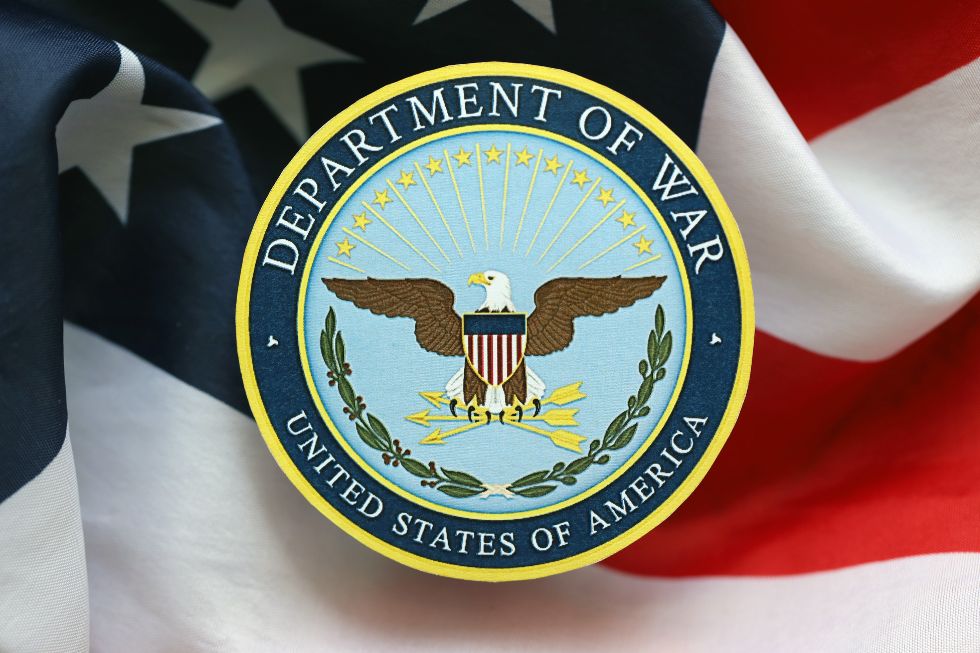



Has anyone bothered to notice that the famous “clash of civilizations” Samuel Huntington predicted three decades ago is now taking place, justifying the influential political scientist’s foresight? It was about time. Washington has always loved a good clash.
During his 2000 campaign for the presidency, candidate George W. Bush expressed his nostalgia for the golden age of the Cold War, in which the USSR played the role of America’s reliable bugbear.
“When I was coming up, it was a dangerous world, and we knew exactly who ‘they’ were. It was ‘us’ versus ‘them,’ and it was clear who ‘them’ was. Today, we’re not so sure who the ‘they’ are, but we know they’re there.”
Once elected, Bush believed he had found the solution to the problem. He turned Huntington’s thesis into historical reality when, with the appropriate fanfare, he launched his “Global War on Terror” (GWOT). First in Afghanistan, then in Iraq, a newly “dangerous world” got off to a spectacular start to mark the new millennium and reassure a president in desperate need of an authenticated enemy.
Alas, Bush’s valiant effort never really developed into the kind of heroic cinematic “clash” Hollywood culture may have been hoping for. Instead, it produced two boring and confusing “forever wars.” Conducted in parallel, both dragged on for years over the wastelands of Asia.
Obama offered a bit of stimulus with his “surges,” which nobody really understood and which produced no memorable outcome. Boring and meaningless are the two epithets most people would have applied to the subsequent history of those two wars.
Fast forward to 2026. How things have finally changed!
Two decades on, US President Donald Trump, teaming up with Israel’s Prime Minister Benjamin Netanyahu, may finally be fulfilling Bush’s 2020 call for excitement. The world is now witnessing a clash — if Trump is to be believed — that might just see the end of an entire civilization. Had he lived to read Trump’s solemn promise, Huntington would have deemed himself a prophet: In the first week of April, Trump proudly proclaimed: “A whole civilization will die tonight, never to be brought back again.”
Distinguishing between clashes
Despite appearances, today’s civilizational stakes are not the ones Huntington imagined. The current showdown between East and West (the “twain” that author Rudyard Kipling predicted “shall never meet”) is neither ideological, like the Cold War, nor properly religious (the core of Huntington’s thesis). Not that it doesn’t feature some elements of a religious “crusade.” Both Trump and his “Secretary of War” Pete Hegseth have sought to frame the conflict as Christian good versus some other religion’s evil. But so far that has backfired, if only because, according to the traditional value system evoked in the liberal democratic West, we identify as “evil actors” the ones who start the wars. The good actors are those who focus on defending their values. For most Americans, this is Trump’s war. He started it. (Some keener observers see it as Trump’s war for Netanyahu.)
Everyone cites World War II not just as a good war, but an exemplary good war. That is because Germany started the hostilities by invading Poland and then demonstrating its alacrity to invade most of its neighbors. Japan then attacked Pearl Harbor. The villains declared their identity by being the ones who attacked without warning.
In the current war in West Asia, Trump’s and Netanyahu’s attempt to reverse the roles by having the “good guys” attack “bad guys” and restore order might have worked had they achieved the quick regime change they believed feasible. But even a clear knockout punch against Iran’s Supreme Leader on the first day failed to deliver the championship belt to the US–Israeli TagTeam. Instead, the war began to spin out of anyone’s control. It quickly took a shape nobody could predict (apart from various well qualified experts whose opinions are systematically ignored). The fact that in the intervening weeks, no coherent narrative has emerged to justify the start or the pursuit of the war means that the US and Israel increasingly appear to the global public as forces of evil.
In other words, even if Trump actually does go ahead with his promise to demolish an entire civilization, one thing is already clear: US soft power — a major factor in Washington’s dominance of the post-World War II order — has taken a serious and perhaps fatal hit.
Analysts agree that in the near future, the US will continue to possess the most powerful military in the world and that the US dollar, even though weakened, will not be quickly dethroned as the privileged global reserve currency. The army and the dollar are two of the three pillars that have anchored Washington’s geopolitical authority. It’s an authority to which every nation understands it is obliged to bow, whether deeply and consistently (US allies) or superficially and irregularly (everyone else). Everyone respects power. Especially when they can trust it. But what happens when trust disappears?
Has Kant led Western culture astray?
Respect begins with trust. Not absolute trust — the “perfect duty” to be truthful that philosopher Immanuel Kant built his ethics around — but the kind of confidence or stability of judgment one develops in the perception and interpretation of motivational factors that emerge from any relationship. This is never perfect. It is adaptive.
Kant’s insistence on “categorical imperatives” may have had the effect of poisoning our modern Western culture’s ability to construct and understand rational political relationships. In Kant’s system, everyone should trust that others are acting out of duty to the same moral law that they are. This stands as the required condition for mutual respect to emerge.
In the real world, different cultures construct different readings of the “moral law.” Different languages generate contrasting frameworks for understanding what truthfulness may be. Furthermore, different individuals treat language and value systems in ways that will inevitably undermine Kant’s recommendation of aligning with a “kingdom of ends.”
Trust in the real world is built not on truthfulness, but on predictability and the perception of stability. Morality if defined as a value system should not in itself be “open to interpretation,” but its role in defining and guiding relationships must be flexible. Let’s take a simple example. Chinese culture elevates the notion of “harmony” to the highest level in serious decision-making. However complex the conflict, the instinct to seek a solution that promotes harmony will be the privileged reflex.
This contrasts starkly with US culture. For Americans, the motivation to achieve success in realizing one’s vision trumps the goal of harmony. That is why in the West we have to remind ourselves consciously that “win-win” is the most effective strategy. Without that conscious effort, we are likely to apply zero sum, win-lose logic.
This distinction may help us to understand why the many in the US fail to realize that the nation has lost the golden key of soft power it once possessed, perhaps its greatest achievement in the 20th century and the true foundation of its global influence.
At the start of the 20th century, US President Theodore Roosevelt’s trust-busting thrived on the idea that the companies that had become trusts were obvious winners. They would be allowed to keep winning so long as competitors were allowed to rise by sharing the same market space. Roosevelt airbrushed the vampire’s teeth from the portrait of US capitalism. At mid-century, in the aftermath of World War II, the Marshall Plan demonstrated that even though Europe had made a mess of things, it was now incumbent upon the winners to help them stand up and compete.
This wasn’t just fair play. This was Hollywood-endorsed and quasi-saintly benevolence.
The accelerating decline of US soft power
At the same time, even though many of America’s actions across the globe were aggressive, unjust, violent and even spiteful, the US made a valiant effort to build up goodwill by maintaining at the very least the illusion of commitment to helping the underdog and especially not humiliating losers. The most prosperous nation in the history of humanity successfully entertained the lasting impression that it was willing to share its good fortune with the rest of the world. And what is soft power if not success at creating an impression?
That mentality had begun to shift radically by the start of the 21st century. It was replaced by the vision of a world defined not just by a “clash of civilizations,” but by the need to impose on the rest of the world one type of civilization, and to do so with Kantian categorical absoluteness. Bush’s GWOT installed that attitude in a way that Cold War anti-communism never attempted to do. The Cold War claim was that capitalism is better than communism. The GWOT proclaimed that it had become a battle between good and evil.
Bush’s neo-con friends accelerated the trend that began late in the 20th century based on the newly acquired reflex of US administrations to apply increasingly severe and arbitrary sanctions on nations, organizations and individuals who failed to live up to the so-called liberal democratic, rules-based international order — a new “kingdom of ends” — defined and enforced by Washington.
More than a decade later, US President Joe Biden contradicted his own voters’ expectations when, instead of undoing Trump’s policy of “maximum pressure” on Iran and returning to the Joint Comprehensive Plan of Action Trump had withdrawn from, he chose to ride the white stallion of “good” that refuses even to listen to “evil.” On the same grounds, he declined Russia’s insistent invitation to sit down and hammer out an architecture for mutual security in Europe. We should note, on that score, that Biden never considered asking Europeans for their input on that decision. We now know the price of following that particular categorical imperative: a costly four-year-old war that has devastated Europe’s economy.
Trump’s “America First, screw the others (including allies)” doctrine and his propensity to arrest or assassinate foreign leaders as well as launch wars while conducting negotiations, have sealed the coffin of US soft power and put paid to any remaining illusion of the US military being a “force for good.”
There’s no going back this time. Biden’s failure to undo Trump’s first round dismantling of US soft power made it clear that the past will not return. Whatever happens in Iran, the Persian Gulf, Ukraine or Taiwan in the coming months and years, a different world order will emerge. Whether you like what you see or not, and whether the new order turns out to be manageable or not, no one can deny it will be multipolar. The king who imposed the previous “kingdom of ends” has met the guillotine.
Some of us believe the emerging order can be manageable, but it will require a concerted effort. We also know that there are others who have an interest in proving it can’t be managed. Will that lead to a new “clash of civilizations?”
One thing is certain: Whatever order emerges, the rules it establishes will be different from anything we inherited from the past.
*[The Devil’s Advocate pursues the tradition Fair Observer began in 2017 with the launch of our “Devil’s Dictionary.” It does so with a slight change of focus, moving from language itself — political and journalistic rhetoric — to the substantial issues in the news. Read more of the Fair Observer Devil’s Dictionary. The news we consume deserves to be seen from an outsider’s point of view. And who could be more outside official discourse than Old Nick himself?]
[Lee Thompson-Kolar edited this piece.]
The views expressed in this article are the author’s own and do not necessarily reflect Fair Observer’s editorial policy.
Has the US Invented the Pyrrhic War? Part 1
This debate with Claude explores the idea that US military strategy is now designed to engineer lasting disorder rather than...
Trump Makes Wars of Religion Great Again!
From Bush’s War on Terror to Trump’s strikes on Iran, US foreign policy has quietly transformed from ideological conflict into...
Europe, Iran and the New Face of American Power
Europe’s diplomatic influence on Iran has sharply declined since the US withdrew from the Joint Comprehensive Plan of Action and...
For Historians, Was This a Pearl Harbor or a Suez Moment? Part 1
A conversation with Claude about the US–Israeli attack on Iran explores its potential psychological impact on Americans, the growing fracture...
FO° Talks: Why US Soft Power Is Now Declining Dramatically
The United States’s soft power is rapidly declining as US President Donald Trump’s policies exacerbate its collapse. Fair Observer Editor-in-Chief...
Support Fair Observer
We rely on your support for our independence, diversity and quality.
For more than 10 years, Fair Observer has been free, fair and independent. No billionaire owns us, no advertisers control us. We are a reader-supported nonprofit. Unlike many other publications, we keep our content free for readers regardless of where they live or whether they can afford to pay. We have no paywalls and no ads.
In the post-truth era of fake news, echo chambers and filter bubbles, we publish a plurality of perspectives from around the world. Anyone can publish with us, but everyone goes through a rigorous editorial process. So, you get fact-checked, well-reasoned content instead of noise.
We publish 3,000+ voices from 90+ countries. We also conduct education and training programs
on subjects ranging from digital media and journalism to writing and critical thinking. This
doesn’t come cheap. Servers, editors, trainers and web developers cost
money.
Please consider supporting us on a regular basis as a recurring donor or a
sustaining member.
Will you support FO’s journalism?
We rely on your support for our independence, diversity and quality.





Comment